Aligning Production with Market Demand
The manufacturing system that produces what the production plan specifies and the market that demands what consumers want are two different systems that must be continuously aligned. When they drift apart as they inevitably do the result is simultaneous stockouts and dead stock: the signature of a production-demand misalignment.
Aditya Sharma
Author
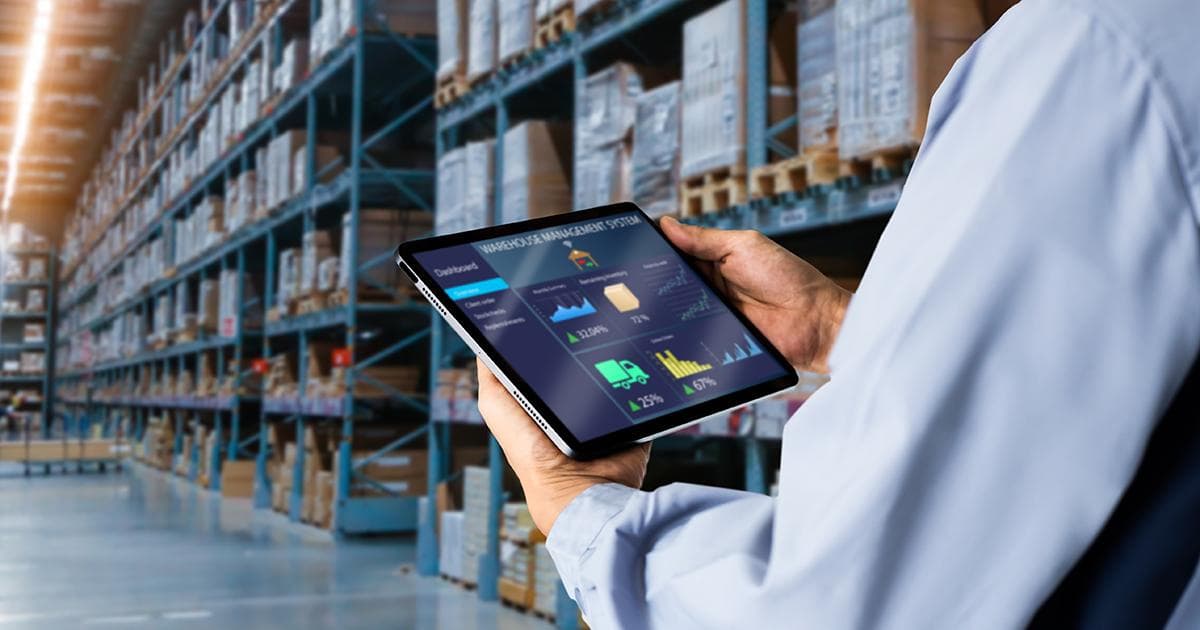
The alignment between production and market demand is the fundamental challenge of every manufacturing-linked consumer business. It is a moving target: demand changes continuously in response to marketing activity, competitor moves, consumer preference shifts, and seasonal patterns. Production is inherently discrete production runs committed weeks or months in advance, at fixed quantities determined at the time of the commitment. The gap between the continuous nature of demand and the discrete nature of production is the source of every inventory problem: dead stock where production overestimated demand, stockouts where production underestimated it. Closing this gap requires a systematic process for translating real-time demand signals into production decisions a process that most consumer brands have not formally built.
The Production-Demand Alignment System
A production-demand alignment system has three components working in sequence. A real-time demand signal: the trailing 21-day weighted average of daily sell-through by SKU by channel, updated weekly, expressing the current demand at the item level. This is not last month's sales, not the annual forecast, not the sales team's optimism it is what is actually selling right now. A demand-to-production translator: the calculation that converts the current demand signal into a production quantity for the next production run, accounting for the production lead time, the safety stock requirement, the minimum order quantity constraints, and the channel-specific timing requirements. The translator produces a production recommendation: 'at current velocity and upcoming seasonal index, we need [X] units of SKU Y available in channel by [date Z], which requires placing a production order of [W] units by [date A].'A production decision protocol: the process by which the production recommendation is reviewed, approved, and communicated to the manufacturer. This protocol should be weekly for high-velocity SKUs and monthly for the full portfolio. The protocol should include a working capital impact check confirming that the production payment can be funded within the cash plan before the production order is committed. The decision protocol converts the demand signal and the translator's output into a production commitment within a defined decision window.
The Four Demand Signals That Must Feed the Production System
- Current sell-through velocity by SKU and channel: the primary input to every production decision, reflecting current actual consumer demand rather than projected or historical demand
- Promotional calendar: any planned marketing activity that will increase velocity (a campaign, an influencer collaboration, a platform sale participation) should be reflected as a demand uplift in the production calculation for the period it covers
- Seasonal index: the historical ratio of seasonal peak demand to baseline demand, applied to current velocity to project the seasonal production requirement in advance of the peak
- Competitor inventory signal: when a direct competitor stocks out of a category-leading product, the brand's demand for its own alternative typically increases a signal worth monitoring and incorporating as a temporary demand adjustment in the production system

Related articles
View all → AI
AIThe Future of AI-Powered Digital Marketplaces
Digital marketplaces are evolving from transactional platforms into intelligent commerce ecosystems. AI is reshaping how buyers discover products, how sellers manage operations, and how platforms create value for everyone in the ecosystem and the pace of this transformation is accelerating.
 Customer Support
How AI Can Transform Enterprise Customer Support Systems
Customer support is one of the highest-cost, highest-impact functions in a growing enterprise. AI is transforming it from a cost centre with linear scaling constraints into an intelligent service layer that delivers better customer outcomes at a fraction of the traditional cost per interaction.
 Logistics
The Future of Smart Logistics and Autonomous Delivery Systems
Autonomous vehicles, drone delivery, AI-powered routing, and real-time supply chain visibility are moving from pilot projects to operational infrastructure. The logistics industry is undergoing its most significant transformation since containerisation and the businesses that adapt earliest will define the next era of commerce.