Daily vs Weekly Metrics: What Actually Matters
Checking daily metrics that should be checked weekly wastes cognitive capacity and produces anxiety without action. Missing weekly metrics that should be checked daily allows preventable problems to compound for seven days. The right monitoring frequency for each metric is not a preference it is a function of how quickly the metric changes and how quickly the decision it informs must be made.
Manthan Sharma
Author
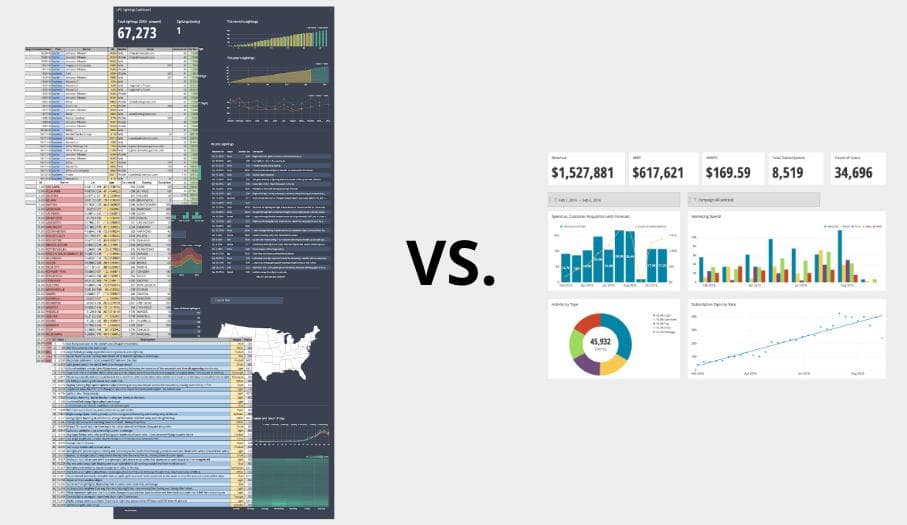
Metric monitoring frequency is a resource allocation decision. The time and cognitive load spent monitoring a metric is the cost. The decision quality improvement enabled by monitoring at that frequency is the benefit. When the cost exceeds the benefit when monitoring daily produces no better decisions than monitoring weekly would have the daily monitoring is waste. When the benefit exceeds the cost when daily monitoring enables a decision that weekly monitoring would have delayed by seven days at a significant operational cost the daily monitoring is investment. Getting this frequency allocation right requires understanding which metrics change on daily timescales (and thus require daily monitoring to be actionable), which change on weekly timescales (and thus require weekly monitoring), and which change on monthly timescales (and thus are distorted rather than informed by daily or weekly examination).
The Daily Monitoring List: Metrics That Change Consequentially Within 24 Hours
Active campaign CAC versus profitable threshold: performance marketing spend above the profitable CAC threshold costs money every hour it continues. A campaign that crossed the threshold yesterday should be paused today not at Friday's weekly review. Check daily, with an automated alert that fires same-day. Dispatch completion rate versus daily schedule: the dispatch that does not go out today creates a delivery delay that violates the delivery commitment made to the customer. Catching a dispatch failure at 3pm allows same-day recovery in most cases. Missing it until tomorrow means the delay is already committed. Check twice daily during dispatch window. Inventory for any SKU with active paid marketing: a SKU that stocks out while a paid campaign is driving traffic to its product page is converting ad spend into wasted clicks. The stockout-while-advertising cost accumulates by the hour. Check daily for any SKU with above-threshold marketing spend.NDR rate for any geography with active acquisition spend: if a specific geography has an NDR rate above threshold, every new COD customer acquired there has a 25%+ probability of being an RTO event. The cost accumulates daily. Check daily for geographies where active campaigns are running. Settlement variance from expected amount: a settlement that arrived below expected amount by more than the tolerance threshold should be flagged for dispute within 48 hours of the settlement date most marketplaces have a dispute filing window of 30 to 60 days, but early detection and filing improves recovery probability.
The Weekly Monitoring List: Metrics That Change Meaningfully Over 7-Day Periods
Contribution margin per order: daily fluctuations in this metric are driven by order mix variance that does not represent structural change. The weekly average smooths the variance and reveals the structural trend. Check weekly, compare to prior week and prior month. Return rate by channel and SKU: return rate in a specific channel or on a specific SKU typically develops over a 7 to 14-day period as the batch of customers from a specific campaign receives their orders and makes return decisions. Daily return rate is too noisy to act on. Weekly return rate by channel reveals the channel-specific pattern worth addressing. CAC trend by acquisition channel: CAC changes gradually as audience saturation builds. Daily CAC is volatile. Weekly trailing average CAC reveals the trend direction that determines whether a channel's spend level is sustainable. Inventory days-of-cover for the full SKU portfolio: daily DOH for actively marketed SKUs should be checked daily (as above). Weekly DOH for the full portfolio identifies the slow-moving and dead stock accumulation that requires quarterly action.
The Monthly Monitoring List: Metrics That Require 30-Day Data to Be Valid
Cohort retention rate: 90-day repeat purchase rate is a cohort-level metric that requires 90 days of data to be statistically meaningful. Checking it weekly produces a number based on insufficient data that will change significantly as the cohort matures. Check monthly using cohorts that are at least 90 days old. LTV-to-CAC ratio by channel: LTV calculations require cohort purchase history over multiple months. A LTV-to-CAC ratio calculated on less than 90 days of customer history is unstable and not reliable for channel investment decisions. Net margin percentage: net margin includes fixed cost allocation that smooths over monthly cycles. Daily or weekly net margin is distorted by timing of fixed cost payments and does not represent the structural profitability of the business.

Related articles
View all → Operational Intelligence
Why Enterprise Leaders Must Adopt AI-Driven Operational Intelligence
Operational intelligence the real-time, comprehensive understanding of what is happening across an enterprise and why has always been the foundation of effective leadership. AI is making a quality of operational intelligence available to enterprise leaders that was previously impossible to achieve, and the leaders who adopt it are making fundamentally better decisions than those who do not.
 Decision Intelligence
The Future of Enterprise Decision Intelligence Through AI Coordination
Decision intelligence the systematic improvement of decision quality through better data, better analysis, and better coordination of decision inputs is being transformed by AI. The enterprises that build AI-coordinated decision intelligence are making better decisions faster than their competitors will ever catch up with.
 Decision Bottlenecks
How Intelligent AI Systems Can Reduce Enterprise Decision Bottlenecks
Decision bottlenecks are the silent tax on enterprise performance. They are everywhere, accepted as inevitable, and collectively responsible for more lost revenue, more operational failures, and more missed opportunities than almost any other management problem. AI can eliminate most of them.