The Gap Between Factory Output and Market Demand
The factory produces what the production plan specifies. The market demands what consumers want, when they want it. The gap between these two the misalignment between what is being produced and what is actually selling is the operational root cause of both dead stock and stockouts, often simultaneously.
Aditya Sharma
Author
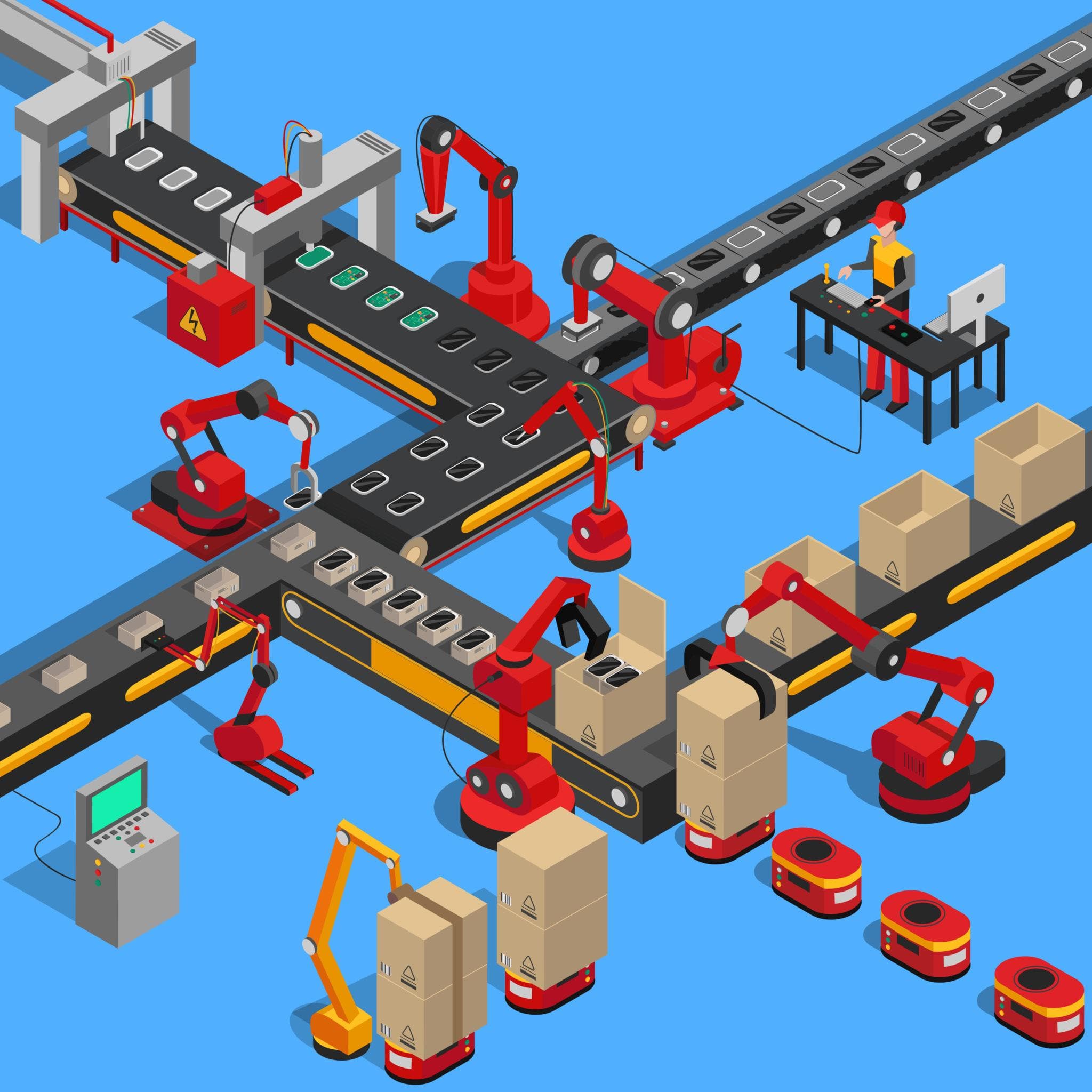
The production plan and the demand signal are two separate realities in most manufacturing-linked businesses. The production plan is a document based on last season, on the founder's growth target, on the sales team's optimism, and on the production manager's experience that specifies what should be produced in the next production cycle. The demand signal is a real-time data stream derived from current sell-through velocity by SKU by channel that specifies what is actually selling and at what rate. The gap between the production plan's implied demand assumption and the demand signal's actual demand data is the misalignment that produces the twin failures of dead stock and stockouts: dead stock where the production plan overestimated demand, stockouts where the production plan underestimated it, often on different SKUs within the same production cycle.
Why the Gap Persists
The production plan-to-demand gap persists in most manufacturing businesses for three structural reasons. First, the people who create the production plan do not have real-time access to the sell-through velocity data that should inform it. The production manager knows production. The sales team knows their revenue targets. Neither has the SKU-level, channel-level, current-velocity data that would allow the production plan to be anchored in actual demand rather than in projections. Second, the production plan has a minimum commitment size MOQ requirements from suppliers, minimum batch sizes at the contract manufacturer that forces the brand to round up from the actual demand calculation to the nearest MOQ, introducing structural overproduction for any SKU where current demand is below the MOQ. Third, the production plan is made weeks before the goods will be in channel and in that window, demand can shift significantly in ways the production plan made at the planning date cannot anticipate.
Closing the Gap: The Demand-Signal-to-Production Link
Closing the factory output-to-market demand gap requires building a direct data link between the sell-through signal and the production planning input. The sell-through velocity report trailing 21-day weighted average daily units by SKU by channel should be the primary input to every production planning session, not last month's revenue or last season's history. The production plan should be sized to the sell-through velocity multiplied by the production lead time plus the safety stock calculation not to the revenue target or to the optimistic demand projection.For SKUs where the sell-through velocity implies a production quantity below the MOQ, the production planning decision is explicit rather than implicit: accept the higher per-unit cost of a below-MOQ production run, or accept the risk of overproduction at the MOQ level by building the dead stock cost into the unit economics comparison. This is a financial decision that should be made consciously rather than defaulting to the MOQ without calculating the cost of the overproduction risk.
The Demand Sensing Cadence That Keeps the Gap Closed
- Update the sell-through velocity calculation weekly not monthly so that demand trend changes (a slowing hero SKU, a new SKU finding its audience) are visible before the production decision is made rather than after the goods are already in the warehouse
- Conduct production planning sessions weekly for all SKUs with fewer than 60 days of inventory cover and monthly for the full portfolio the planning frequency should match the inventory risk profile, not an arbitrary calendar cadence
- Build a demand exception flag into the velocity report any SKU with a velocity change of more than 25% in the trailing two weeks should flag for manual review before the standard reorder formula is applied, because a sudden velocity change may indicate a data issue, a competitor action, or a genuine trend change that warrants a different production response
- Compare each completed production run's actual sell-through velocity at 30 and 60 days post-production against the velocity assumption that drove the production decision this retrospective comparison reveals systematic biases in the forecasting approach and informs the calibration of the next production cycle

Related articles
View all → Autonomous Coordination
The Rise of Autonomous Enterprise Coordination Platforms
Enterprise coordination the alignment of people, processes, information, and resources across organisational boundaries has always been expensive, slow, and error-prone when managed through human intermediaries alone. Autonomous coordination platforms powered by AI are replacing the coordination overhead of large organisations with intelligent systems that synchronise the enterprise continuously and without manual intervention.
 AI Agents
How AI Agents Are Transforming Enterprise Workflow Intelligence
AI agents autonomous systems that perceive their environment, reason about objectives, and take action across enterprise workflows are moving from research concept to operational reality. The enterprises deploying AI agents at scale are discovering that workflow intelligence is not just about automation it is about creating organisational capability that compounds with every cycle.
 Enterprise Management
The Future of Enterprise Management Through AI Execution Layers
Enterprise management is being restructured by AI execution layers intelligent systems that sit between strategic direction and operational action, translating intent into coordinated execution at a speed and consistency that human management hierarchies cannot match. The enterprises that deploy these layers effectively are redefining what management means and what managers do.