The Real Reason Customers Don't Come Back
Most founders believe customers do not come back because the product was not good enough. The data consistently shows something different: customers who do not return most frequently cite the delivery experience, the post-purchase communication, and the perception that the brand does not value their continued relationship not the product.
Manroze
Author
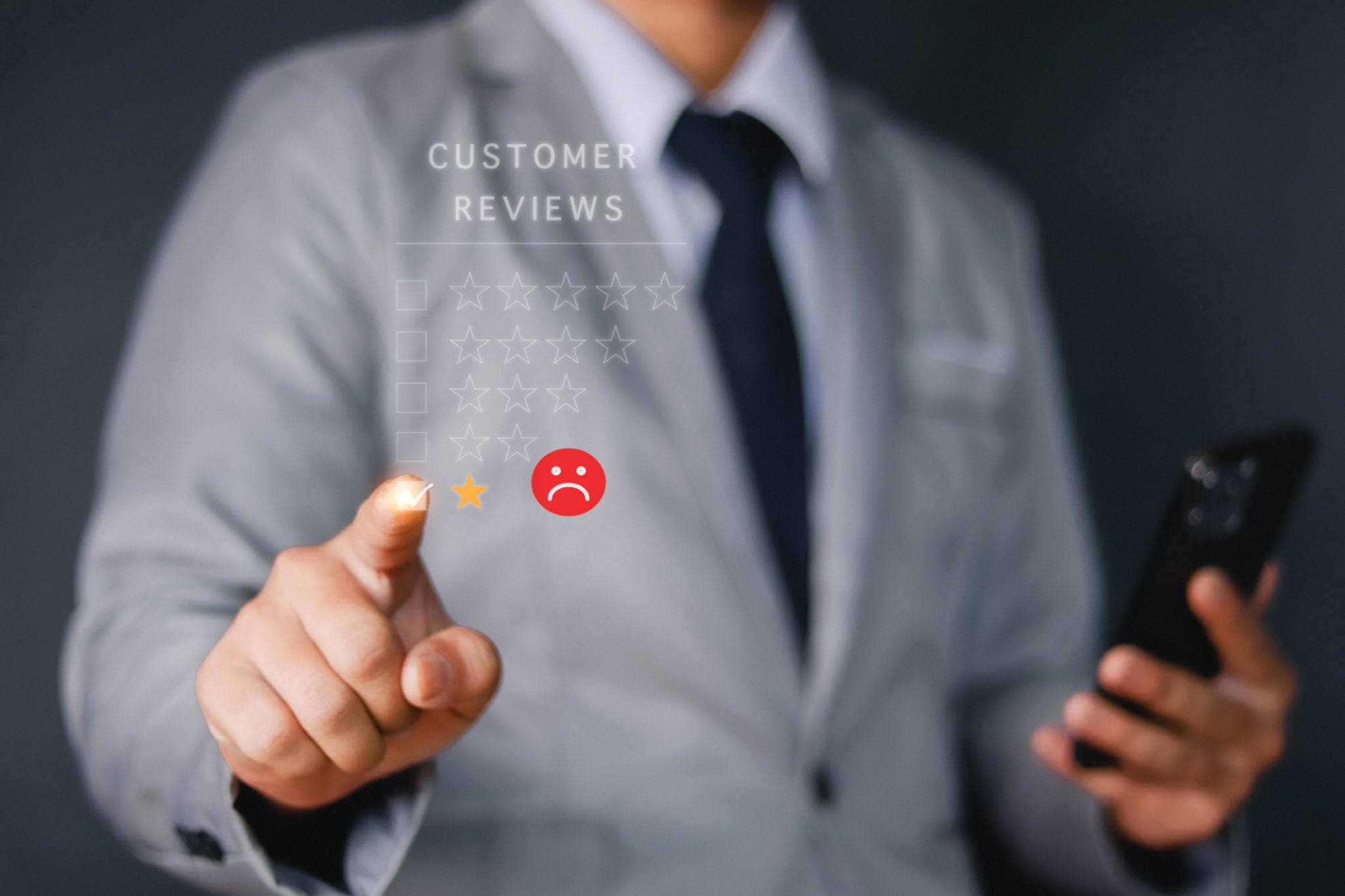
The customer who buys once and never returns is the most expensive customer the brand acquired. The entire acquisition cost the ad spend, the agency fees, the creative production was invested in a relationship that lasted one transaction. At a ₹600 CAC and a single ₹799 purchase with 35% contribution margin, the brand lost approximately ₹320 on this customer after accounting for acquisition cost and margin. This is not an unusual outcome: in most Indian D2C categories, 55 to 70% of customers acquired in any given month do not place a second order within 90 days. Understanding why they do not return specifically and accurately, from customer research rather than from assumption is the insight that determines whether the brand can improve its retention rate from 28% to 38%, which at a ₹600 CAC and ₹2,400 average LTV would mean the difference between destroying value on each acquired customer and generating significant positive return.
The Actual Reasons Customers Do Not Return (From the Data)
The most comprehensive research on D2C customer churn in India consistently reveals that the top reasons customers do not place a second order are: the delivery experience on the first order (cited by 28 to 35% of non-returning customers), the absence of a reason to return no follow-up communication, no loyalty incentive, no new product notification (cited by 25 to 32%), and the product not fully meeting expectations despite being adequate (cited by 20 to 28%). The product being genuinely bad defective, completely wrong for the purpose, or significantly different from the description is cited by only 8 to 14% of non-returning customers.The implication is significant: the majority of customer churn is not caused by product failure and cannot be solved by product improvement. It is caused by a delivery experience that fell below expectation, by the brand's failure to maintain the relationship after the first purchase, and by the absence of a compelling reason for the customer to think of the brand when the next relevant purchase occasion arises. These are operational and marketing problems, not product problems and they have different and more tractable solutions.
The Retention Improvement Actions With the Highest ROI
Fix 1: Post-purchase communication sequence
The customer who receives no communication between placing their order and receiving it has a brand experience defined entirely by waiting. A structured post-purchase sequence order confirmation with product summary, dispatch notification with tracking link, out-for-delivery notification, delivery confirmation, 24-hour post-delivery check-in, and 7-day follow-up with complementary product introduction converts the waiting period from a brand experience vacuum into a brand touchpoint sequence that builds relationship rather than eroding it. Brands that implement this sequence report a 15 to 25 percentage point improvement in 30-day repeat purchase rates for customers who received the full sequence versus those who received only the automated Shopify order confirmation.
Fix 2: First-purchase experience recovery protocol
The 24-hour post-delivery check-in message 'your order has arrived, is everything as expected?' is more than a customer service touchpoint. It is an early warning system for first-purchase dissatisfaction. Customers who received an imperfect product or delivery experience but were proactively asked about it have a significantly higher probability of remaining customers than those whose issue surfaces through a return initiation or a negative review. The resolution cost is lower, the customer relationship is preserved, and the negative review that the dissatisfied customer would have left is converted into either a positive review (if the resolution was excellent) or a neutral one.
Fix 3: Product replenishment and reorder triggers
For consumable categories personal care, food, supplements the customer who bought a 30-day supply in month one is a natural reorder candidate in month four to five. A proactive reorder reminder, sent 3 to 4 weeks before the expected end of supply, converts customers who intended to repurchase but forgot into actual repurchasers. The timing precision matters: a message sent two weeks after the product has run out finds a customer who has already substituted. A message sent three weeks before it runs out finds a customer in the pre-need state where the reorder decision is easiest.
Measuring Retention Improvement: The Cohort Tracking Requirement
- Track the 30-day and 90-day repeat purchase rate for every monthly acquisition cohort, segmented by the post-purchase treatment they received cohorts who received the full communication sequence versus those who did not should show measurably different retention rates within three months of implementation
- Track the repeat purchase rate by first-delivery-experience outcome customers who had on-time delivery versus delayed delivery to quantify the retention impact of logistics performance and justify logistics improvement investment with retention data
- Calculate the LTV impact of each 1-percentage-point improvement in 90-day retention rate: at ₹600 CAC and ₹2,400 LTV, moving from 25% to 26% retention for a cohort of 1,000 monthly customers means 10 additional retained customers × ₹2,400 LTV = ₹24,000 per month in incremental lifetime value from a single percentage point of retention improvement
Related articles
View all → AI
AIThe Future of AI-Powered Digital Marketplaces
Digital marketplaces are evolving from transactional platforms into intelligent commerce ecosystems. AI is reshaping how buyers discover products, how sellers manage operations, and how platforms create value for everyone in the ecosystem and the pace of this transformation is accelerating.
 Customer Support
How AI Can Transform Enterprise Customer Support Systems
Customer support is one of the highest-cost, highest-impact functions in a growing enterprise. AI is transforming it from a cost centre with linear scaling constraints into an intelligent service layer that delivers better customer outcomes at a fraction of the traditional cost per interaction.
 Logistics
The Future of Smart Logistics and Autonomous Delivery Systems
Autonomous vehicles, drone delivery, AI-powered routing, and real-time supply chain visibility are moving from pilot projects to operational infrastructure. The logistics industry is undergoing its most significant transformation since containerisation and the businesses that adapt earliest will define the next era of commerce.