The Founder's Guide to Delegation Without Losing Control
Founders who cannot delegate are founders who cannot scale. Founders who delegate without structure lose control of quality and outcomes. The solution is a delegation system that transfers ownership clearly while maintaining visibility not a choice between doing it yourself and hoping for the best.
Prince Kumar
Author

The transition from founder-doing to founder-leading is the single most difficult transition in the growth of a business. It is also non-optional a founder who is still personally executing operational tasks at ₹1 crore monthly revenue will break before the business does. The failure mode in delegation is almost always the same: the founder delegates the task but retains the decision, so the team member is executing without authority, escalating every exception, and developing no genuine ownership. The founder has created a more expensive version of doing it themselves.
The Delegation Framework
Effective delegation transfers three things simultaneously: the task, the decision authority for that task, and the accountability for the outcome. Transferring the task without the decision authority creates a request queue, not a delegation. Transferring the task and authority without accountability creates activity without responsibility. All three must transfer together for delegation to work.The pre-conditions for effective delegation are: the delegate has the skills to execute, or a defined path to developing them; the success criteria for the task are explicit and measurable; the reporting cadence is defined in advance; and the escalation threshold the specific type of decision that requires founder involvement is agreed before the delegation begins, not discovered through a mistake.
Maintaining Visibility Without Micromanaging
The founder's fear of delegation is not really about trust it is about visibility. The loss of direct control feels like the loss of the ability to course-correct before a problem becomes expensive. The solution is not to maintain direct control. It is to build a visibility system that provides the information needed to course-correct without requiring the founder to be in every decision.A weekly output report from each delegate three to five key metrics and one paragraph on what is working, what is not, and what they need provides the visibility that makes delegation safe. A monthly outcome review that compares actual results against the success criteria agreed at the time of delegation provides the accountability. Between these touchpoints, the founder is not involved in the day-to-day and should not be.
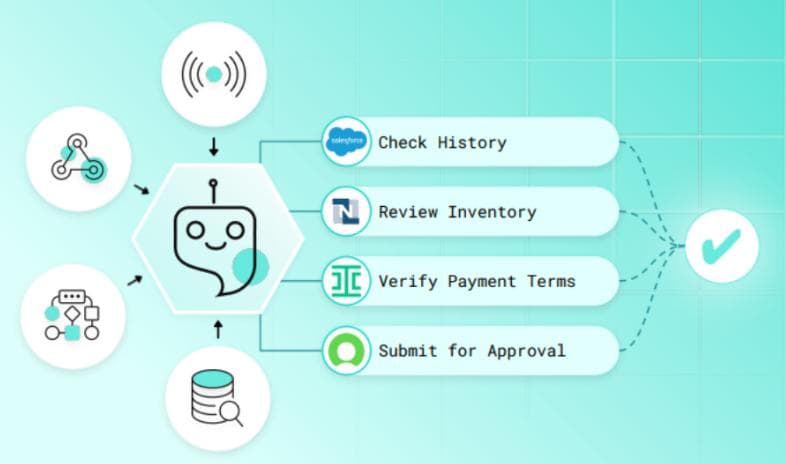
Why AI Execution Systems Will Define the Future of Enterprise Operations
Related articles
View all → Enterprise Management
The Future of Enterprise Management Through AI Execution Layers
Enterprise management is being restructured by AI execution layers intelligent systems that sit between strategic direction and operational action, translating intent into coordinated execution at a speed and consistency that human management hierarchies cannot match. The enterprises that deploy these layers effectively are redefining what management means and what managers do.
 AI Agents
Why AI Agents Will Become Strategic Partners for Enterprise Leaders
The AI agent that flags an anomaly is a tool. The AI agent that investigates the anomaly, assesses its strategic implications, identifies the available responses, and presents a structured recommendation with evidence that is a strategic partner. The transition from AI-as-tool to AI-as-strategic-partner is already beginning in the most advanced enterprise deployments.
 Execution Speed
Why Enterprise Execution Speed Will Define Market Leadership in the AI Era
In the AI era, the fastest-executing enterprise wins. Not the best-strategised, not the most well-resourced the fastest. Execution speed is becoming the primary competitive variable, and the organisations that have built AI-powered execution infrastructure are setting a pace their competitors cannot match.