Why Cloud-Native Architectures Are Replacing Legacy IT Systems
Legacy IT systems are becoming a liability for enterprises trying to compete in a fast-moving digital economy. Cloud-native architectures offer the scalability, resilience, and speed that modern businesses demand and the shift is no longer optional.
Aditya Sharma
Author
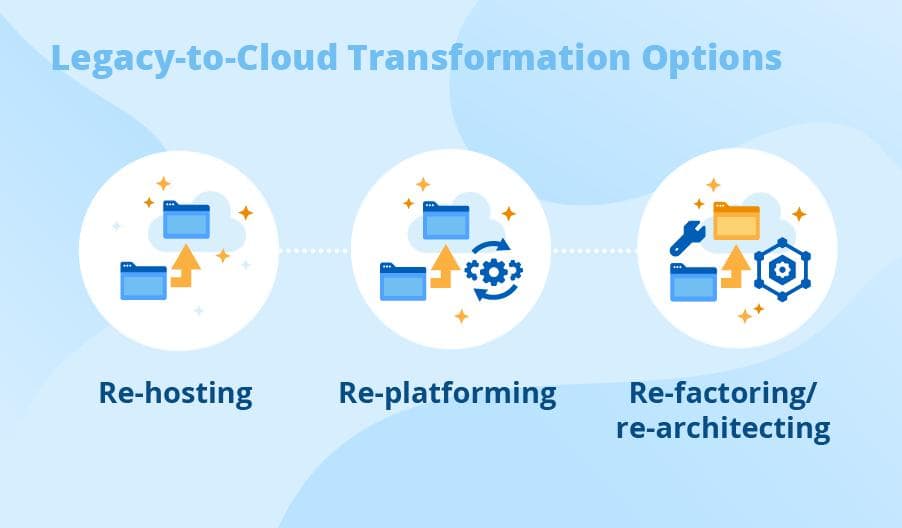
Enterprises that built their technology foundations on legacy systems are discovering that the cost of staying put is now higher than the cost of migrating. Cloud-native architectures built on microservices, containers, and continuous delivery pipelines are not just a technology preference. They are becoming the structural requirement for any enterprise that needs to deploy faster, scale on demand, and reduce the operational overhead of maintaining aging infrastructure. Understanding why this shift is accelerating, and what it means for enterprise technology strategy, is essential for every CTO, IT leader, and founder making infrastructure decisions today.
Why Legacy Systems Are Losing Ground
Legacy IT systems were designed for a different era one where software was deployed quarterly, infrastructure was provisioned in weeks, and the primary concern was stability over speed. The enterprises that built on these systems now face a compounding problem: the cost of maintaining legacy infrastructure grows every year while the systems become less capable of supporting modern workloads like real-time data processing, API-first integrations, and mobile-first user experiences.Cloud-native architectures solve the core constraint of legacy systems by decoupling services, enabling independent deployment, and shifting infrastructure management to platforms optimised for scale. The result is faster release cycles, lower operational risk, and the ability to scale specific components of the system without rebuilding the entire stack.
The Four Pillars of Cloud-Native Advantage
Pillar 1: Scalability on demand
Legacy systems require capacity planning months in advance. Cloud-native architectures scale automatically in response to real demand meaning enterprises pay for what they use and never under-provision during peak periods. For businesses with seasonal demand spikes or rapid user growth, this is a structural cost and reliability advantage.
Pillar 2: Faster deployment cycles
Cloud-native systems enable continuous integration and continuous delivery pipelines that allow engineering teams to deploy updates in hours rather than weeks. This directly impacts the speed at which enterprises can respond to market changes, fix production issues, and ship new features to customers.
Pillar 3: Resilience and fault isolation
In a monolithic legacy system, a single failure can bring down the entire application. Microservices-based cloud-native architectures isolate failures to individual services, ensuring that a problem in one component does not cascade across the system. This resilience is a direct operational advantage for enterprises with uptime-sensitive workloads.
Pillar 4: Ecosystem and integration velocity
Cloud-native platforms integrate natively with the modern software ecosystem from AI and ML services to data pipelines, security tools, and third-party APIs. Legacy systems require expensive custom middleware to achieve the same integrations. For enterprises building data-driven products or AI-powered services, cloud-native is the only architecture that supports the integration velocity required.
The Migration Diagnostic: Key Questions for Enterprise IT Leaders
- What percentage of your current IT budget is spent on maintaining existing systems versus building new capabilities? Above 60% on maintenance signals a legacy debt problem that will worsen without intervention.
- How long does it take your engineering team to deploy a production update? Above two weeks indicates a deployment pipeline that is constraining your competitive responsiveness.
- How many of your core systems have documented APIs that can be consumed by new services? Low API coverage means your architecture cannot support modern integration requirements.
- What is your current infrastructure cost per unit of workload, and how does it compare to equivalent cloud-native deployments? The gap is often 30 to 50% in favour of cloud-native at scale.
- Does your current architecture support independent scaling of individual services? If not, you are paying for full-system capacity even when only a subset of services requires scale.

Related articles
View all → AI-Native Infrastructure
Why Global Enterprises Need AI-Native Operational Infrastructure
The operational infrastructure that global enterprises built in the pre-AI era was designed for a different competitive environment. Enterprises that try to layer AI on top of legacy operational infrastructure will capture a fraction of AI's potential. The ones that rebuild their operational foundations as AI-native will gain structural advantages their competitors cannot close.
 Agentic AI
The Evolution of Enterprise Operations in the Age of Agentic AI
Agentic AI AI systems that pursue goals, take actions, and adapt to feedback without requiring step-by-step human instruction is not an incremental evolution of enterprise automation. It is a structural shift in what operational systems can do and what human operators are for.
 AI Execution Layer
Why Enterprise AI Needs an Execution Layer, Not Just Analytics
The enterprise AI market has produced an extraordinary volume of analytical capability dashboards, predictions, anomaly detections, and recommendations and an insufficient volume of execution capability. The enterprises that are capturing the full value of their AI investment are the ones that have recognised this imbalance and are building the execution layer that converts AI insight into AI-driven action.