Why Feedback Systems Build Better Businesses
The business that learns from every execution is compounding its capability with every cycle. The business that executes without systematic feedback is running in place making the same errors, experiencing the same inefficiencies, and missing the same opportunities regardless of how hard the team works.
Manroze
Author
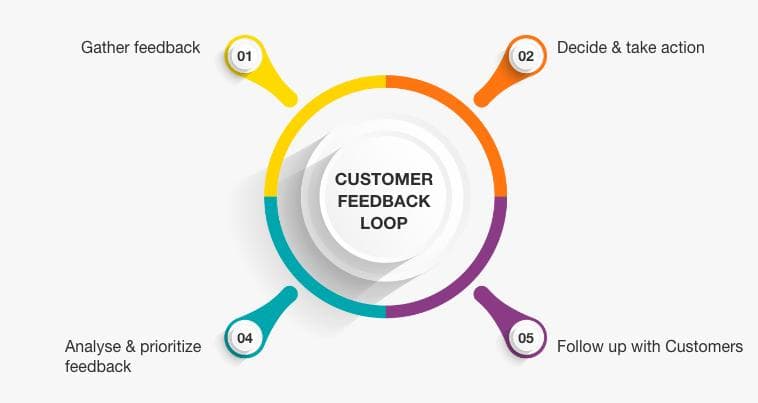
A feedback system is the organisational mechanism that converts outcomes into improvement. Every business produces outcomes deliveries completed, orders returned, campaigns performing, customers retained or churned, suppliers delivering on time or late. The feedback system is the structure that systematically examines those outcomes, identifies the causal patterns, and routes the insight to the decision-makers who can act on it. Without a feedback system, the same outcome occurs repeatedly: the supplier that was late in January is late in March and late in May, because the January late delivery was managed as an individual event rather than as a signal about the supplier relationship that required a formal response. With a feedback system, the January late delivery triggers a supplier performance conversation and a qualification requirement for the backup supplier, so that the March late delivery is caught by the backup system and the May late delivery does not occur.
The Four Feedback Loops Every D2C Brand Needs Running
Loop one: customer experience to product and operation. The systematic analysis of return reasons, review content, customer service themes, and post-delivery feedback, converted into specific product improvements and operational changes on a monthly cadence. This loop closes when a return reason pattern (description mismatch on a specific SKU) reaches the marketing team and produces a product page update within two weeks. It fails to close when the return data is collected but never analysed, or analysed but the insight never reaches the person who can change the product page.Loop two: operational metrics to process improvement. The systematic tracking of dispatch accuracy, inventory accuracy, settlement completeness, and NDR rate, with monthly root cause analysis for every metric below the standard and a named improvement initiative for each root cause identified. This loop closes when the dispatch accuracy dip in a specific week is traced to a new warehouse team member's onboarding gap and produces a structured training intervention. Loop three: financial outcomes to investment decisions. The systematic comparison of actual unit economics (CAC, contribution margin, LTV) against the assumptions in the investment model, updated monthly, with specific threshold triggers for pausing or redirecting marketing investment when actuals diverge negatively from assumptions.Loop four: market signals to strategic response. The systematic monitoring of competitor activity, category search volume trends, and channel performance shifts, with a quarterly strategic review that assesses whether the business's current direction remains the correct response to the current market context. This loop closes when a competitor's new product launch is systematically evaluated for its impact on the brand's category position and produces a strategic response decision within 30 days not when it is noted in a Slack message and never formally evaluated.
Building the Feedback Infrastructure
- Assign a named owner for each feedback loop the person responsible for collecting the data, conducting the analysis, and routing the findings to the relevant decision-maker within a defined cadence
- Set the feedback cadence for each loop explicitly: customer experience feedback monthly, operational metrics feedback weekly, financial outcomes feedback monthly, market signals feedback quarterly
- Create a standard template for each feedback loop's output a one-page summary with: what happened, why it happened, what it means, and what specific action is recommended that routes to the relevant decision-maker in a format designed for decision rather than for reading
- Track the action completion rate for feedback-generated recommendations the proportion of recommendations from feedback analysis that produce a named action, a named owner, and a completion date below 60% action rate indicates the feedback loop is producing insight but not improving the business
- Review the quality of each feedback loop annually is the data collected capturing the most important signals, is the analysis identifying the most relevant root causes, is the routing reaching the decision-makers who can act on the insights? Feedback systems that were well-designed for the business at ₹30 lakh monthly revenue may need redesign for the business at ₹1 crore monthly revenue

Why Growth Feels Good but Breaks Your Operations
Related articles
View all → Autonomous Coordination
The Rise of Autonomous Enterprise Coordination Platforms
Enterprise coordination the alignment of people, processes, information, and resources across organisational boundaries has always been expensive, slow, and error-prone when managed through human intermediaries alone. Autonomous coordination platforms powered by AI are replacing the coordination overhead of large organisations with intelligent systems that synchronise the enterprise continuously and without manual intervention.
 AI Agents
How AI Agents Are Transforming Enterprise Workflow Intelligence
AI agents autonomous systems that perceive their environment, reason about objectives, and take action across enterprise workflows are moving from research concept to operational reality. The enterprises deploying AI agents at scale are discovering that workflow intelligence is not just about automation it is about creating organisational capability that compounds with every cycle.
 Enterprise Management
The Future of Enterprise Management Through AI Execution Layers
Enterprise management is being restructured by AI execution layers intelligent systems that sit between strategic direction and operational action, translating intent into coordinated execution at a speed and consistency that human management hierarchies cannot match. The enterprises that deploy these layers effectively are redefining what management means and what managers do.