Why Founders Must Think Like Systems Designers
The founder who solves problems is always behind the business. The founder who designs systems that prevent problems is always ahead of it. Systems design is not an engineering discipline it is a management philosophy that asks 'what structure would make this outcome happen reliably?' rather than 'how do I fix this outcome?'
Prince Kumar
Author

The transition from founder-as-problem-solver to founder-as-systems-designer is the most important professional development available to any scaling business founder. Problem solving is reactive: a problem occurs, the founder applies judgment to resolve it, the resolution is personal and specific to the instance. Systems design is proactive: a class of problems is identified, the system that generates it is understood, and a structural change is made that prevents the entire class from occurring rather than resolving individual instances. The compound value of systems design over problem solving is enormous the system designed once to prevent a class of problems prevents every future instance of that class at zero additional cost. The problem solved once prevents one instance at the cost of the founder's time, with the next instance arriving shortly.
The Systems Designer's Mental Model
The systems designer's mental model asks a different set of questions than the problem solver's. Where the problem solver asks 'why did this happen and how do I fix it?', the systems designer asks 'what structure produced this outcome, and what different structure would produce a different outcome?' The distinction produces different interventions. The problem solver who identifies that a high-velocity SKU stocked out last Tuesday will increase the safety stock for that SKU solving the instance. The systems designer who identifies the same event will ask: what in the demand planning process allowed the stockout to occur? Was the reorder threshold too low? Was the velocity calculation using the wrong time window? Was the alert system not triggering for this SKU category? Was the reorder authority not clearly assigned? Each answer identifies a different structural change that prevents not just the next stockout on this SKU but the class of stockouts generated by that specific structural gap.The systems designer's mental model produces a fundamentally different approach to business problem management: instead of a growing backlog of individual problems requiring the founder's personal attention, the business has a set of systems that handle the problem classes automatically, with individual exceptions escalating only when the system cannot handle them.
Developing the Systems Design Practice
Systems thinking develops through deliberate practice of two habits. Habit one: for every significant operational problem that requires founder attention, trace the causal chain backward three to four levels before taking action. The problem is the surface manifestation. The system producing it is three to four levels deeper. A stockout is the surface. The incorrect reorder quantity is one level deeper. The velocity calculation methodology is two levels deeper. The absence of a velocity trend adjustment for seasonal demand uplift is three levels deeper. The system design intervention that prevents the class of problems targets the third or fourth level not the surface manifestation.Habit two: after every significant operational fix, document the system change that was made and the problem class it prevents. Over six months of consistently applying this habit, the founder develops a reference library of system design patterns the structural changes that prevent specific classes of problems that can be applied to new contexts faster and with more confidence than starting from scratch each time. The systems designer's practice is a compounding capability: each system designed makes the next design faster and better.
Related articles
View all → Autonomous Coordination
The Rise of Autonomous Enterprise Coordination Platforms
Enterprise coordination the alignment of people, processes, information, and resources across organisational boundaries has always been expensive, slow, and error-prone when managed through human intermediaries alone. Autonomous coordination platforms powered by AI are replacing the coordination overhead of large organisations with intelligent systems that synchronise the enterprise continuously and without manual intervention.
 AI Agents
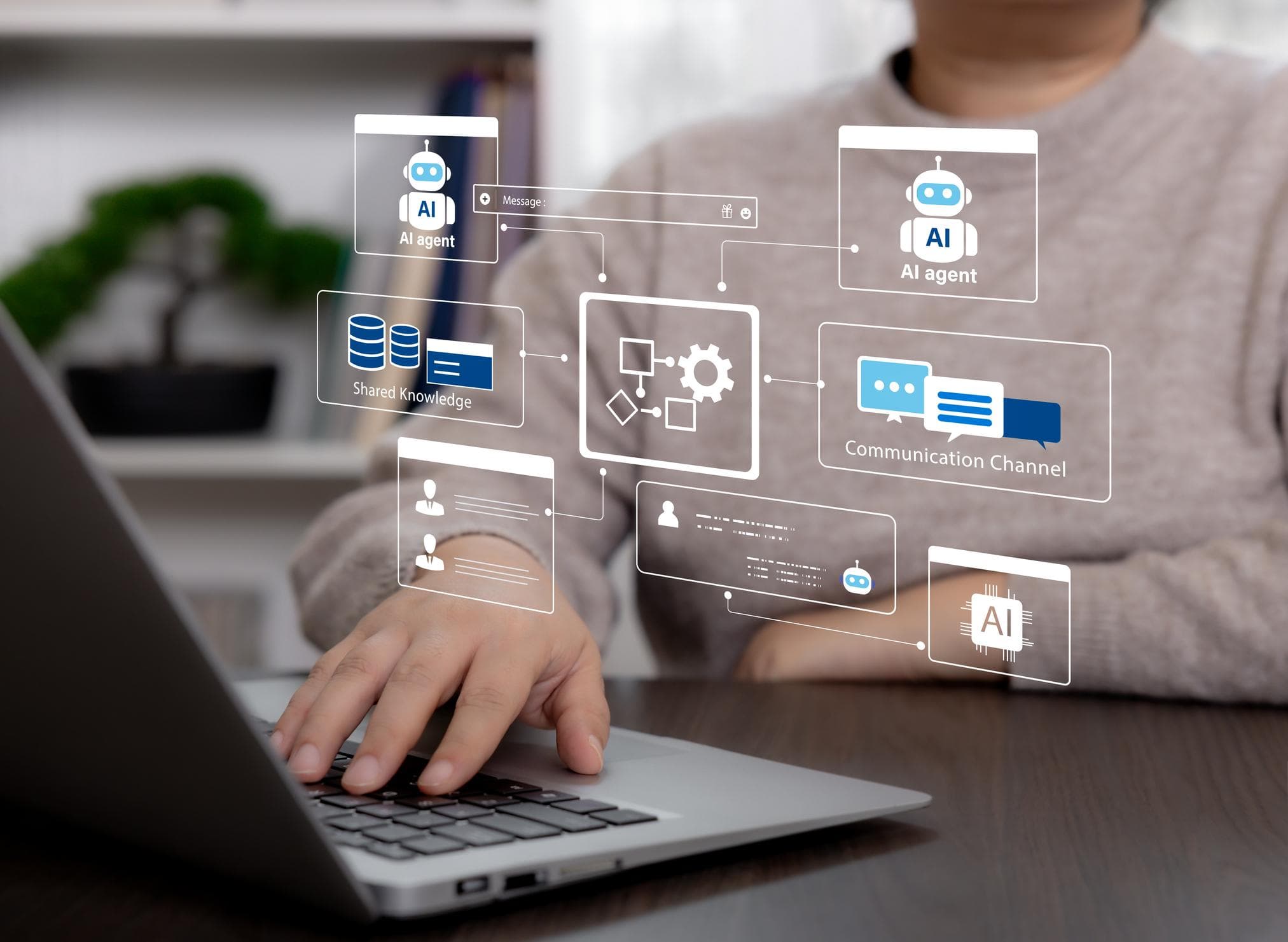
How AI Agents Are Transforming Enterprise Workflow Intelligence
AI agents autonomous systems that perceive their environment, reason about objectives, and take action across enterprise workflows are moving from research concept to operational reality. The enterprises deploying AI agents at scale are discovering that workflow intelligence is not just about automation it is about creating organisational capability that compounds with every cycle.
 Enterprise Management
The Future of Enterprise Management Through AI Execution Layers
Enterprise management is being restructured by AI execution layers intelligent systems that sit between strategic direction and operational action, translating intent into coordinated execution at a speed and consistency that human management hierarchies cannot match. The enterprises that deploy these layers effectively are redefining what management means and what managers do.