Why Production Capacity Limits Your Revenue Ceiling
The revenue ceiling of a manufacturing-linked business is set not by market demand or marketing capability but by the production system's maximum reliable output. Most founders discover this ceiling when they hit it at the worst possible moment, during a growth phase they cannot sustain.
Manthan Sharma
Author
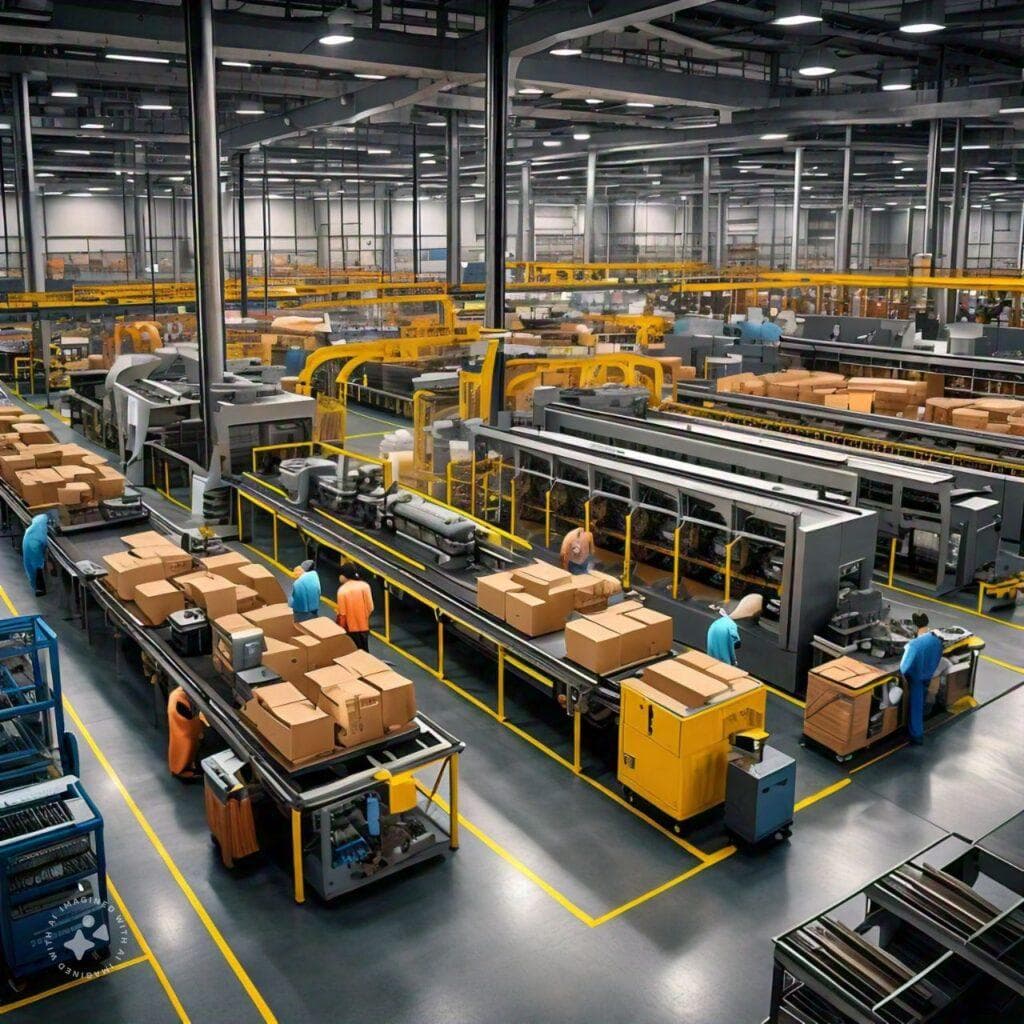
The demand-supply equation in a manufacturing-linked business has two sides, and most founders spend 90% of their strategic energy on the demand side marketing, customer acquisition, channel expansion, product development. The supply side the manufacturing capacity, the raw material supply infrastructure, the quality management system, and the production planning capability receives attention primarily when it fails. This asymmetry produces a characteristic growth pattern: the business scales effectively on the demand side, accumulating orders and marketing momentum, until the supply side reveals its constraint the contract manufacturer who cannot deliver more than 8,000 units per month without a capacity investment, the raw material supplier who has a 45-day lead time that cannot compress when demand spikes, the quality inspection process that cannot review more than 500 units per day without a quality degradation that generates unacceptable return rates.
The Three Production Constraints That Set Revenue Ceilings
Constraint 1: Contract manufacturer capacity and priority position
Contract manufacturers allocate production capacity across multiple clients. The brand that represents 15% of a contract manufacturer's revenue has significantly less priority than the brand representing 40%. When both request capacity increases simultaneously as typically happens during a festive season or a viral demand spike the higher-priority client gets the capacity. The lower-priority brand is told the next available slot is three to five weeks away. At that point, the brand has two options: accept the delayed supply (with the revenue and customer experience cost of the stockout it produces) or find an alternative manufacturer (with the lead time, quality risk, and transition cost that qualification requires). Both options are expensive. Neither is available quickly. The structural solution is negotiating priority status with the contract manufacturer by committing minimum annual volume formalising the relationship so that capacity allocation is contracted rather than informal.
Constraint 2: Raw material supply lead time and supplier capacity
The production capacity ceiling is often not at the manufacturing stage but at the raw material procurement stage. An active ingredient available from only one supplier in India, a packaging component with a 35-day lead time that cannot be compressed, a proprietary fragrance formula that requires a 60-day production cycle each of these creates a supply lead time constraint that translates directly into a production planning constraint. The brand cannot produce faster than the slowest critical input allows, regardless of available manufacturing capacity. Mapping the critical path of each SKU's supply chain identifying the input with the longest lead time and the most constrained supply reveals the specific bottleneck that limits production acceleration.
Constraint 3: Quality management throughput
Quality inspection has a throughput rate the maximum number of units that can be inspected to the required standard per day with the available personnel and equipment. In artisan or precision categories, this rate may be significantly lower than the production rate creating the impossible situation where the manufacturing line can produce 2,000 units per day but the quality team can only inspect 800 units per day to the required standard. The constraint is not visible until the demand pressure creates the temptation to ship uninspected goods at which point it produces either a quality failure at the customer level or an inventory backup at the inspection stage.
Identifying and Planning for Your Revenue Ceiling
The revenue ceiling calculation for a manufacturing-linked business: identify the maximum reliable monthly output of each production constraint (contract manufacturer capacity, critical raw material delivery rate, quality inspection throughput), express each in revenue terms (maximum units × selling price), and the binding constraint the lowest of the three figures is the revenue ceiling at current infrastructure. For a brand with a contract manufacturer limited to 10,000 units per month, a critical raw material arriving at a rate that supports 12,000 units per month, and a quality team that can inspect 9,000 units per month, the effective revenue ceiling is 9,000 units × average selling price.The strategic plan for raising the ceiling: each constraint requires a different investment. Contract manufacturer capacity requires either a volume commitment that negotiates priority or a qualification of a second manufacturer. Raw material supply requires either a larger buffer stock position (accepting the inventory carrying cost) or qualification of a second raw material supplier. Quality inspection throughput requires either additional quality personnel, additional inspection equipment, or a process redesign that allows higher throughput without quality compromise. The lead time for each investment typically runs 8 to 16 weeks which means the capacity expansion plan must be initiated well before the revenue ceiling is reached, not when the ceiling is already constraining growth.

Related articles
View all → Autonomous Coordination
The Rise of Autonomous Enterprise Coordination Platforms
Enterprise coordination the alignment of people, processes, information, and resources across organisational boundaries has always been expensive, slow, and error-prone when managed through human intermediaries alone. Autonomous coordination platforms powered by AI are replacing the coordination overhead of large organisations with intelligent systems that synchronise the enterprise continuously and without manual intervention.
 AI Agents
How AI Agents Are Transforming Enterprise Workflow Intelligence
AI agents autonomous systems that perceive their environment, reason about objectives, and take action across enterprise workflows are moving from research concept to operational reality. The enterprises deploying AI agents at scale are discovering that workflow intelligence is not just about automation it is about creating organisational capability that compounds with every cycle.
 Enterprise Management
The Future of Enterprise Management Through AI Execution Layers
Enterprise management is being restructured by AI execution layers intelligent systems that sit between strategic direction and operational action, translating intent into coordinated execution at a speed and consistency that human management hierarchies cannot match. The enterprises that deploy these layers effectively are redefining what management means and what managers do.