Why Profit Margins Shrink as You Grow (And How to Fix It)
The business earning 18% net margin at ₹20 lakh monthly revenue that earns 8% net margin at ₹70 lakh monthly revenue has not become less efficient. It has allowed a set of costs to scale faster than its gross margin and the fix is specific, actionable, and almost always possible without slowing the growth.
Prince Kumar
Author
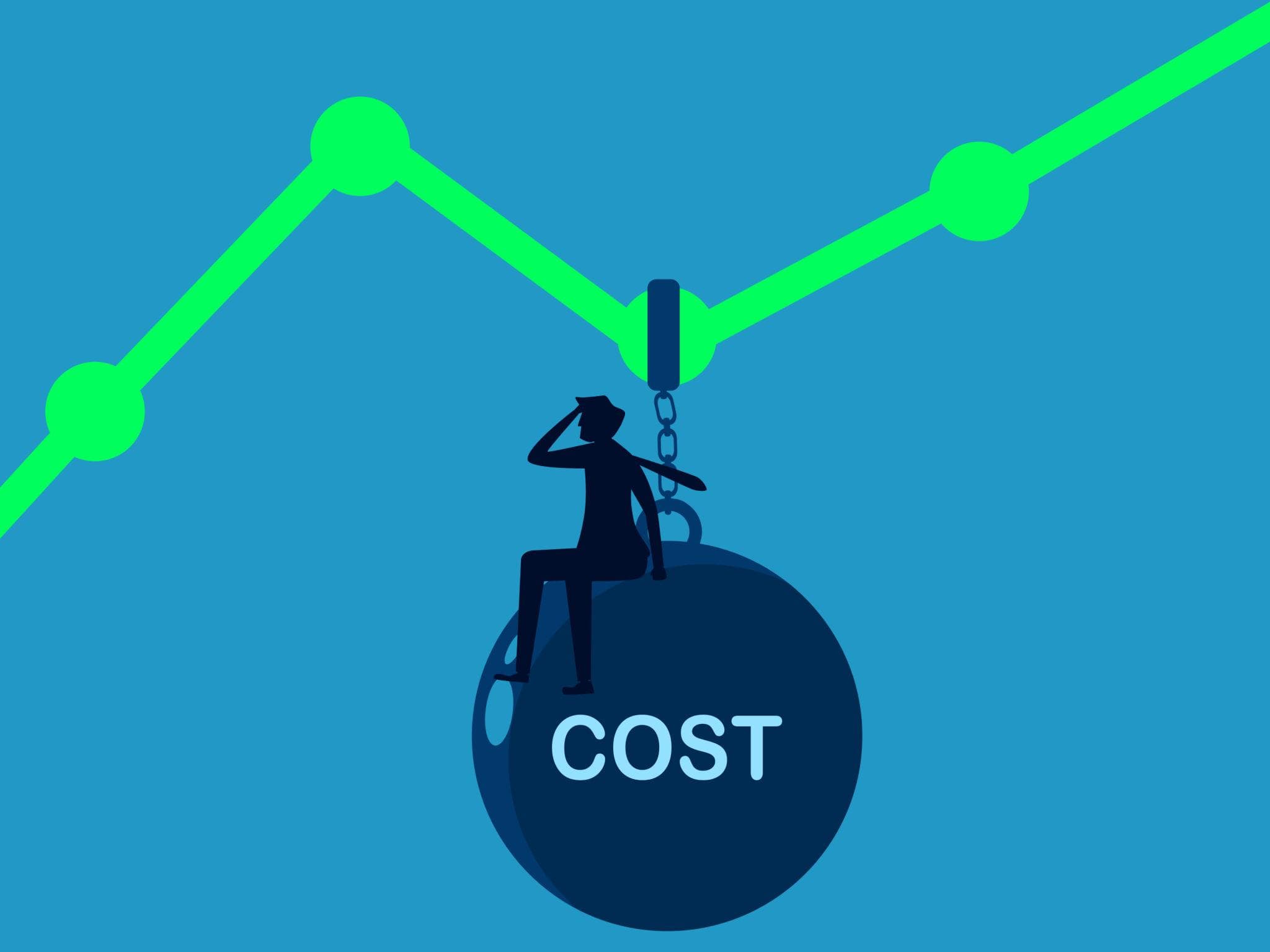
Margin compression during growth is so common that most founders accept it as inevitable a necessary cost of scaling that resolves itself when revenue reaches a level where fixed costs are spread across sufficient volume. Sometimes this is true: the fixed cost leverage effect eventually improves unit economics as scale increases. More often, it is a rationalisation the margin is compressing not because of fixed cost dilution that will reverse at scale, but because of specific, addressable structural problems in the cost model that will continue to compress margin indefinitely unless they are identified and fixed. The distinction is critical: a founder who believes margin compression is a temporary scaling cost will not act on the specific interventions that could recover 5 to 10 margin points. A founder who understands the specific causes of their margin compression will.
The Five Mechanisms of Margin Compression During Growth
Mechanism 1: CAC inflation in saturating audience
As documented in the growth plateau article, scaling ad spend in a given audience reaches the point of diminishing returns where each additional rupee of spend acquires a less receptive customer at a higher CAC. A brand that scales from ₹5 lakh to ₹20 lakh monthly ad spend typically sees its CAC increase 30 to 50% over the same period. If the LTV is stable, this CAC inflation represents a proportional decline in the marketing efficiency component of the margin. The fix: audience expansion (new channels, new geographies, new customer segments) that accesses receptive audiences at the original acquisition cost, rather than continuing to push spend into a saturating audience at escalating CAC.
Mechanism 2: Fixed cost structure that grew ahead of revenue
The warehouse lease signed for projected revenue, the team hired for the growth plan rather than the current performance, the technology subscriptions added in anticipation of scale all represent fixed cost commitments that compress margin when the revenue they were planned for arrives later than expected, or at a lower level. The fix: match fixed cost commitment timing to demonstrated revenue performance, not to projections. Add the next tranche of fixed costs when revenue has sustained at the level that justifies them for two months, not when the revenue model projects they will be needed.
Mechanism 3: Return rate creep at broader market penetration
As the brand's marketing reaches audiences beyond the core early adopter segment the segment that found the product, loved it immediately, and had the lowest return rate the return rate of acquired customers increases because each successive audience expansion brings in customers with less precise product-market fit. A 12% return rate on a tightly targeted early adopter audience becomes an 18% rate as the brand scales to broader demographics. At ₹50 lakh monthly revenue, this 6-point return rate increase costs approximately ₹1.5 to ₹2.5 lakh per month in additional handling and reverse logistics costs. The fix: track return rate by acquisition cohort and channel, and set channel-level return rate thresholds that trigger targeting refinement before the return rate reaches the level where it materially compresses margin.
Mechanism 4: Operational inefficiency costs that grow faster than volume
The operational inefficiencies that were proportionally small at lower volume the dispatch error rate, the inventory count inaccuracy, the settlement reconciliation gap stay at the same rate while the absolute cost grows with volume. A 0.8% dispatch error rate on 500 monthly orders costs ₹1,200 per month in direct costs. The same 0.8% rate on 3,000 monthly orders costs ₹7,200 per month. The rate is unchanged; the cost has grown 6x. The fix: build the process controls and automation that reduce the rate not accept it as stable because the rate is consistent before the volume reaches the level where the stable rate produces an unacceptable absolute cost.
Mechanism 5: Working capital cost increasing as inventory and settlement scale
The interest cost on working capital either explicit (interest on a CC facility or inventory financing) or implicit (the opportunity cost of capital tied up in inventory and settlement receivables) grows proportionally with the business's working capital requirement. A brand growing revenue 3x grows its inventory requirement, its in-transit goods value, and its outstanding settlement receivables by approximately 3x and the carrying cost of this working capital grows 3x simultaneously. If the brand's net margin did not include an explicit working capital cost at lower scale (because the founder was self-funding from personal capital), this cost appears as a margin compressor as the business professionalises its financial management.
The Margin Recovery Plan
- Run the true contribution margin calculation monthly and track the trend if contribution margin per order is declining, identify which specific cost category is increasing as a percentage of revenue and address that category specifically
- Model the unit economics at 2x current revenue before committing to each growth investment the growth investment that compresses margin further is not worth making until the margin is restored
- Set a minimum contribution margin floor as a scaling criterion do not increase marketing spend in any month where the trailing 4-week contribution margin per order is below the floor
- Review the return rate by acquisition channel quarterly and set channel-level thresholds channels with return rates above 20% require targeting refinement before additional investment
- Formalise the working capital cost in the unit economics model include the cost of capital tied up in inventory and settlement receivables as a per-order cost so that it is visible in the margin calculation rather than hidden in the balance sheet

Related articles
View all → Growth
The Future of Enterprise Growth Through AI Innovation
AI is not just improving the efficiency of existing growth strategies it is enabling entirely new growth models. The enterprises that understand how to use AI as a growth driver, not just a cost reducer, are accessing markets, customer segments, and revenue streams that were previously out of reach.
 Scalability
AI-Powered Systems for Enterprise Scalability and Resilience
The ability to scale without proportional cost increases and to absorb shocks without operational failure is what separates enterprises that grow sustainably from those that grow into crisis. AI-powered systems are the infrastructure through which scalability and resilience are built.
 AI
AIThe Future of AI-Powered Digital Marketplaces
Digital marketplaces are evolving from transactional platforms into intelligent commerce ecosystems. AI is reshaping how buyers discover products, how sellers manage operations, and how platforms create value for everyone in the ecosystem and the pace of this transformation is accelerating.