Why Quality Control Breaks During Scaling
Quality control at small scale is sustained by personal attention. Quality control at mass scale is sustained by documented systems, statistical sampling, and accountability structures that do not depend on any single person's presence. The transition between the two is when most consumer brands experience their first quality crisis.
Aditya Sharma
Author
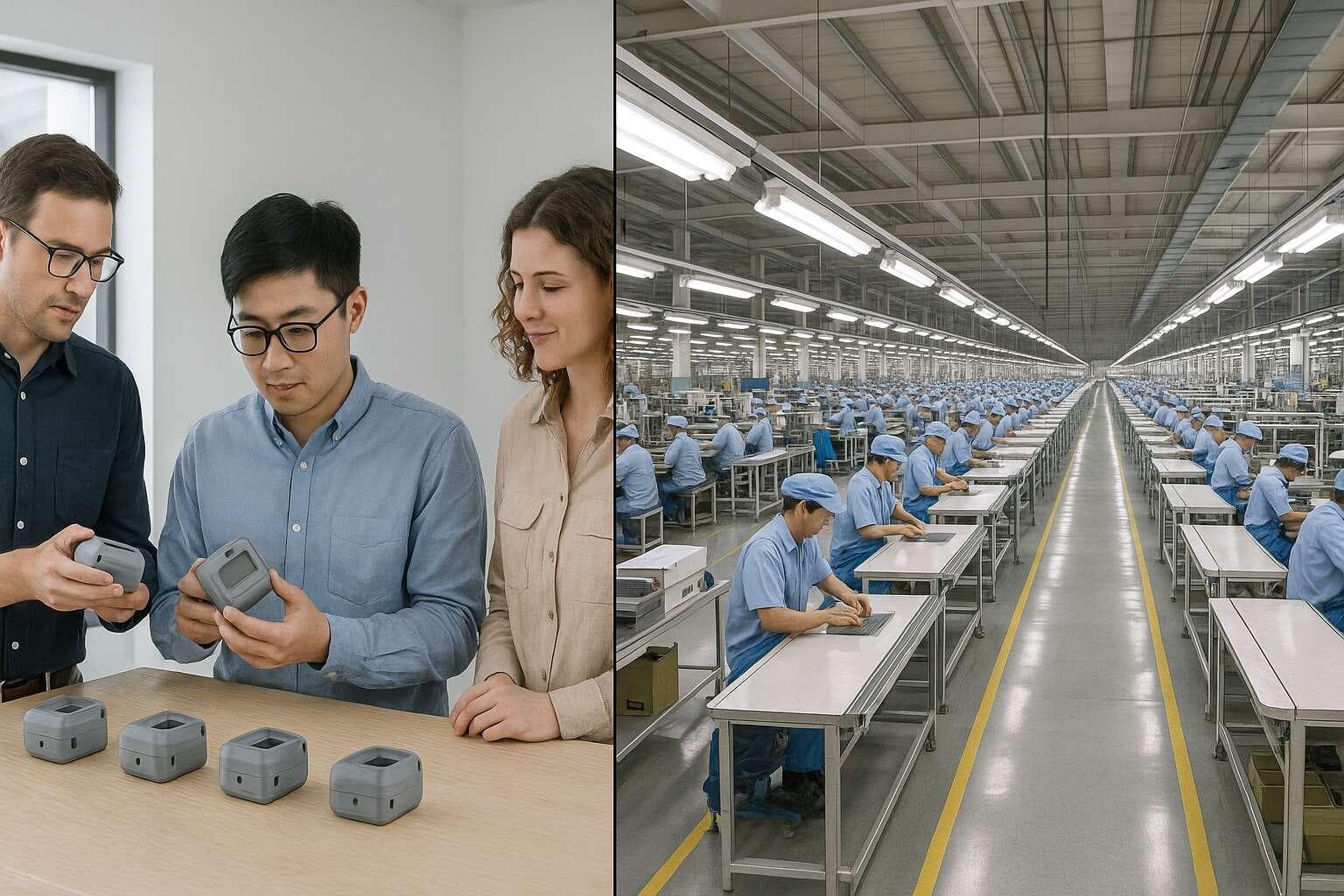
The consumer brand that has maintained excellent product quality through its first 18 months of operation and then experiences a sudden quality decline in month 22 returns spiking, marketplace reviews declining, customer complaints increasing is almost always experiencing the quality control transition failure. The brand grew from 400 monthly units to 2,500 monthly units, and the quality management system that was adequate at 400 units the production manager's personal attention, the informal visual inspection, the quality standard that lived in the founder's judgment did not scale to 2,500 units. The quality was not deprioritised. The system was not upgraded. The volume outgrew the system's capacity.
The Five Points Where Quality Control Breaks Under Scale
Break 1: Incoming raw material inspection
At small scale, incoming raw materials from a familiar supplier are spot-checked informally a visual inspection, a quick performance test, the production manager's experienced assessment. At mass scale, the same supplier is delivering 10x the volume, drawn from a larger and more variable source pool. Informal spot-checking on 10x the volume requires 10x the inspection time which is not available. The result: the inspection is either compressed (fewer samples per batch, faster assessment) or skipped entirely under production pressure. Raw material variability that was caught by the informal inspection at small scale passes through unchecked at mass scale and produces the quality variance that surfaces as customer returns.
Break 2: In-process quality checks
In-process quality checks the monitoring of quality at each stage of the production process rather than only at the end are the most effective form of quality control because they catch problems at the point where rework is least expensive. At small scale, the production manager observes the entire process and intervenes immediately when something is off. At mass scale, the production manager oversees multiple work stations simultaneously and the real-time observation that was the quality control mechanism is no longer possible across the full production volume.
Break 3: Finished goods inspection sampling rate
Finished goods inspection the quality check on completed units before they are released for dispatch requires a statistically valid sampling rate to detect quality issues reliably. At 500 units per month, a 20% sampling rate (100 units) is practical. At 3,000 units per month, the same 20% sampling rate requires inspecting 600 units 6x the prior inspection volume. Under production pressure, the sampling rate typically declines to maintain throughput and defect batches that would have been caught by the prior sampling rate pass through to the customer.
Break 4: Specification documentation
The product specifications that determine what 'good quality' means colour, texture, dimensions, performance characteristics exist in the production manager's knowledge at small scale. At mass scale, when a second production shift is added or a second contract manufacturer is qualified to share the volume, those specifications must exist in written, measurable form that can be communicated to people who have no prior relationship with the product. The first multi-shift or multi-manufacturer batch typically reveals quality variance that would never have occurred when one person who knew the product deeply was supervising the entire production volume.
Break 5: Traceability for defect investigation
When a quality issue reaches the customer a batch-level defect that generates a cluster of returns and complaints the ability to identify which production batch, which raw material lot, and which production date is responsible determines how quickly the issue can be contained. At small scale, this traceability exists informally the production manager knows every batch. At mass scale without a formal batch tracking system, the investigation of a quality issue may take weeks to trace to its root cause during which further affected units may be dispatched and the brand damage continues to accumulate.
Building a Quality System That Scales
- Document product specifications in measurable form before any production volume increase every characteristic that defines acceptable quality must be expressed as a number, a range, or a pass/fail criterion that can be assessed by any trained inspector
- Implement statistical process control (SPC) for the highest-risk quality parameters tracking quality measurements over time and flagging when the process is showing variance trends before the variance produces defective output
- Establish batch traceability every production batch assigned a unique batch code, linked to the raw material lot numbers used in that batch, the production date and shift, and the finished goods inspection record so that any quality issue can be traced to its source within hours
- Set a minimum sampling rate for finished goods inspection and make it a non-negotiable production release criterion no batch is released for dispatch until the minimum sample has been inspected and passed, regardless of production schedule pressure

The Cost of Slow Decision Cycles
Related articles
View all → Autonomous Coordination
The Rise of Autonomous Enterprise Coordination Platforms
Enterprise coordination the alignment of people, processes, information, and resources across organisational boundaries has always been expensive, slow, and error-prone when managed through human intermediaries alone. Autonomous coordination platforms powered by AI are replacing the coordination overhead of large organisations with intelligent systems that synchronise the enterprise continuously and without manual intervention.
 AI Agents
How AI Agents Are Transforming Enterprise Workflow Intelligence
AI agents autonomous systems that perceive their environment, reason about objectives, and take action across enterprise workflows are moving from research concept to operational reality. The enterprises deploying AI agents at scale are discovering that workflow intelligence is not just about automation it is about creating organisational capability that compounds with every cycle.
 Enterprise Management
The Future of Enterprise Management Through AI Execution Layers
Enterprise management is being restructured by AI execution layers intelligent systems that sit between strategic direction and operational action, translating intent into coordinated execution at a speed and consistency that human management hierarchies cannot match. The enterprises that deploy these layers effectively are redefining what management means and what managers do.