Why Your Pricing Strategy Might Be Hurting Growth
The founder who set the price based on a cost-plus calculation at launch and has not revisited it in 18 months may be leaving ₹80 to ₹120 per order in unrealised margin or may be positioned above the threshold where a significant segment of potential customers self-select out before the add-to-cart. Either way, the pricing strategy is working against the growth objective.
Prince Kumar
Author
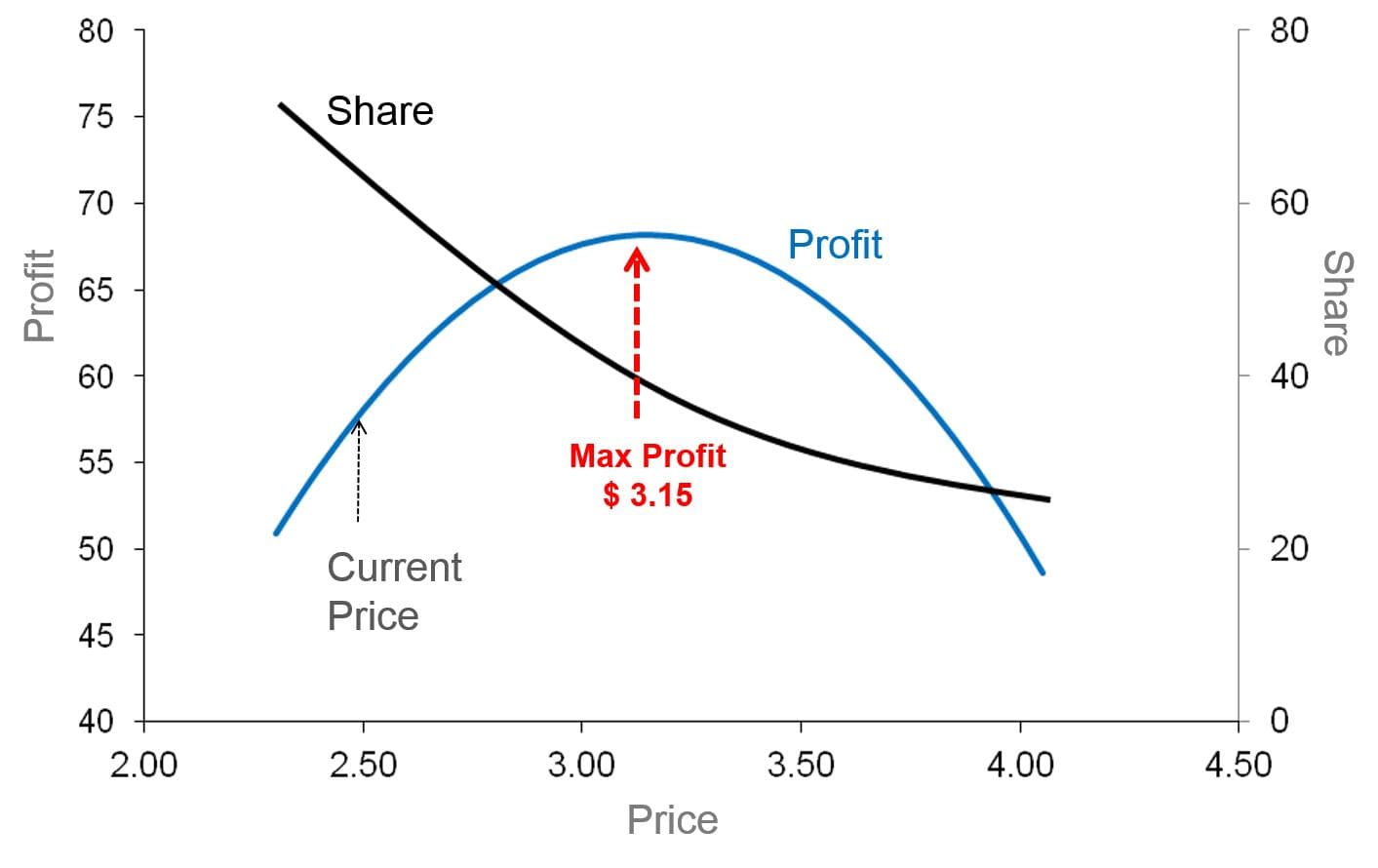
Pricing is the single most leveraged variable in a consumer brand's business model. A 10% price increase that holds volume constant increases contribution margin by approximately 15 to 20% depending on the margin structure more than any equivalent operational efficiency improvement or CAC reduction. A 10% price reduction that increases volume by 15% increases total contribution margin by approximately 5% a modest gain that comes with proportionally higher operational complexity, higher return handling cost, and higher working capital requirement. Getting the price right set at the level that maximises contribution margin per unit multiplied by units sold is the highest-leverage business decision most founders make, and also one of the least frequently revisited after the initial launch.
The Three Pricing Mistakes Most Common in Indian D2C
Mistake 1: Cost-plus pricing that underprices value
Cost-plus pricing COGS multiplied by a target margin percentage produces a price grounded in the brand's cost structure rather than in the customer's perception of value. A personal care product costing ₹120 to manufacture, priced at ₹299 (a 2.5x markup) because that markup produces the target gross margin, may be significantly underpriced relative to what consumers in the target segment would pay for a product with equivalent ingredients and positioning. Comparable products in the same category may be priced at ₹499 to ₹599, and the ₹299 price point intended to be competitive may actually be signalling lower quality to the premium consumer who uses price as a quality proxy. The opportunity is not just a ₹200 per unit margin improvement. It is a repositioning that converts the product from a mid-tier value option to a premium consideration without changing anything about the product.
Mistake 2: Identical pricing across channels with different cost structures
The ₹799 price on Amazon with 20% commission and ₹90 fulfilment cost generates a different contribution margin than the ₹799 price on the brand's own website with 1.8% payment gateway fee and ₹85 fulfilment cost. If the Amazon price is set to achieve a specific contribution margin target, the website price at the same ₹799 is generating 15 to 18 percentage points more margin per order on the better-margin channel margin that could be invested in customer acquisition, product development, or simply banked as improved profitability. Conversely, the brand whose website price is identical to its Amazon price is forgoing the price differentiation that the website channel's lower cost structure makes possible and that could be used to increase website LTV without requiring any change to the product.
Mistake 3: Failing to test price elasticity
Most brands set a launch price and never systematically test whether a higher price would produce better unit economics at the same or similar volume. Price elasticity in consumer goods is often lower than founders assume particularly in categories where brand perception, ingredient quality, and emotional resonance drive purchase decisions more than pure price comparison. A brand that has never run a structured price test (an A/B test where a sample of website visitors sees a ₹50 or ₹100 higher price and conversion rate is compared) is making a permanent pricing decision on an assumption that has never been validated. In most categories, a ₹50 to ₹100 price increase produces a conversion rate decline of 2 to 8% a decline that is typically more than offset by the higher margin per sale, producing a net improvement in total contribution margin.
The Pricing Review Every D2C Brand Should Conduct Annually
- Calculate the current price-to-value position relative to the top-5 competitors in the category not just the price comparison but the ingredients, formulation quality, and brand positioning comparison that determines whether the brand is priced above or below its actual value relative to alternatives
- Run a price elasticity test on the top-3 revenue SKUs a 30-day A/B test where 20% of website visitors see a ₹50 to ₹100 higher price, conversion rate is compared, and the resulting contribution margin is calculated at both price points to determine which produces higher total contribution
- Review channel-specific pricing for alignment with channel-specific cost structures the website price should reflect the website's lower cost structure relative to marketplace channels
- Model the contribution margin impact of a 10% price increase across the hero SKU if the product's market position and customer loyalty would support a 10% increase with a conversion rate decline of less than 7%, the price increase improves total contribution margin and should be considered
- Review price points annually against input cost changes COGS typically increases over time as raw material and manufacturing costs inflate, and a price that was appropriately positioned at launch may be under-positioned 18 months later if input costs have risen by 10 to 15% without a corresponding price adjustment

Related articles
View all → Growth
The Future of Enterprise Growth Through AI Innovation
AI is not just improving the efficiency of existing growth strategies it is enabling entirely new growth models. The enterprises that understand how to use AI as a growth driver, not just a cost reducer, are accessing markets, customer segments, and revenue streams that were previously out of reach.
 AI
AIThe Future of AI-Powered Digital Marketplaces
Digital marketplaces are evolving from transactional platforms into intelligent commerce ecosystems. AI is reshaping how buyers discover products, how sellers manage operations, and how platforms create value for everyone in the ecosystem and the pace of this transformation is accelerating.
 Customer Support
How AI Can Transform Enterprise Customer Support Systems
Customer support is one of the highest-cost, highest-impact functions in a growing enterprise. AI is transforming it from a cost centre with linear scaling constraints into an intelligent service layer that delivers better customer outcomes at a fraction of the traditional cost per interaction.