Feature
Autonomous AI Agents Running 24x7
Always watching. Always acting. Always auditable.
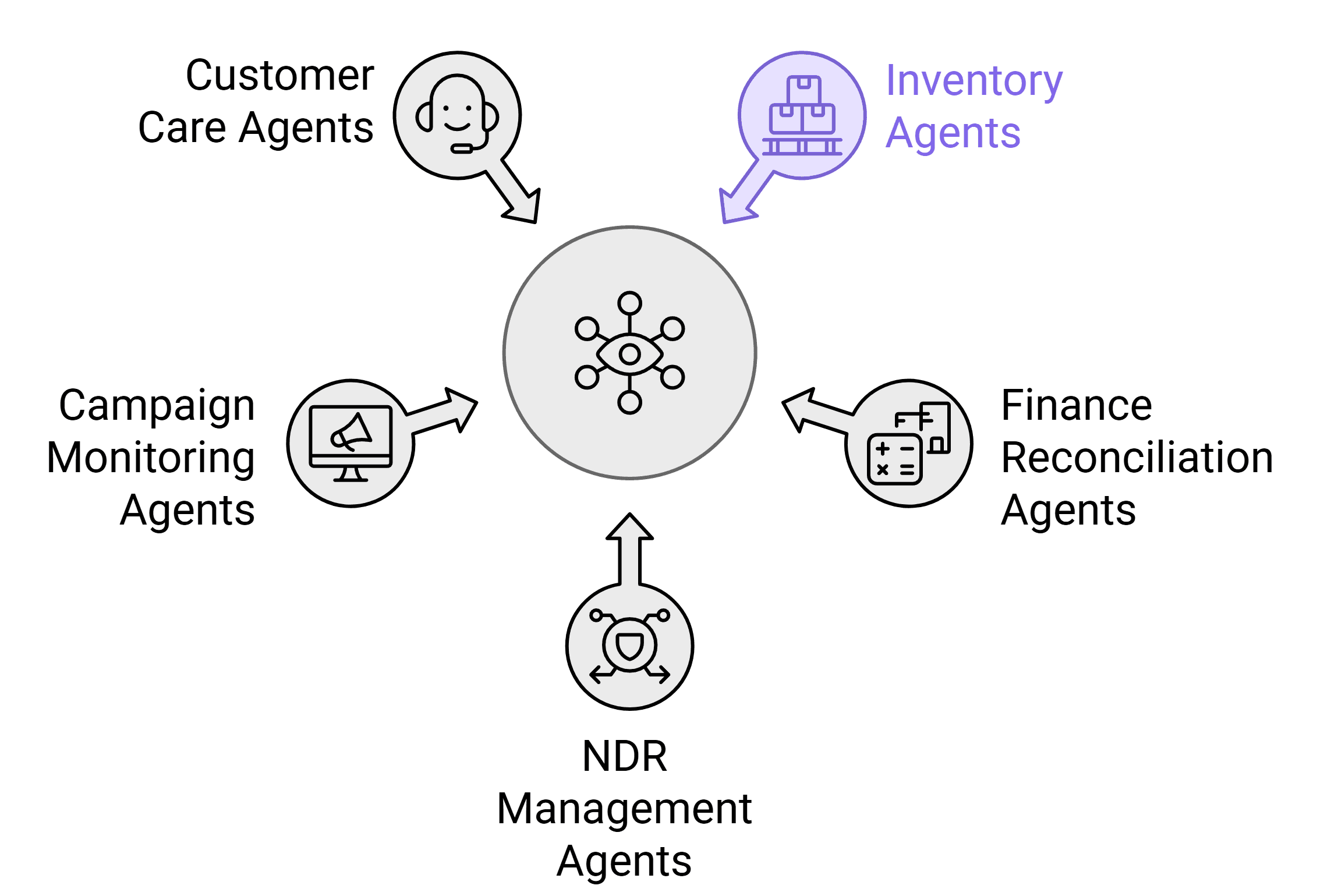
Deploy always-on agents that monitor systems, detect triggers, and execute actions without prompts. Includes inventory agents, finance reconciliation agents, NDR management agents, campaign monitoring agents, and customer care agents all autonomous, coordinated, and fully auditable.
24×7
Continuous monitoring coverage
5+
Specialist autonomous agent types
<2 s
Trigger-to-action latency
100%
Actions logged and auditable
Overview
Most automation tools run when you tell them to. SuperManager's 24x7 autonomous agents run continuously monitoring your business systems in real time, detecting the conditions that matter, and taking action the moment a trigger fires. No cron jobs, no manual checks, no alerts that require human follow-up before anything happens.
Each category of autonomous agent is purpose-built for its domain. Inventory agents watch stock levels, velocity trends, and supplier lead times automatically triggering replenishment orders before a stockout occurs. Finance reconciliation agents compare settlement records against invoices in real time, flagging discrepancies the moment they appear. NDR (Non-Delivery Report) management agents monitor shipping exceptions, attempt re-engagement via SMS/WhatsApp/email, and rebook deliveries dramatically improving last-mile success rates.
All agents operate within defined policy boundaries configurable thresholds, escalation rules, and override mechanisms. Every action is logged with full context. Humans retain final authority at any point. The result: operational coverage that was previously impossible without large teams, running continuously without fatigue, at a fraction of the cost.
Benefits
Zero Monitoring Overhead
Agents watch your systems continuously you don't need to check dashboards, set up alert pipelines, or assign team members to monitoring tasks. Issues are caught and acted on automatically.
Configurable Policy Boundaries
Every autonomous agent operates within rules you define: action thresholds, escalation conditions, approval requirements, and blackout windows. Full control without manual involvement.
Coordinated Agent Networks
Autonomous agents share state and coordinate actions. An inventory agent detecting a stockout can trigger the finance agent to approve a PO and the procurement agent to place an order automatically.
Full Auditability
Every trigger detected, decision made, and action taken is logged with context, timestamp, and agent ID. Compliance, debugging, and performance review are always possible.
Human Override at Any Point
Any agent action can be paused, modified, or reversed by a human with appropriate access. Critical action types can be configured to require approval before execution.
Use Cases
E-commerce Operations
Inventory agent monitors real-time stock levels across 3 warehouses.
When any SKU crosses the reorder threshold, the agent automatically creates a PO in the ERP, notifies the supplier via email, updates the expected restock date in the product catalog, and logs the action without human intervention.
Finance Team
Finance reconciliation agent runs continuously against Razorpay and SAP data.
Discrepancies between settlements and invoices are flagged within seconds of appearing, a Jira ticket is created with full context, and the relevant accountant is notified average detection time drops from 3 days to under 1 minute.
Logistics Team
NDR agent monitors all undelivered shipment events in real time.
For each NDR event, the agent sends a personalized re-engagement message (WhatsApp first, SMS fallback), attempts address confirmation, and schedules a re-delivery attempt increasing delivery success rate by 31% on average.
How It Works
Step 1
Continuous System Monitoring
Agents maintain persistent connections to your data sources and subscribe to event streams monitoring for the specific conditions, thresholds, and anomalies they are configured to detect.
Step 2
Trigger Detection
When a monitored condition is met a stock level crosses a threshold, a payment fails, an SLA is breached the agent registers a trigger event with full context.
Step 3
Policy Evaluation
Before acting, the agent evaluates the trigger against your configured policy: is the condition severe enough to act autonomously, or does it require escalation? Is it within the agent's action scope?
Step 4
Autonomous Action
If policy conditions are met, the agent executes the appropriate response querying additional data if needed, constructing the action, validating it, and committing to target systems.
Step 5
Log & Notify
Every action is logged to the audit trail and a summary notification is sent to the designated human owner keeping your team informed without requiring their involvement.
FAQ
How do I configure what an autonomous agent is allowed to do?
Each agent type has a policy configuration panel where you define: action thresholds (e.g., auto-approve POs up to ₹50,000), escalation rules (e.g., notify manager for actions above threshold), blackout windows (e.g., no actions during system maintenance), and required approval workflows for specific action types.
Can autonomous agents make mistakes and cause damage?
All autonomous actions pass through evidence validation before execution. You can configure 'sandbox mode' for any agent where it identifies and logs what it would do, but requires human confirmation before committing. This is recommended during initial deployment.
What agent types are currently available?
Inventory management, finance reconciliation, NDR management, campaign performance monitoring, customer care routing, SLA breach detection, employee IT provisioning, and lead follow-up agents are available today. New agent types are released monthly.