1 Engineer + AI = Entire Team: The New Org Chart
The '10x engineer' was a myth. The AI-native engineer replacing an entire team is becoming real but only under very specific conditions nobody is talking about.
Prince Kumar
Author
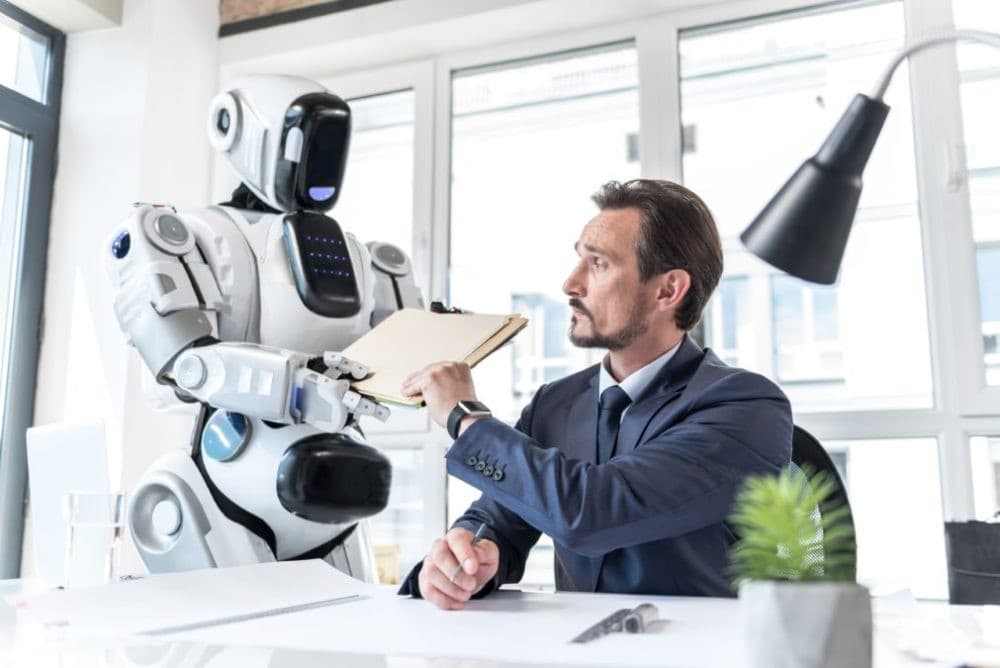
Jack Dorsey said it on X in February 2026: '100 people + AI = 1,000 people.' Block's CFO backed it up with data a 40% increase in production code shipped per engineer since September 2025. It sounds like a revolution. But when you look at what the research actually says about AI and engineering productivity, the picture is far more specific, far more conditional, and far less universal than the headlines suggest. Yes, one engineer with the right AI stack can now do what used to require a team. But that engineer looks nothing like the average hire and the conditions that make it work are rarely found in most companies.
What the Data Actually Shows
Faros AI's 2025 AI Productivity Paradox report, drawn from telemetry across over 10,000 developers and 1,255 teams, found something that should reframe the entire conversation: developers using AI complete 21% more tasks and merge 98% more pull requests per day. Those are real gains. But PR review time increases 91% nearly doubling. The productivity created at the coding stage is being absorbed by the review and QA stage. At the organizational level, output barely moves.The DORA 2025 report reinforced this. Only 24% of engineers fully trust AI-generated code. GitHub Copilot's code completion rate is 46%, but only 30% of that code is accepted by developers after review. In other words, AI writes nearly twice as much code as gets used. The rest gets reviewed, rejected, and often rewritten. The time savings at one end of the pipeline create new bottlenecks at the other.
Where the '1 Engineer = Team' Claim Holds Up
It holds up in a specific and narrow scenario: a senior engineer with deep domain knowledge, working on a greenfield project, with no legacy codebase, no ambiguous requirements, and no cross-functional dependencies. In that context, AI coding tools deliver a genuine 5x to 10x productivity multiplier. Boris Chenry, creator of Claude Code, said in February 2026 that 'coding is practically solved' for well-defined problems. He's right. For well-defined problems.The problem is that most real engineering work isn't well-defined. It involves unclear requirements, competing stakeholder priorities, architectural decisions with long-term consequences, and deep knowledge of existing systems that AI cannot access. The Waydev analysis from late 2025 was direct: AI amplifies whatever system it's placed into. Strong teams compound AI gains. Weak systems generate more noise. If planning is unclear and ownership is fuzzy, AI accelerates confusion rather than progress.
The New Org Chart: What's Actually Changing
| Role | 2023 Status | 2026 Status | Driver |
|---|---|---|---|
| Junior developer (boilerplate/CRUD) | Entry point for most teams | 37% of employers prefer to 'hire' AI over a new grad | AI handles routine implementation |
| Mid-level 'code monkey' | Largest segment | Under pressure, especially in maintenance roles | AI plus senior oversight |
| Senior engineer | High demand | Higher demand acts as AI orchestrator | Jevons Paradox: more to build |
| Engineering manager | Process-heavy | Shifting to outcome ownership and AI governance | Accountability for AI output |
| QA / review engineer | Support role | Becoming a bottleneck and high-value function | AI ships more code to review |
| AI-native 'builder' | Did not exist | Fastest-growing hybrid role | Product + engineering + AI direction |
The Jevons Paradox Problem
The standard fear AI tools make engineers more productive, therefore companies need fewer engineers misunderstands how competitive markets respond to productivity gains. When software development gets faster and cheaper, the number of things worth building increases. An internal tool that required a team of five for six months can now be prototyped in a week. Projects that sat on the 'nice to have' backlog for three years become two-sprint deliverables.Economists call this the Jevons Paradox: when a resource becomes cheaper to use, total consumption increases rather than decreases. The evidence from 2025 and early 2026 follows this pattern. Germany's Bitkom survey of 855 companies found 109,000 unfilled IT positions down from 149,000 in 2023, but with 42% of companies expecting to need additional IT specialists specifically because of AI adoption. Software engineering job postings on Indeed climbed through late 2025 into 2026. Demand is real. The composition of what's demanded is what's changing.
What Is Genuinely Disappearing
- Entry-level roles doing isolated, well-specified tasks boilerplate code, basic CRUD apps, standard mobile backends are shrinking. Junior software engineering job postings in the U.S. declined significantly in 20242025, and big-tech new-graduate hiring is down 55% from its 2019 peak.
- Bootcamp graduates focused purely on frameworks without systems thinking face the hardest market the narrow skills that were sufficient in 2021 are no longer differentiated.
- Mid-level engineers on legacy system maintenance without deep domain expertise are seeing their roles compressed.
- The median time for a laid-off tech worker to find re-employment increased from 3.2 months in 2024 to 4.7 months in early 2026 the skills being sought are different from the skills being displaced.
What Is Genuinely Rising
- Agentic engineers those who treat AI tools as a team of junior contributors they direct, review, and course-correct. Block's 40% increase in production code per engineer came from this model.
- Specialists in AI integration, security, performance, and heavily regulated industries (fintech compliance, healthcare data privacy, embedded systems) where AI cannot operate autonomously.
- Engineers who combine technical depth with product sense and stakeholder communication the 'builder' role that crosses traditional boundaries.
- AI-fluent seniors in the top 20% of engineering capability are becoming 5 to 10 times more productive not because AI replaced their team, but because they know exactly how to direct it.
The Honest Conclusion
The '1 engineer + AI = entire team' headline is true as a ceiling case and misleading as a general claim. It describes the best possible outcome for the best possible engineer on the best possible project type. As a description of what most engineering teams will experience, it confuses aspiration with average.What is universally true: the bar for what a senior engineer can accomplish has risen permanently. The bar for what a junior engineer needs to know before being hirable has risen with it. The org charts being drawn right now leaner at the bottom, more demanding at the top reflect that shift. The revolution is real. It's just more selective than the press releases suggest.

The First AI Labor War Has Begun
Related articles
View all → Enterprise AI
The Enterprise Operating Model After the Rise of Autonomous AI
The enterprise operating model that was built for human coordination hierarchies, approval chains, monthly reviews, and manual handoffs is being structurally disrupted by autonomous AI systems that act, coordinate, and close loops without waiting for the next scheduled meeting. The organisations that redesign their operating model around AI execution will define the next decade of enterprise performance.
 Enterprise Coordination
Why Traditional Enterprise Coordination Methods Are Becoming Obsolete
The weekly status meeting, the monthly business review, the quarterly planning cycle, and the annual strategy offsite these are not just inefficient. They are symptoms of an information architecture that was designed for a world without real-time data connectivity. In the world with it, they are being superseded by continuous intelligence systems that make scheduled information aggregation redundant.
 Enterprise Leadership
The Future of Enterprise Leadership in an AI Augmented World
AI is not making leadership less important. It is making the distinction between effective and ineffective leadership more consequential than it has ever been. The leaders who understand what AI changes about their role and what it does not will define the enterprises of the next decade.