AI Code Is Fast But It's Creating a Mess
By early 2026, nearly 50% of all code being written in enterprise environments is AI-assisted. Technical debt is accelerating faster than it is being addressed. Security vulnerabilities are being generated at scale. And the engineers who need to maintain this code base were not the ones who wrote it.
Aditya Sharma
Author
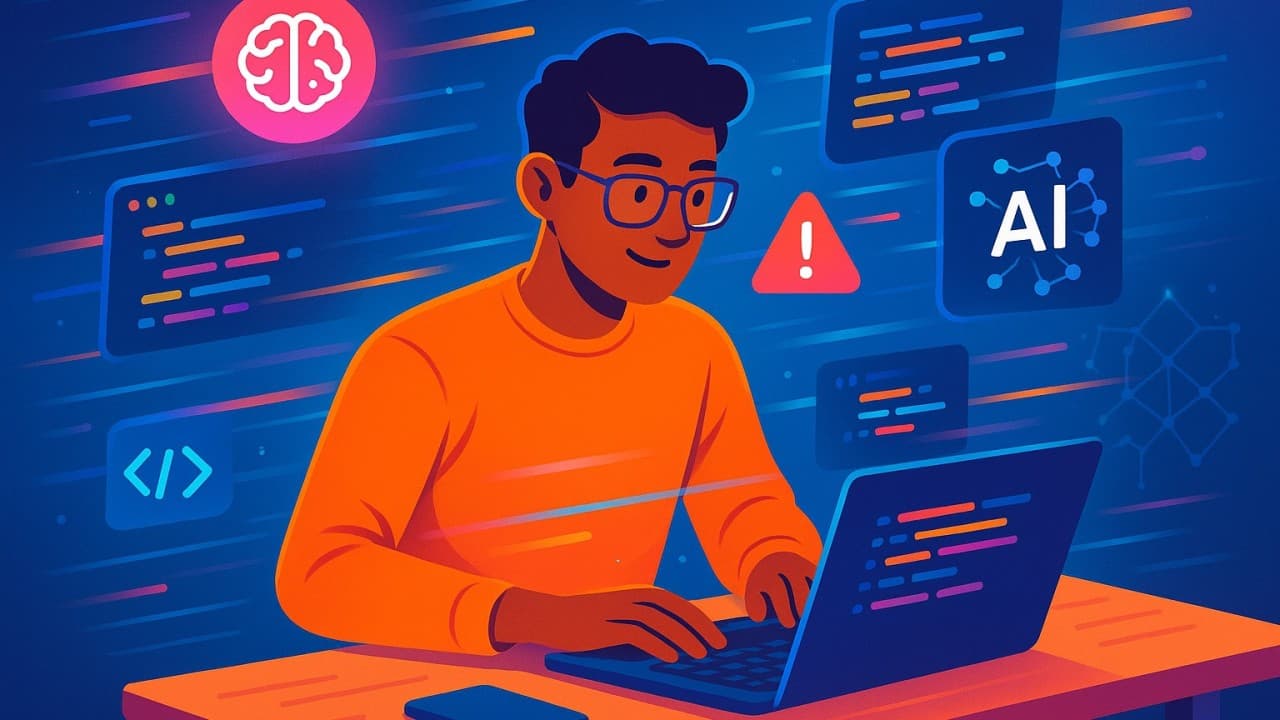
By early 2026, the share of AI-generated or AI-assisted code in enterprise software environments has reached approximately 50%, with adoption curves steepening faster than initial projections. Measured by lines of code written per developer per day, productivity is up. Measured by the quality, security, and maintainability of the resulting codebase, the picture is substantially more complicated. The engineers deploying AI coding tools to ship faster are generating technical debt at a rate that the engineering teams maintaining those codebases were not designed to absorb. Security vulnerabilities are being introduced at scale in patterns that are recognisable to automated scanners but were previously rare enough that manual review processes could catch them. And the institutional knowledge problem where the engineer who wrote the code understands it and the engineer who inherits it does not is being accelerated by AI-assisted code that no single person fully authored or fully understands.
The Technical Debt Acceleration Problem
Technical debt is the accumulated cost of shortcuts taken in software development code that works now but is harder to maintain, extend, and debug than code written with full care and foresight. It has always accumulated in fast-moving codebases. AI coding tools have changed the rate of accumulation. When a developer can generate a working implementation in minutes rather than hours, the incentive to spend additional time on clean abstractions, comprehensive error handling, and maintainable structure decreases. The working implementation exists. Shipping it is faster than improving it. The debt is deferred to the team that will maintain it.The specific debt patterns that AI-generated code tends to introduce are different from the patterns that time-pressured human developers introduce. Human technical debt tends to be contextual a shortcut that made sense given what the developer knew at the time and can be explained to a future maintainer. AI technical debt tends to be structural patterns that are locally coherent but globally inconsistent, implementations that solve the stated problem without understanding the broader system context, and code that handles the common case correctly while silently failing on edge cases that the prompt did not specify.
Security Vulnerabilities at Scale
The Stanford AI Index 2025 found that AI-assisted code contains security vulnerabilities at a higher rate than manually written code in several categories particularly injection vulnerabilities, improper input validation, and insecure default configurations. The mechanism is straightforward: AI models are trained on the full corpus of public code, which includes the full historical distribution of secure and insecure patterns. When asked to generate code for a common task authenticating a user, processing user input, making an API call the model draws from patterns across that distribution without a native security-first orientation.GitHub's security team has published analysis showing that AI-generated code triggers certain categories of their CodeQL static analysis rules at rates significantly higher than human-written code in the same repositories. The specific categories elevated by AI generation include SQL injection, cross-site scripting patterns, and hardcoded credential patterns the categories that appear frequently in the training corpus because they appear frequently in vulnerable code that was publicly committed before the vulnerability was discovered. The AI is not generating these vulnerabilities because it does not know better. It is generating them because it is completing a pattern that statistically co-occurs with the code structure it observed in training.
The Institutional Knowledge Collapse
Software systems accumulate institutional knowledge the understanding of why specific design decisions were made, what the edge cases are, what the upstream and downstream dependencies look like, and what the cost of changing a given component is. This knowledge traditionally lives in the minds of the engineers who built the system and transfers (imperfectly) through code comments, documentation, and direct knowledge sharing over time. AI-assisted code generation disrupts this transfer in two ways.First, AI-generated code is written without the architectural intent that produces the knowledge in the first place. A developer who spends two hours designing a data access layer understands the tradeoffs deeply and can explain them. A developer who generates a data access layer in ten minutes using AI prompts often does not have the same depth of understanding they got a working implementation without fully internalising why it works that way. When that developer leaves or the code needs to be changed, the institutional knowledge was never fully created.Second, AI-generated code tends to be verbose and structurally complex relative to carefully hand-crafted code solving the same problem. A developer reading AI-generated code for the first time faces a higher cognitive load than they would face reading carefully written human code because AI code optimises for functional correctness rather than readability and does not apply the compression and clarity that experienced developers impose when they know human readers will need to maintain the result.
The Ownership Gap
A codebase where 50% of the code was AI-generated and the humans who prompted the generation have since moved on has a specific and novel maintenance problem: no one is the author of large portions of the system. Traditional ownership models this module belongs to this team, this function was written by this person who can be consulted break down when the 'author' is a model that has no memory of generating the code and the human prompter's contribution was the specification rather than the implementation.Code review processes developed for human-authored code assume that the author knows what they wrote and can explain it. Pull request reviews for AI-generated code require the reviewer to both evaluate correctness and reconstruct the author's intent a significantly higher cognitive burden. Engineering teams that have not updated their review processes for AI-generated code are applying human-code review standards to a different category of artefact, with predictable gaps. The OWASP community has begun updating its secure development guidelines to include AI-generated code as a separate risk category precisely because the existing review guidance does not adequately address its specific failure modes.
What Responsible AI Code Deployment Looks Like
- Treat AI-generated code with the security review standards applied to third-party libraries because the failure modes are similar to imported code rather than internally reasoned code, and the existing review processes for human code are insufficient
- Implement automated security scanning (CodeQL, Semgrep, Snyk) as a mandatory gate in every PR pipeline, not a periodic audit AI-generated code produces security patterns that scanners are effective at catching if they are run consistently
- Require human authorship certification for high-consequence modules authentication, payment processing, data access, external API integration where the cost of an AI-introduced security vulnerability is highest
- Track technical debt accumulation rate as a leading indicator of codebase health, not just current defect count AI coding tools make debt invisible at the point of generation and visible at the point of maintenance cost, which creates a systematic lag in quality signals
- Invest in refactoring capacity proportional to AI code generation volume if AI is doubling the rate of code generation, the refactoring and code quality investment needs to scale proportionally or the debt will compound to unmanageable levels within 12 to 18 months

Related articles
View all → Enterprise Mobility
Why Enterprise Mobility Will Depend on Intelligent Systems
Enterprise mobility the ability of organisations to operate effectively from anywhere, on any device, at any time is evolving from a technology configuration challenge to an intelligent systems challenge. The enterprises that build the right intelligent mobility infrastructure will unlock workforce productivity advantages that static competitors cannot match.
 Healthcare
How Healthcare Enterprises Can Use AI Agents Securely
Healthcare organizations face unique security and privacy constraints when deploying AI agents: HIPAA compliance requires strict data access controls and audit trails, patient safety concerns demand verification of agent recommendations, liability considerations necessitate human oversight for clinical decisions, and regulatory requirements mandate explainability for automated actions. These constraints make healthcare one of the most challenging industries for AI agent deploymentbut also one where the operational benefits are most significant. Healthcare AI agents must operate under explicit authority boundaries: handling administrative workflows autonomously while escalating clinical decisions to appropriate providers, maintaining comprehensive audit logs that satisfy regulatory requirements, and implementing role-based access ensuring agents only access data necessary for their functions.
 AI Orchestration
AI Orchestration is the New Engineering Superpower
Block's CFO reported a 40% increase in production code per engineer after deploying AI orchestration workflows. The engineers driving that increase were not the ones writing the most code. They were the ones who learned how to direct AI systems most effectively. The skill that matters in 2026 is not coding. It is orchestration.