AI Orchestration is the New Engineering Superpower
Block's CFO reported a 40% increase in production code per engineer after deploying AI orchestration workflows. The engineers driving that increase were not the ones writing the most code. They were the ones who learned how to direct AI systems most effectively. The skill that matters in 2026 is not coding. It is orchestration.
Manthan Sharma
Author

By early 2026, approximately 50% of enterprise code is AI-assisted. GitHub Copilot runs at a 46% code completion rate in fully deployed environments. Boris Cherny, creator of Claude Code, said in February 2026 that coding is 'practically solved' for well-defined problems. Jack Dorsey cut Block's headcount by nearly half and cited AI orchestration as the reason his remaining engineers could absorb the output. Block's CFO confirmed a 40% increase in production code shipped per engineer after deploying Goose their internal AI coding harness. None of this means coding is dead. It means the skill that determines how much value an engineer produces has shifted. The engineers generating the 40% increase at Block were not the fastest typers or the deepest algorithm experts. They were the ones who had developed the skill of directing AI systems decomposing problems for AI consumption, evaluating AI outputs with the right critical standards, and building the architectural structures within which AI tools could operate most effectively. That skill has a name: AI orchestration. And it is becoming the most valuable engineering capability of this decade.
What Orchestration Actually Involves
AI orchestration is not prompt engineering the practice of finding clever phrasings that extract better outputs from language models. Prompt engineering is a tactic. Orchestration is an architecture. It involves decomposing a complex software development objective into a sequence of precisely specified subtasks that AI tools can execute reliably, designing the evaluation logic that determines whether each subtask's output is acceptable before it is passed downstream, building the integration layer that connects AI-generated components into a coherent system, and maintaining the architectural judgment that determines what should be AI-generated and what requires human design.The Faros AI research found that developers on high AI-adoption teams touch 47% more pull requests per day than their pre-AI baseline. The orchestrating engineers are not writing 47% more code. They are managing, evaluating, and integrating 47% more units of AI-generated work. Their primary activity has shifted from production to direction from being the person who writes the code to being the person who determines what code should be written, evaluates whether the AI wrote it correctly, and integrates it into a system that actually works. This shift requires a fundamentally different set of skills than traditional software engineering, and it is not well-served by the current engineering education curriculum.
The Three Core Orchestration Skills
Problem decomposition for AI consumption
AI tools perform significantly better on precisely specified, well-scoped subtasks than on broad, open-ended requests. An engineer who can take a complex feature requirement and decompose it into a sequence of subtasks each with explicit inputs, outputs, constraints, and success criteria will produce dramatically better AI outputs than one who prompts at the feature level and expects the AI to figure out the decomposition. This decomposition skill is a form of systems thinking that senior engineers develop over years. It is not obvious to junior engineers. And it is the skill that determines whether an AI coding workflow produces 40% more output or 40% more rework.
Output evaluation under uncertainty
AI-generated code is often correct in ways that are easy to verify and wrong in ways that are difficult to detect subtle security vulnerabilities, edge case failures, architectural inconsistencies with the existing codebase, performance characteristics that are acceptable in test but problematic at production scale. Evaluating AI output requires the engineer to hold a mental model of the system context what the code needs to do, what it must not do, how it will interact with adjacent components and apply that model critically to code they did not write. The DORA 2025 report found that only 24% of engineers fully trust AI-generated code, not because of AI scepticism but because of calibrated experience with specific categories of AI failure that require domain knowledge to catch.
Failure attribution in AI-assisted systems
When a bug appears in a codebase that is 50% AI-generated, diagnosing whether it originated in AI-generated code, in the human code interfacing with it, or in the interaction between the two requires debugging reasoning that traditional tools were not designed to support. The AI model has no accessible reasoning process explaining why it generated a specific implementation. The engineer must infer intent from code that was produced without the architectural context that human-written code typically reflects. This is the most novel and most underappreciated debugging skill in the AI-augmented engineering environment and it is one that cannot be developed without significant hands-on experience with AI-assisted development at production scale.
Why This Matters for Hiring and Career Development
LinkedIn data from early 2026 shows AI-related job postings up 340% since 2024 while traditional software engineering roles declined 15%. Big-tech new-graduate hiring is down 55% since 2019. Thirty-seven percent of engineering managers say they prefer AI over new graduates for standard implementation tasks. These numbers describe a market that is actively repricing engineering skills reducing demand for implementation-focused engineers and increasing demand for orchestration-focused engineers who can direct AI tools effectively and bring the judgment and domain expertise that AI cannot provide.For working engineers, the development priority is clear: invest in the skills that AI cannot substitute system architecture, domain expertise, critical evaluation, and the problem decomposition capability that makes AI tools actually useful. For engineering organisations, the curriculum and onboarding investment needs to include AI orchestration skill development explicitly, not treat it as something engineers will develop on their own through tool exposure. The engineers who have developed genuine orchestration capability are not those who were given access to Copilot and left to figure it out. They are those who had structured practice in decomposition, evaluation, and integration across a range of project types.
The Jevons Paradox for Engineering
The standard concern about AI coding tools is that they will reduce demand for engineers. The Jevons Paradox suggests the opposite: when a resource becomes cheaper to use, total consumption increases rather than decreases. When software development becomes faster and cheaper through AI tools, the number of software projects that are economically viable increases. An internal tool that required five engineers for six months can now be prototyped in two weeks by one engineer using AI orchestration. That project would not have been built without AI tools it was previously unaffordable. AI does not mean fewer software projects. It means the supply of what software can solve has expanded to meet demand that was previously unmet.Germany's Bitkom survey of 855 companies found 42% anticipate needing additional IT specialists specifically because of AI adoption not fewer. The overall software developer employment for 35 to 49-year-olds in the US is up, even as entry-level employment declines. The market is not contracting. It is restructuring concentrating demand on the engineers who can direct and evaluate AI work while reducing demand for those whose primary value was mechanical implementation. The engineers who are positioned well in this restructuring are those who have developed orchestration capability alongside their technical foundations.
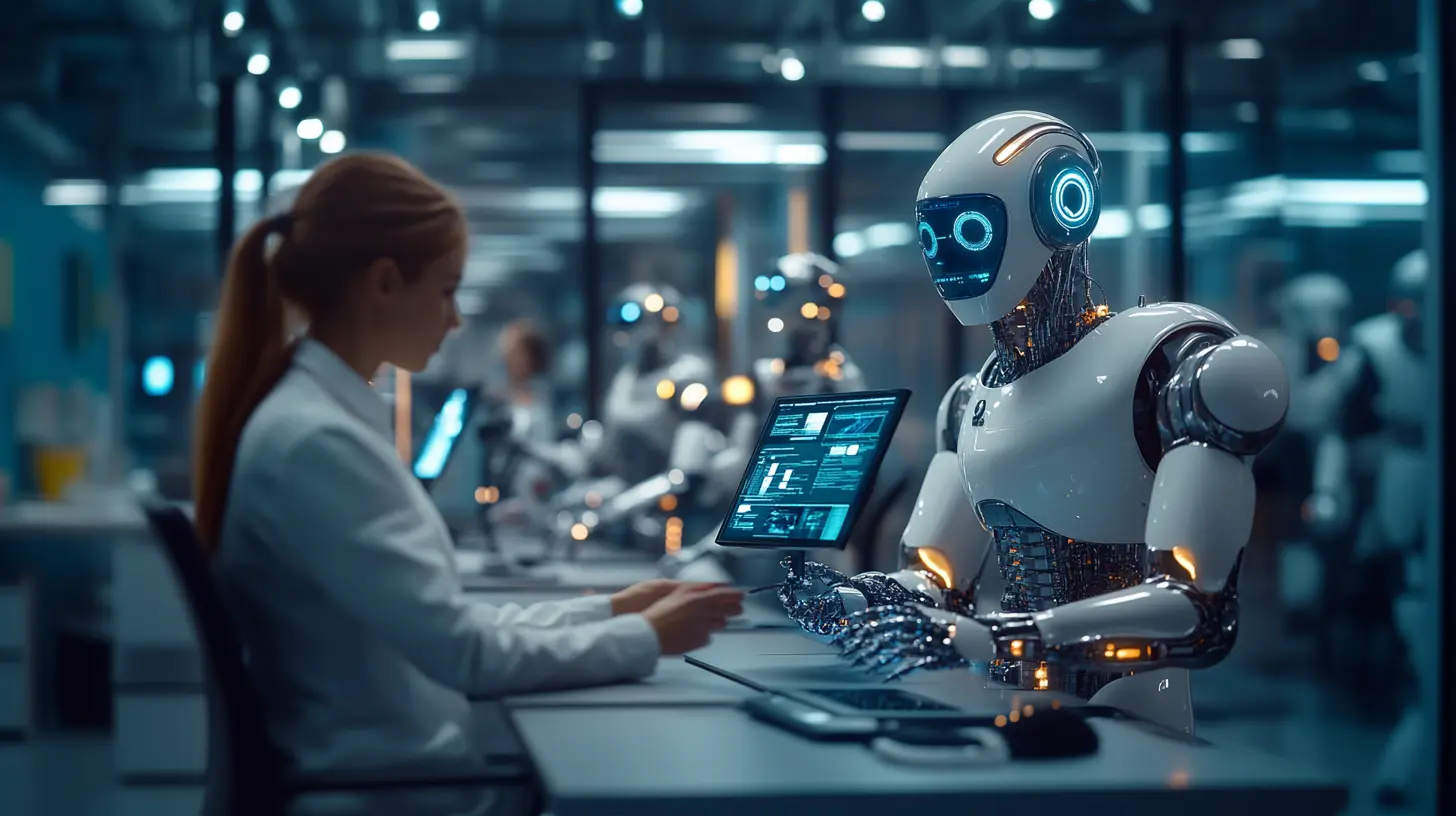
AI is Not Replacing You. Someone Using AI Is
Related articles
View all → Enterprise AI
The Enterprise Operating Model After the Rise of Autonomous AI
The enterprise operating model that was built for human coordination hierarchies, approval chains, monthly reviews, and manual handoffs is being structurally disrupted by autonomous AI systems that act, coordinate, and close loops without waiting for the next scheduled meeting. The organisations that redesign their operating model around AI execution will define the next decade of enterprise performance.
 Enterprise Coordination
Why Traditional Enterprise Coordination Methods Are Becoming Obsolete
The weekly status meeting, the monthly business review, the quarterly planning cycle, and the annual strategy offsite these are not just inefficient. They are symptoms of an information architecture that was designed for a world without real-time data connectivity. In the world with it, they are being superseded by continuous intelligence systems that make scheduled information aggregation redundant.
 Enterprise Leadership
The Future of Enterprise Leadership in an AI Augmented World
AI is not making leadership less important. It is making the distinction between effective and ineffective leadership more consequential than it has ever been. The leaders who understand what AI changes about their role and what it does not will define the enterprises of the next decade.