AI is Not Replacing You. Someone Using AI Is
The competitive threat in 2026 is not the software subscription. It is the person who bought the same subscription, spent forty hours learning to use it well, and can now produce what used to require your entire team. The displacement is already happening. Here is what it looks like.
Akshay
Author

Every conversation about AI and jobs eventually produces the same distinction: AI is a tool, and tools do not take jobs people who use tools more effectively than people who do not take jobs. This is true as a logical claim. The difficulty is that most people who accept it in the abstract continue behaving as though the threat is theoretical and distant, when the evidence suggests it is concrete and close. The graphic design team that was five people is now one creative director with Midjourney and a subscription to Adobe Firefly. The content team that was eight writers is now two writers who use Claude to produce the output the eight used to produce. The data analysis function that required a team of four is now handled by one analyst with AI tools and a well-structured set of prompts. In each case, the reduction was not caused by software running autonomously. It was caused by one person who learned to use the software and made the rest of the team structurally redundant. The agent of displacement is a human being with a new skill.
The Displacement Mechanism in Three Industries
Content and copywriting
Between 2022 and 2026, freelance rates for standard content types declined 30 to 50% on major platforms. Content agencies reduced junior writer headcount significantly. The mechanism was not that AI produced better content than skilled writers it does not, consistently. The mechanism was that a writer using Claude or ChatGPT can produce first drafts five to ten times faster than one writing from scratch, allowing them to take on client volumes that previously required a team. One AI-enabled writer doing the work of three is not a threat to the profession. It is a threat to the two who did not develop the same skill.
Entry-level software development
GitHub Copilot handles approximately 46% of keystrokes in enterprise codebases. Big-tech new-graduate hiring is down 55% since 2019. Thirty-seven percent of engineering managers say they prefer AI over a new graduate for standard implementation tasks. The senior engineers generating 40% more production code at Block after deploying AI orchestration tools did not make AI capable of this. They made themselves capable of using AI this way through deliberate skill development in decomposing problems for AI consumption and evaluating AI outputs critically. The engineers whose jobs are most secure are the ones who positioned themselves as directors of AI work rather than executors of implementation tasks.
Data analysis and reporting
A business analyst using Claude's Advanced Data Analysis feature and Perplexity can complete a competitive analysis in two hours that previously required a full day. Organisations are not running fewer analyses they are running more, with fewer analysts. Goldman Sachs' 2025 report identified marketing consulting and office administration as sectors where employment growth had slowed in ways correlated with AI efficiency gains. The analysts who maintained their position and increased their rates are the ones who shifted their value proposition from analysis execution to business interpretation from producing the numbers to determining what the numbers mean in the context of specific business decisions.
The Productivity Gap Is Already Significant
LinkedIn data from early 2026 shows AI-related job postings up 340% since 2024. The median time for a displaced tech worker to find re-employment has increased from 3.2 months in 2024 to 4.7 months in early 2026. The re-employment time is growing because the skills being demanded are different from the skills being displaced and the gap between them is widening faster than workers are crossing it.The productivity differential between an AI-enabled professional and a non-AI-enabled professional in the same role is large enough to be commercially decisive in competitive markets. A freelancer who produces five times the output at the same cost wins clients from the one who does not. An employee who produces twice the output in the same hours gets the promotion. An organisation that automates its repetitive coordination work moves faster than the one that does not. These differentials compound over time. The person who has been building AI skills for two years while their peers were not has a gap that is not closed in a weekend of catching up.
What the Right Response Looks Like
- Identify the two or three highest-time-cost tasks in your current role and spend two weeks building AI workflows for each not exploring AI in general, but specifically automating the work that consumes the most time
- Develop output evaluation skill for AI in your domain the ability to quickly assess whether AI-generated work is accurate and appropriate for your specific professional context is the skill that separates AI-enabled professionals from ones who just have an AI subscription
- Move your competitive positioning upstream away from the execution tasks that AI accelerates and toward the judgment, domain expertise, and strategic direction that AI cannot reliably substitute
- Build a visible portfolio of AI-assisted work that demonstrates what you can produce the market hires demonstrated capability, and passive AI proficiency that produces no visible evidence of its existence does not differentiate you
- Treat the transition as permanent the professional who waits for the market to clarify before investing in AI skill development will find that by the time the market is clear, the competitive gap has widened beyond easy recovery
The Honest Timeline
The window for building AI skills before they become a baseline professional expectation is still open in 2026 but it is narrowing. The 2025 State of Engineering Management Report found that 90% of engineering teams now use AI coding tools, up from 61% a year prior. AI tool adoption in knowledge work more broadly followed the same trajectory. What was an early-adopter differentiator in 2023 is becoming standard practice in 2026. The professionals who will have the strongest positions heading into 2027 and 2028 are the ones who have been using these tools long enough to have developed genuine judgment about how to use them in their specific domain not the ones who are just starting.The fastest path from current position to AI-enabled professional is not a course or a certification. It is deliberate practice on real work tasks, with real AI tools, tracking the outcomes and iterating on what does not work. Thirty days of consistent, structured AI workflow development produces more practical proficiency than six months of casual tool exploration. The person who displaced you did not take an AI course. They spent forty hours building something, ran into problems, figured out how to solve them, and emerged with a skill that is visible in their output. That is still the path.

Related articles
View all → Autonomous Coordination
The Rise of Autonomous Enterprise Coordination Platforms
Enterprise coordination the alignment of people, processes, information, and resources across organisational boundaries has always been expensive, slow, and error-prone when managed through human intermediaries alone. Autonomous coordination platforms powered by AI are replacing the coordination overhead of large organisations with intelligent systems that synchronise the enterprise continuously and without manual intervention.
 AI Agents
How AI Agents Are Transforming Enterprise Workflow Intelligence
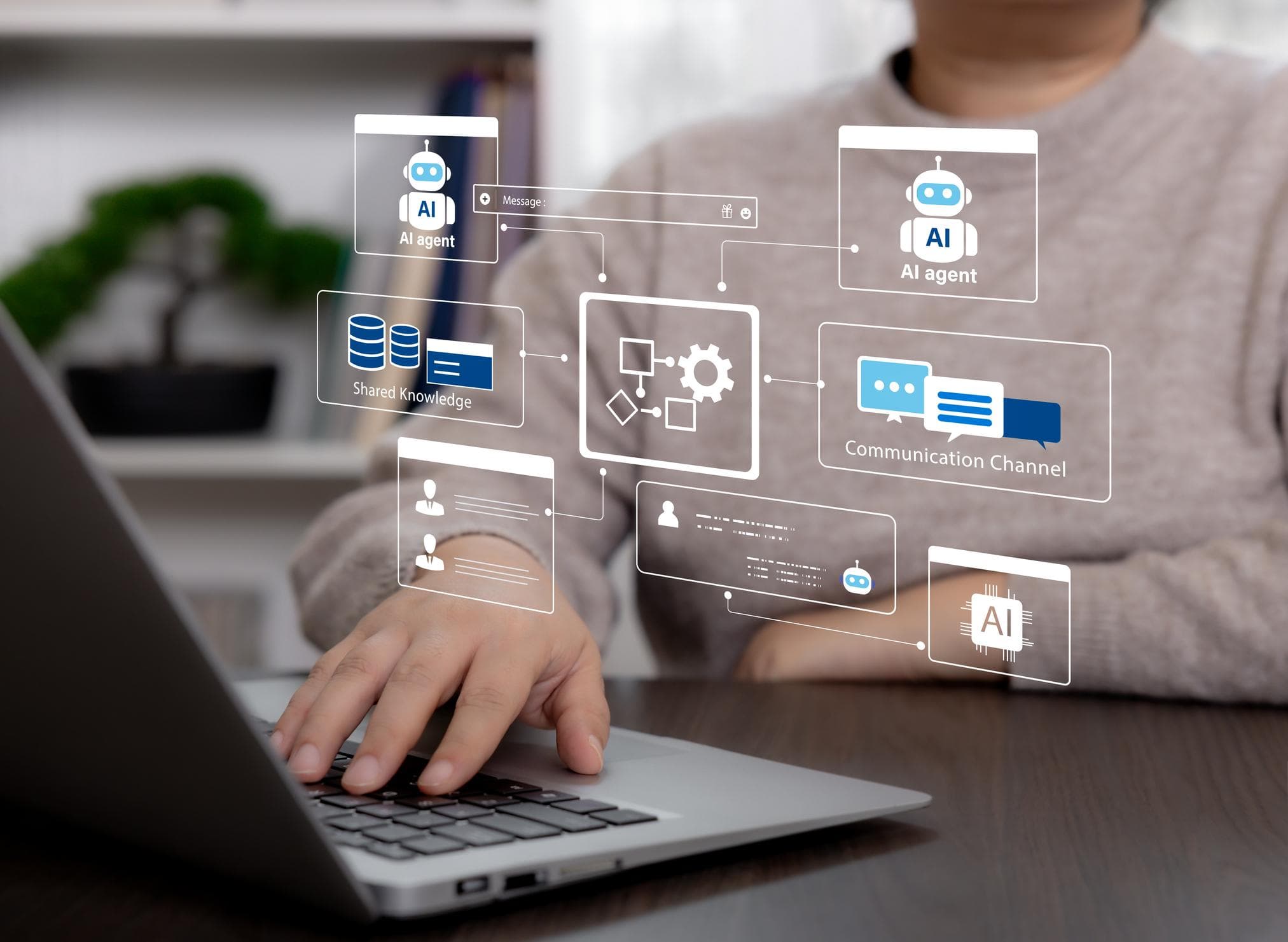
AI agents autonomous systems that perceive their environment, reason about objectives, and take action across enterprise workflows are moving from research concept to operational reality. The enterprises deploying AI agents at scale are discovering that workflow intelligence is not just about automation it is about creating organisational capability that compounds with every cycle.
 AI-Native Infrastructure
Why Global Enterprises Need AI-Native Operational Infrastructure
The operational infrastructure that global enterprises built in the pre-AI era was designed for a different competitive environment. Enterprises that try to layer AI on top of legacy operational infrastructure will capture a fraction of AI's potential. The ones that rebuild their operational foundations as AI-native will gain structural advantages their competitors cannot close.