Why AI Execution Intelligence Will Define the Next Generation of Enterprise Software
Enterprise software has spent three decades helping organisations plan better, report faster, and communicate more efficiently. The next generation of enterprise software does something fundamentally different it executes. AI execution intelligence is the capability that closes the gap between decision and outcome, and it is redefining what enterprise software is for.
Aditya Sharma
Author
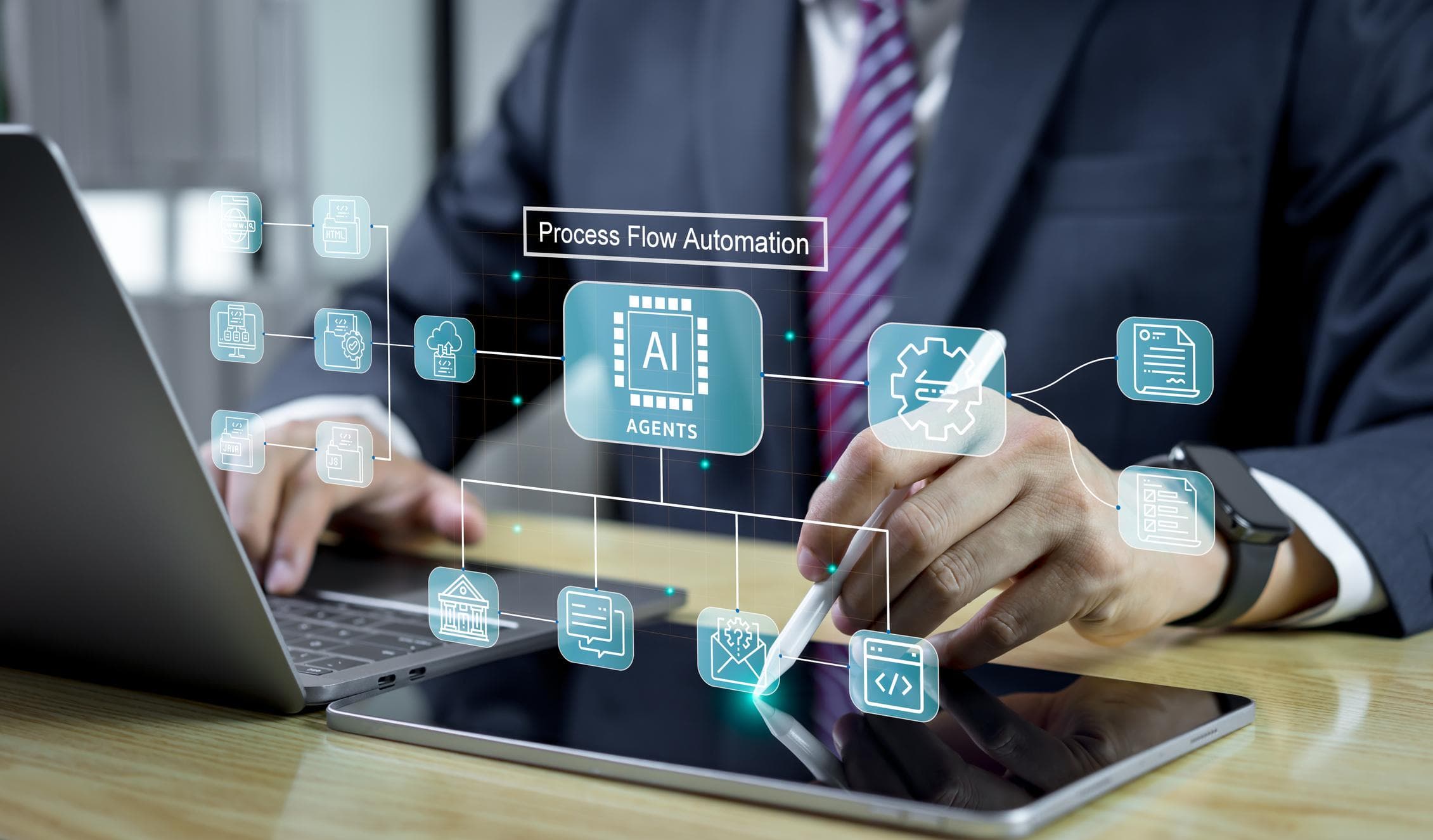
A Fortune 500 logistics company runs SAP for resource planning, Salesforce for customer management, ServiceNow for operations, and Tableau for analytics. Each system is best-in-class. Each is fully implemented. The executive team has dashboards that tell them, with remarkable precision, exactly what is going wrong across the business at any given moment. What the software does not do what no software in their stack does is fix it. A delivery bottleneck identified in the analytics layer requires a human to interpret the data, open the operations system, identify the resource reallocation required, navigate the approval workflow, and execute the change. In a business where conditions change faster than approval cycles move, the gap between insight and execution is where competitive advantage is lost, customer commitments are broken, and operational costs accumulate. AI execution intelligence is the software capability that closes this gap. It does not replace the planning systems, the CRM, or the analytics platform. It sits above them reading their outputs, understanding the current state of the enterprise, and executing the decisions that the data demands without waiting for a human to translate insight into action. This is what defines the next generation of enterprise software: not better reporting, not smarter recommendations, but actual execution.
The Execution Gap: Why Enterprise Software Has Always Stopped Short
Every generation of enterprise software has moved the boundary of automation forward from manual bookkeeping to ERP, from paper workflows to BPM platforms, from spreadsheet analytics to cloud BI. But each generation has stopped at the same boundary: the point where a human must interpret the software's output and decide what to do with it. This boundary was not a design failure. It was a design philosophy: enterprise software was built to augment human judgment, not replace it. For most of the history of enterprise computing, this was the right philosophy. The decisions that enterprise software surfaced where to invest, how to price, which customers to prioritise were genuinely judgment-intensive, context-dependent, and consequential enough that human accountability was both appropriate and necessary. The business environment of the 2020s has changed the calculus. The volume, velocity, and complexity of operational decisions in a modern enterprise pricing adjustments across tens of thousands of SKUs, routing decisions across global logistics networks, resource allocation across hundreds of concurrent projects has exceeded the bandwidth of human decision-making. Organisations are not failing to make good decisions because they lack the right software. They are failing to make decisions at all or making them too slowly because the volume of decisions that need to be made exceeds the capacity of the human workforce available to make them.AI execution intelligence addresses this bandwidth constraint directly. It does not attempt to replicate the full range of human judgment the strategic, creative, and relational decisions that require human wisdom, empathy, and accountability. It targets the specific category of operational decisions that are high-volume, time-sensitive, data-intensive, and sufficiently rule-definable that an AI system can execute them with the accuracy and speed that human execution cannot match. This is a large and valuable category. In most enterprises, it represents 60 to 80% of the operational decisions made every day the decisions that consume the majority of management time and attention without requiring the distinctively human capabilities that define genuine leadership.
The Four Dimensions of AI Execution Intelligence
Dimension 1: Cross-system context comprehension
AI execution intelligence requires the ability to read and synthesise the current state of the enterprise from multiple systems simultaneously understanding not just what one system reports but what the combination of signals across ERP, CRM, supply chain, finance, and operational systems means for the specific decision at hand. A pricing execution agent that can only see the pricing system cannot execute intelligently; it needs to understand current inventory levels, competitor pricing signals, customer demand patterns, and margin requirements simultaneously to make a pricing decision that is optimal across all dimensions. Cross-system context comprehension the ability to query, interpret, and synthesise data from disparate enterprise systems in real time is the foundational technical capability that distinguishes AI execution intelligence from single-system automation.
Dimension 2: Decision confidence calibration
Not all operational decisions are equal in their consequences or their reversibility. An AI execution intelligence system must be able to assess its own confidence in a proposed action and calibrate its response accordingly executing autonomously when confidence is high and the action is easily reversible, seeking human confirmation when confidence is lower or the action has significant downstream consequences, and escalating to human decision-makers when the situation falls outside the parameters for which the system was designed. This decision confidence calibration is what separates AI execution intelligence from brittle automation: it is a system that knows what it knows, knows what it does not know, and routes decisions to the right decision-maker human or AI based on an honest assessment of both.
Dimension 3: Outcome tracking and learning
AI execution intelligence systems that do not track the outcomes of their decisions are automation systems, not intelligence systems. The defining characteristic of execution intelligence is that it learns from every decision it makes: comparing the predicted outcome of an action to the actual outcome, identifying the cases where its predictions were wrong, and updating its decision models to improve future performance. This outcome tracking and learning loop is what allows AI execution intelligence to improve over time adapting to changes in the business environment, learning the specific operational patterns of the enterprise it serves, and becoming more accurate with each decision cycle. The enterprise that deploys AI execution intelligence is not buying a static software product; it is deploying a learning system that compounds in value with use.
Dimension 4: Human-AI decision authority design
The most important design decision in any AI execution intelligence deployment is the boundary between autonomous AI execution and human decision authority. This boundary must be designed explicitly not left to emerge from the system's behaviour and it must be revisited regularly as the system's track record builds and trust in its judgment grows. The boundary design must address three questions: which decisions can the AI execute autonomously without any human involvement, which decisions require human notification after execution, and which decisions require human approval before execution? Getting this boundary right neither too conservative, which negates the execution speed benefit, nor too permissive, which creates unacceptable operational risk is the organisational challenge that determines whether AI execution intelligence delivers its potential value.
The AI Execution Intelligence Readiness Diagnostic
- Have you identified the specific operational decision categories in your enterprise where decision volume and velocity exceeds human bandwidth where decisions are delayed, deferred, or made at lower quality because there are not enough humans to make them at the required speed?
- Do you have the data integration infrastructure to give an AI execution system real-time access to the enterprise context it needs across ERP, CRM, supply chain, finance, and operational systems to make well-informed execution decisions?
- Have you designed the human-AI decision authority boundary for your target execution use cases explicitly defining which decisions the AI can make autonomously, which require notification, and which require approval?
- Do you have the outcome tracking infrastructure to measure the performance of AI execution decisions against the outcomes they were intended to produce, and the model governance process to update decision models based on observed outcomes?
- Have you assessed the change management requirements of AI execution intelligence deployment the shifts in management role, accountability structure, and performance measurement that autonomous execution requires from the human teams whose work it transforms?
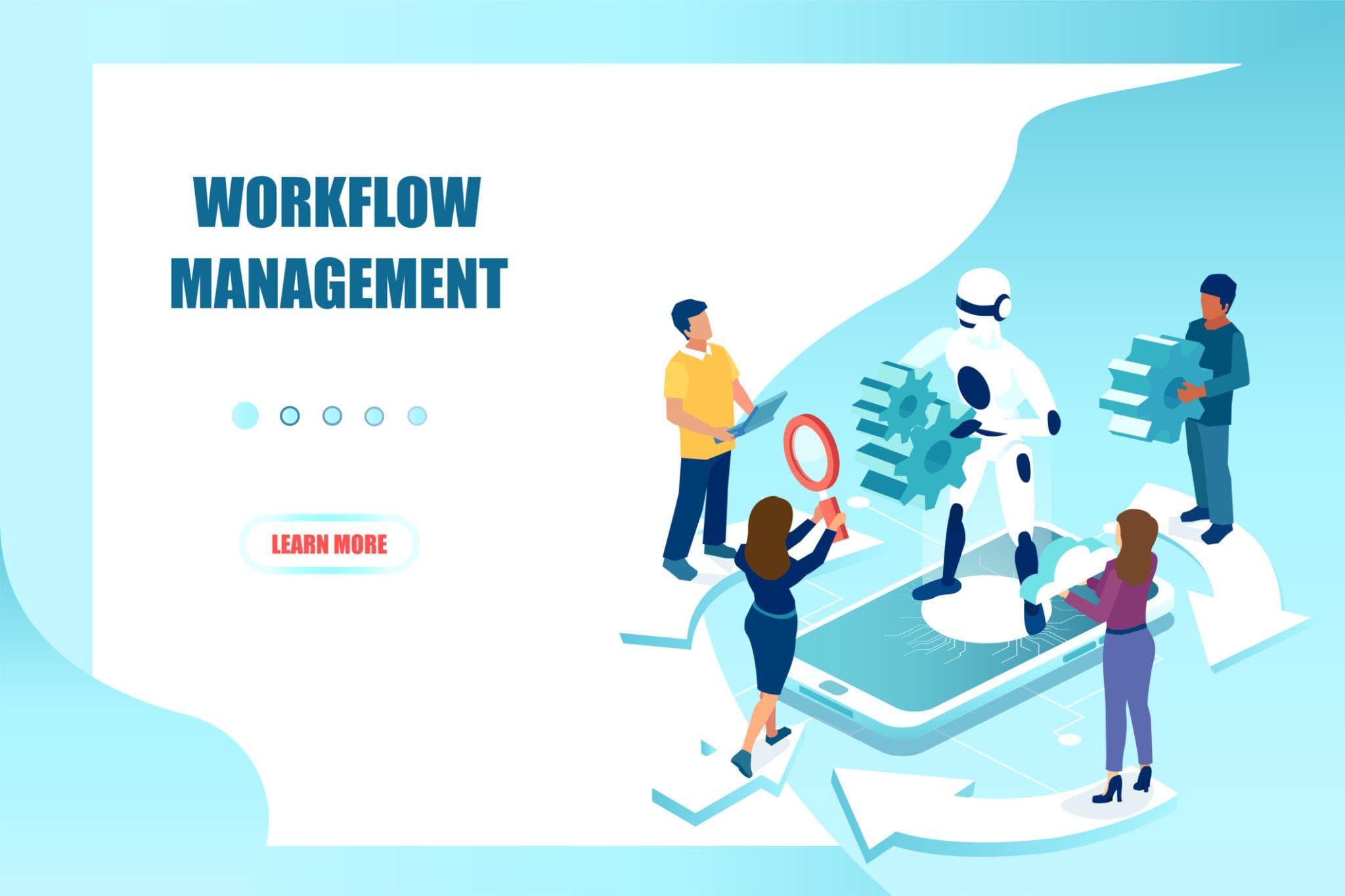
The Rise of Autonomous Enterprise Operations Powered by AI Agents
Related articles
View all →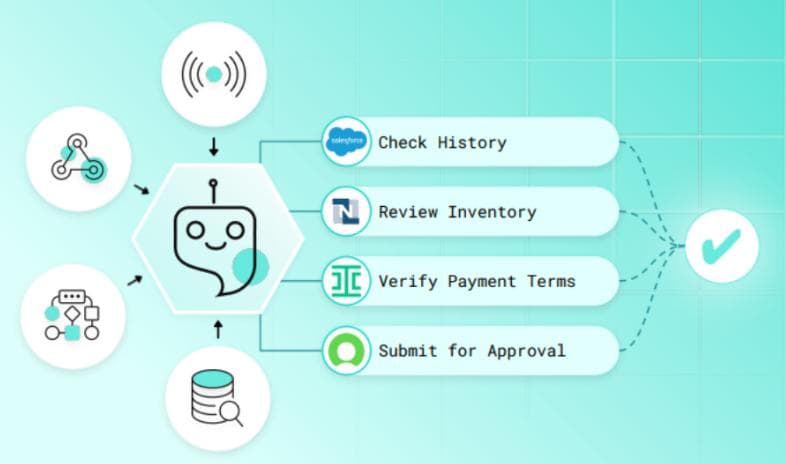 AI Execution
Why AI Execution Systems Will Define the Future of Enterprise Operations
The next frontier of enterprise competitive advantage is not strategy it is execution. AI execution systems that translate strategic intent into coordinated operational action, faster and more reliably than any human-managed process, are becoming the defining infrastructure of enterprise performance in every sector.
 Autonomous Coordination
The Rise of Autonomous Enterprise Coordination Platforms
Enterprise coordination the alignment of people, processes, information, and resources across organisational boundaries has always been expensive, slow, and error-prone when managed through human intermediaries alone. Autonomous coordination platforms powered by AI are replacing the coordination overhead of large organisations with intelligent systems that synchronise the enterprise continuously and without manual intervention.
 AI Agents
How AI Agents Are Transforming Enterprise Workflow Intelligence
AI agents autonomous systems that perceive their environment, reason about objectives, and take action across enterprise workflows are moving from research concept to operational reality. The enterprises deploying AI agents at scale are discovering that workflow intelligence is not just about automation it is about creating organisational capability that compounds with every cycle.