How AI Agents Are Transforming Enterprise Workflow Intelligence
AI agents autonomous systems that perceive their environment, reason about objectives, and take action across enterprise workflows are moving from research concept to operational reality. The enterprises deploying AI agents at scale are discovering that workflow intelligence is not just about automation it is about creating organisational capability that compounds with every cycle.
Aditya Sharma
Author
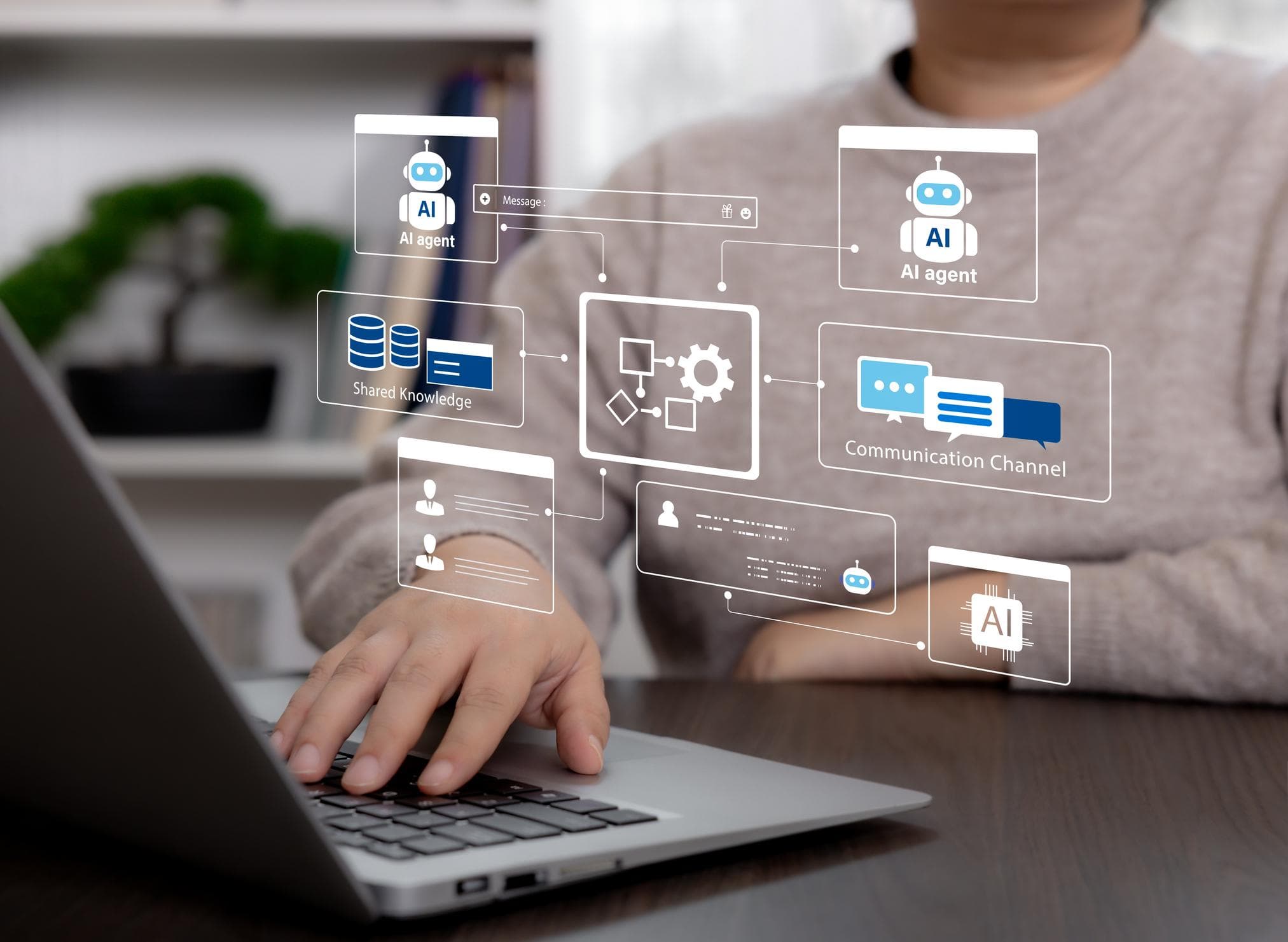
The distinction between AI automation and AI agency is the most important conceptual shift in enterprise AI deployment. Automation executes predefined processes reliably and at scale it does what it has been programmed to do, in the sequence it has been programmed to do it, without deviation or adaptation. Agency is qualitatively different: an AI agent perceives the state of its environment, reasons about the objectives it has been given, selects from a range of possible actions, executes the selected action, and updates its understanding based on the result adapting its approach as conditions change without requiring explicit reprogramming. This agentic capability is what allows AI systems to handle the complexity, variability, and judgment requirements of real enterprise workflows rather than only the structured, rule-based processes that traditional automation addresses. The enterprises that understand this distinction and deploy AI agents where agency rather than automation is what the workflow requires will build operational capabilities that traditional RPA and workflow automation investments cannot replicate.
The Difference Between Automation and Agency in Enterprise Workflows
Traditional enterprise workflow automation works well for processes that are fully specified, consistently structured, and stable over time. Invoice processing, data entry, scheduled reporting, and standard approval routing are examples of workflows where automation delivers reliable, high-quality results because the inputs, decision rules, and outputs are well-defined and do not require contextual judgment to handle correctly. The limitation of automation appears when workflows involve variability, exception handling, multi-step reasoning, or the need to integrate information from sources that are not predetermined which describes a significant proportion of the high-value enterprise workflows that create the most leverage when optimised.AI agents handle this variability because they reason about the objective of the workflow rather than following a fixed sequence of steps. An AI agent managing a complex customer escalation does not follow a decision tree it understands the customer's situation, identifies the relevant policies and options, reasons about the best resolution path given the specific context, takes the appropriate actions across multiple systems, and confirms resolution with the customer. Each step involves contextual judgment that automation cannot exercise. The result is a workflow system that handles the full range of real-world inputs, including the edge cases and exceptions that cause traditional automation to fail and require human fallback, at a quality and consistency that matches or exceeds experienced human operators.
Four Enterprise Workflow Domains Where AI Agents Are Creating Transformative Value
Domain 1: Intelligent customer operations
AI agents in customer operations handle the full range of customer interactions from routine enquiries through complex multi-step service requests to sensitive escalations with the contextual understanding and adaptive reasoning that genuinely good customer service requires. Unlike rule-based chatbots that fail on inputs they were not programmed for, AI agents can reason about customer intent, access relevant account information, apply appropriate policies, and execute resolution actions across multiple backend systems in a single interaction. The customer experience quality produced by well-designed AI agents is indistinguishable from skilled human agents for a growing proportion of interaction types at a fraction of the per-interaction cost and with 24-hour availability.
Domain 2: Autonomous research and intelligence workflows
AI agents are transforming research and intelligence workflows across strategy, competitive intelligence, market analysis, and regulatory monitoring functions. An AI agent tasked with producing a competitive landscape analysis does not retrieve a template and fill in predetermined fields it reasons about what information is relevant, identifies and accesses the appropriate sources, synthesises information across sources into coherent insights, identifies gaps and contradictions in the available evidence, and produces a structured output that reflects genuine analytical judgment. The research quality that AI agents produce in mature deployments is comparable to experienced human analysts at dramatically lower cost and in a fraction of the time.
Domain 3: Supply chain and procurement intelligence
AI agents in supply chain and procurement workflows manage the continuous monitoring, decision-making, and coordination activities that keep complex supply chains functioning identifying supply risks, evaluating alternative sourcing options, initiating procurement actions within defined parameters, coordinating with suppliers on delivery issues, and escalating to human decision-makers only when situations require judgment beyond the agent's defined authority. The result is a supply chain management function that operates with greater responsiveness, lower management overhead, and more consistent application of procurement policy than human-managed alternatives at comparable scale.
Domain 4: Financial operations and compliance monitoring
AI agents in financial operations manage the continuous monitoring, reconciliation, and compliance activities that financial functions require detecting anomalies in transaction flows, initiating investigation workflows when suspicious patterns are identified, managing the documentation and reporting requirements of regulatory compliance, and coordinating the resolution of financial discrepancies across systems and counterparties. The consistency and coverage of AI agent monitoring in financial operations consistently exceeds what human teams can achieve at comparable cost with the additional advantage of producing complete, auditable records of every monitoring action and decision.
AI Agent Deployment Diagnostic Questions
- Which of your enterprise workflows currently require human handling primarily because of variability and exception management rather than because of genuine judgment complexity? These workflows are the primary AI agent deployment opportunity they appear to require humans but actually require agency, which AI agents can provide.
- What is your current cost per interaction or transaction in your highest-volume workflow processes and what proportion of that cost is the human labor required for variability handling and exception management? This proportion is the economic opportunity that AI agent deployment addresses.
- Do you have the workflow documentation and system integration infrastructure required to deploy AI agents effectively clear objective definitions, access to relevant data sources, integration with the systems agents need to act in, and defined escalation boundaries? Without this infrastructure, AI agent deployment will be constrained by integration gaps rather than agent capability.
- How do you currently measure the quality of outcomes in your high-volume operational workflows and do you have the baseline metrics required to evaluate the performance of AI agents relative to human-managed alternatives? Without output quality baselines, AI agent performance cannot be evaluated rigorously.
- What governance framework do you have for AI agents that make or support decisions affecting customers, employees, or financial outcomes including performance monitoring, drift detection, escalation protocols, and human override mechanisms? AI agents operating without governance infrastructure create operational and reputational risk that is difficult to manage after deployment.
- Which of your competitors are currently deploying AI agents in operational workflows and what capability and cost advantages are they building as a result? The competitive urgency of AI agent deployment is determined by the pace of adoption among the enterprises you are competing with directly.
Why Global Enterprises Need AI-Native Operational Infrastructure
Related articles
View all →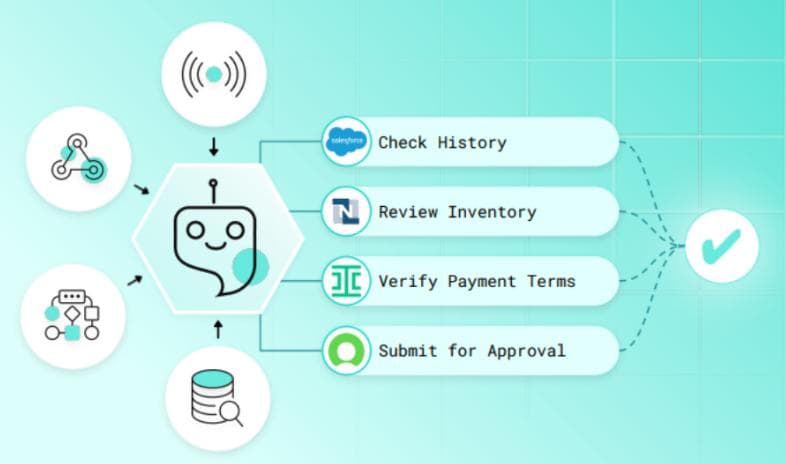 AI Execution
Why AI Execution Systems Will Define the Future of Enterprise Operations
The next frontier of enterprise competitive advantage is not strategy it is execution. AI execution systems that translate strategic intent into coordinated operational action, faster and more reliably than any human-managed process, are becoming the defining infrastructure of enterprise performance in every sector.
 Autonomous Coordination
The Rise of Autonomous Enterprise Coordination Platforms
Enterprise coordination the alignment of people, processes, information, and resources across organisational boundaries has always been expensive, slow, and error-prone when managed through human intermediaries alone. Autonomous coordination platforms powered by AI are replacing the coordination overhead of large organisations with intelligent systems that synchronise the enterprise continuously and without manual intervention.
AI-Native InfrastructureWhy Global Enterprises Need AI-Native Operational Infrastructure
The operational infrastructure that global enterprises built in the pre-AI era was designed for a different competitive environment. Enterprises that try to layer AI on top of legacy operational infrastructure will capture a fraction of AI's potential. The ones that rebuild their operational foundations as AI-native will gain structural advantages their competitors cannot close.