Why AI Execution Systems Will Define the Future of Enterprise Operations
The next frontier of enterprise competitive advantage is not strategy it is execution. AI execution systems that translate strategic intent into coordinated operational action, faster and more reliably than any human-managed process, are becoming the defining infrastructure of enterprise performance in every sector.
Manthan Sharma
Author
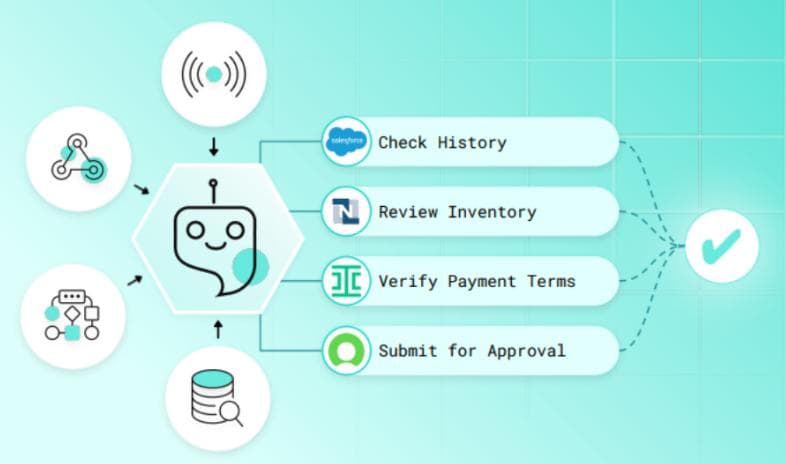
The gap between strategy and execution has been one of the most persistent and expensive problems in enterprise management. Research consistently shows that the majority of strategic initiatives fail not because the strategy was wrong but because the organisation could not execute it could not translate high-level intent into the coordinated operational actions, resource allocations, and process adjustments that strategy requires. Human-managed execution systems are slow, inconsistent, and unable to maintain coordination across the complexity of a modern large enterprise without significant overhead. AI execution systems intelligent platforms that receive strategic direction, decompose it into operational tasks, coordinate the resources required, monitor progress in real time, and adjust dynamically when conditions change are solving this problem at a level of speed and reliability that human-managed execution cannot approach. The enterprises that deploy AI execution systems as their core operational infrastructure will execute strategy faster, more consistently, and with less management overhead than any competitor relying on traditional execution models. This is not an incremental improvement it is a structural shift in what enterprise operations can deliver.
The Execution Gap AI Is Closing
The execution gap in large enterprises is produced by a specific set of structural problems that scale with organisational complexity. Strategic decisions made at the top of the organisation must be translated into operational actions by multiple layers of management, each of which introduces interpretation variance, prioritisation conflicts, and coordination overhead. Information about execution progress flows back up through the same layers slowly and selectively, giving senior leaders a picture of operational reality that is filtered, delayed, and often incomplete. When conditions change a market shift, a supply disruption, a competitive development the organisation's ability to adjust execution in real time is constrained by the speed at which new direction can travel down the same layers and produce coordinated operational response.AI execution systems replace this layer-by-layer translation and coordination model with direct, real-time connection between strategic intent and operational action. The system receives strategic objectives, decomposes them into operational tasks with defined owners, timelines, and resource requirements, monitors execution progress against plan in real time, identifies deviations before they become failures, and adjusts coordination dynamically as conditions change. The management layers that previously performed this translation and coordination function shift from execution management to strategic direction and exception handling a role that requires their judgment and contextual knowledge rather than their bandwidth as coordination intermediaries.
Four Capabilities That Define AI Execution Systems
Capability 1: Strategic intent decomposition
AI execution systems receive high-level strategic objectives and decompose them into structured operational plans identifying the specific tasks, dependencies, resource requirements, and success criteria that execution of the strategy requires. This decomposition is not a one-time planning exercise; it is a dynamic process that updates as new information about execution progress, resource availability, and external conditions arrives. The quality of strategic intent decomposition the degree to which the operational plan accurately reflects what the strategy requires and what the organisation can realistically deliver is the primary determinant of execution system effectiveness, and it improves continuously as the system learns from the outcomes of previous decomposition and execution cycles.
Capability 2: Real-time execution monitoring and deviation detection
AI execution systems maintain continuous visibility into the status of every task, resource, and dependency in the operational plan detecting deviations from plan in real time rather than discovering them in periodic progress reports. The system distinguishes between deviations that are within acceptable tolerance and those that require intervention, routes alerts to the appropriate decision-makers with the context required for rapid response, and maintains a complete audit trail of execution events that supports both operational learning and governance requirements. The speed of deviation detection is the critical capability: a deviation identified and corrected in hours produces a fraction of the impact of the same deviation discovered in a weekly status report.
Capability 3: Dynamic resource coordination
Enterprise execution requires the coordination of resources people, budget, technology, and external partners across organisational boundaries and competing priorities. AI execution systems manage this coordination dynamically, adjusting resource allocation in response to changing execution requirements, identifying resource bottlenecks before they constrain progress, and surfacing trade-off decisions to human decision-makers with the relevant context and options clearly framed. This dynamic coordination capability is the specific function where AI execution systems deliver the largest performance improvement over human-managed coordination: the system can simultaneously optimise resource allocation across hundreds of concurrent workstreams in ways that no human coordination team could achieve.
Capability 4: Adaptive execution intelligence
AI execution systems learn from every execution cycle identifying the patterns of task sequencing, resource allocation, and coordination that produce successful outcomes, and applying these patterns to improve future execution planning. Over time, the system develops an institutional execution intelligence that captures the organisation's learned experience more completely and applies it more consistently than any human team could. This adaptive intelligence is the compounding advantage of AI execution systems: the system becomes more capable with every execution cycle, producing an execution quality improvement trajectory that human-managed systems cannot match.
AI Execution System Readiness Diagnostic
- What is your current average time from strategic decision to coordinated operational implementation across your enterprise? Above 30 days indicates an execution system whose translation and coordination speed is constraining strategic responsiveness.
- How do you currently monitor execution progress against strategic plans and how quickly does a significant deviation from plan reach the attention of the leader responsible for correcting it? Above 72 hours indicates an execution visibility gap with material strategic risk.
- What percentage of your strategic initiatives deliver their intended outcomes on time and within budget? Below 50% indicates an execution capability problem that is systematically destroying strategic value.
- How much management time is currently consumed by execution coordination status meetings, progress reporting, resource allocation discussions, and escalation handling? This time is the overhead cost of your current execution model and the primary efficiency opportunity for AI execution systems.
- Do you have real-time visibility into the status of all active strategic initiatives simultaneously with the ability to identify which are on track, which are at risk, and which have already missed critical milestones? Without this visibility, execution management is reactive rather than proactive.
- What institutional execution knowledge does your organisation have the patterns of task sequencing, resource allocation, and coordination that produce successful outcomes and how consistently is this knowledge applied across different initiatives and teams? Inconsistent application of institutional execution knowledge is a primary driver of execution variance.
The Rise of Autonomous Enterprise Coordination Platforms
Related articles
View all →Autonomous CoordinationThe Rise of Autonomous Enterprise Coordination Platforms
Enterprise coordination the alignment of people, processes, information, and resources across organisational boundaries has always been expensive, slow, and error-prone when managed through human intermediaries alone. Autonomous coordination platforms powered by AI are replacing the coordination overhead of large organisations with intelligent systems that synchronise the enterprise continuously and without manual intervention.
 AI Agents
How AI Agents Are Transforming Enterprise Workflow Intelligence
AI agents autonomous systems that perceive their environment, reason about objectives, and take action across enterprise workflows are moving from research concept to operational reality. The enterprises deploying AI agents at scale are discovering that workflow intelligence is not just about automation it is about creating organisational capability that compounds with every cycle.
 AI-Native Infrastructure
Why Global Enterprises Need AI-Native Operational Infrastructure
The operational infrastructure that global enterprises built in the pre-AI era was designed for a different competitive environment. Enterprises that try to layer AI on top of legacy operational infrastructure will capture a fraction of AI's potential. The ones that rebuild their operational foundations as AI-native will gain structural advantages their competitors cannot close.