How Super Manager AGI Enables Real-Time Enterprise Decision Execution
The bottleneck in most enterprises is not strategy, capital, or talent. It is execution speed the time between a decision being made and that decision producing a result. Super Manager AGI eliminates this bottleneck by collapsing the decision-execution cycle from days to seconds across every layer of the enterprise.
Manthan Sharma
Author
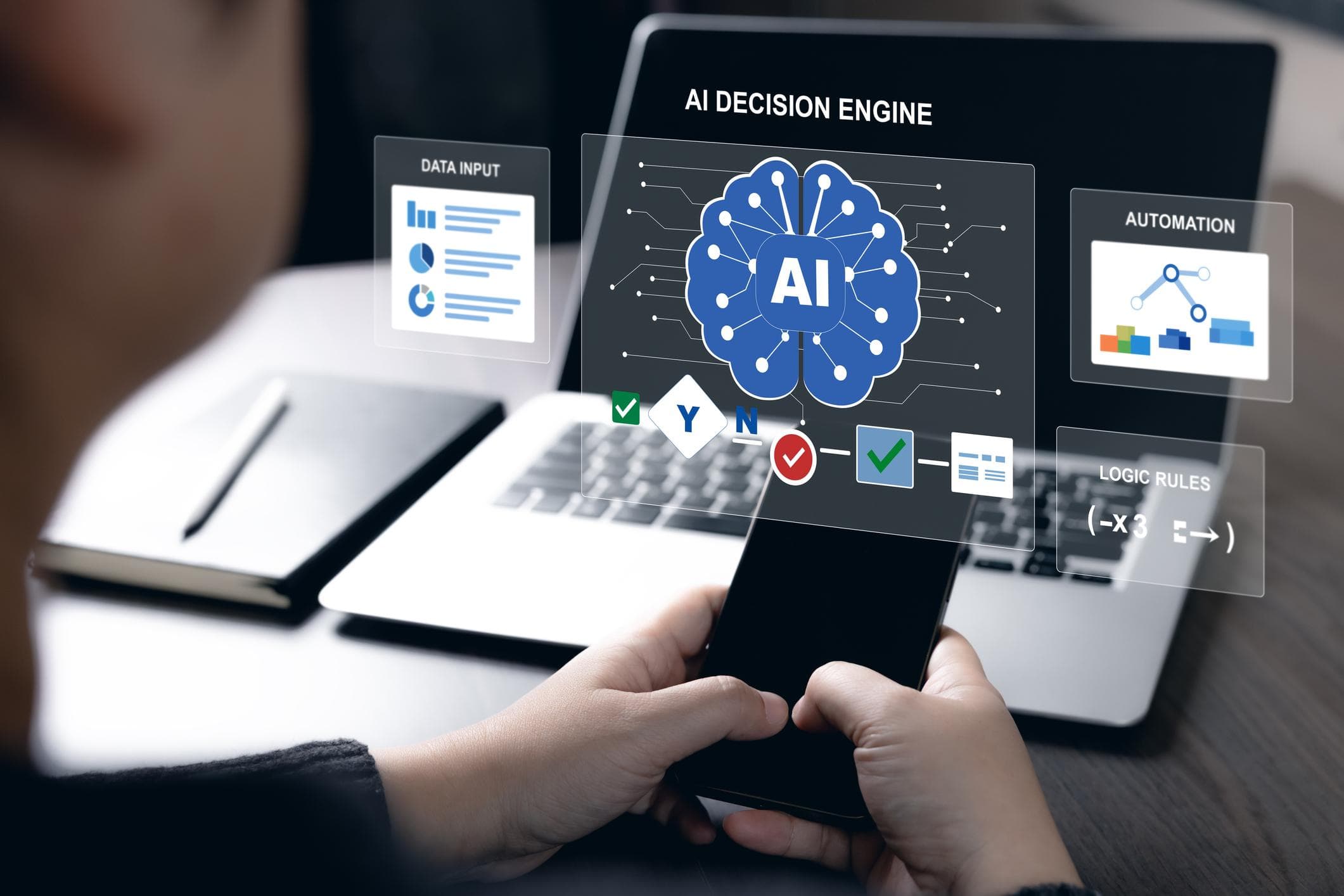
Every enterprise operates with a hidden tax on its performance: the execution lag. It is the time between a sales leader recognising that a deal is at risk and the customer success team being mobilised to intervene. It is the time between a supply chain manager identifying a sourcing disruption and the procurement team issuing alternative purchase orders. It is the time between a financial controller spotting a budget variance and the relevant business unit adjusting its spending behaviour. In each case, the decision what needs to be done is often clear. The constraint is execution: the time required to communicate the decision, gain alignment, navigate approval processes, and coordinate the actions of multiple people across multiple systems to produce the intended outcome. In fast-moving competitive environments, this execution lag is the difference between catching a problem before it becomes a crisis and managing a crisis that should have been prevented. Super Manager AGI an AI system capable of not just advising on decisions but coordinating and executing them across the full operational fabric of the enterprise in real time is the architecture that eliminates this lag. It does not replace the human leaders who make the strategic decisions. It compresses to near-zero the time between those decisions and their operational execution.
The Decision-Execution Gap: Where Enterprise Value Is Lost
The decision-execution gap is one of the most significant and least discussed sources of enterprise value destruction. Strategy consultants spend enormous effort helping organisations make better decisions. Technology vendors spend enormous resources building systems that help organisations make faster decisions. Very little attention is paid to what happens between the decision and the outcome the execution chain that translates a decision into operational reality. In a typical large enterprise, a decision made at the senior leadership level must travel through multiple organisational layers from the executive who made it to the managers who must implement it, to the teams who must execute the specific actions, across the multiple systems that those actions must be performed in before it produces any change in the external world. Each handoff in this chain introduces delay, information loss, and the risk of misinterpretation. Each system that must be updated or actioned requires a human to log in, navigate the interface, and make the change. Each approval that must be obtained requires a human to review the request and decide.The cumulative effect of these frictions is an execution lag that, in complex organisations managing high operational complexity, can stretch from hours to weeks for decisions that the business environment demands be implemented in minutes. Super Manager AGI addresses this gap not by making the individual steps in the execution chain faster though it does that but by compressing the chain itself: intelligently routing decisions to the right execution systems, coordinating the actions required across those systems simultaneously rather than sequentially, and monitoring the execution to ensure that the intended outcome is being produced and intervening when it is not. The result is an enterprise that operates at a speed that its human management structure alone cannot achieve.
The Four Capabilities That Define Super Manager AGI
Capability 1: Enterprise-wide situational awareness
Super Manager AGI maintains a continuously updated model of the enterprise's operational state synthesising data from every system, every process, and every external signal into a coherent situational picture that a human manager would need hours to assemble and can only maintain for a narrow slice of the enterprise. This situational awareness is not passive monitoring. It is active interpretation: understanding which signals are significant, which combinations of signals indicate emerging problems or opportunities, and which current decisions need to be made in light of the current state. An enterprise AGI system that knows, at every moment, which customer accounts are at risk, which supply chain commitments are in jeopardy, which budget lines are trending toward variance, and which operational processes are running below performance targets and understands the interdependencies between all of these has the situational awareness required to coordinate execution intelligently rather than mechanically.
Capability 2: Multi-system execution coordination
Real-time decision execution requires the ability to coordinate actions across multiple enterprise systems simultaneously not just issuing instructions to one system, but orchestrating a sequence of interdependent actions across ERP, CRM, supply chain, HR, and operational systems that together produce the intended outcome. Super Manager AGI coordinates this multi-system execution by understanding the dependencies between actions, sequencing them correctly, handling the exceptions that arise when individual system actions do not produce the expected result, and verifying that the collective outcome of all system actions matches the intended decision outcome. This multi-system coordination capability is what distinguishes enterprise AGI from single-system automation and from point AI solutions that operate within one domain.
Capability 3: Adaptive execution under uncertainty
Real-world execution rarely proceeds exactly as planned. Suppliers respond differently than expected. Customer behaviour deviates from the model. System actions produce unexpected results. Super Manager AGI adapts its execution approach in response to these deviations not rigidly executing a plan that is no longer producing the intended outcome, but reassessing the situation as it evolves and adjusting the execution approach to achieve the original objective through an alternative path. This adaptive execution capability is what makes Super Manager AGI suitable for the complex, variable environments of real enterprise operations as opposed to the clean, deterministic scenarios that conventional automation handles well.
Capability 4: Human leadership augmentation, not replacement
Super Manager AGI is designed to augment human leadership, not replace it. The strategic decisions what the enterprise is trying to achieve, how it wants to compete, what values should guide its behaviour remain with human leaders. What Super Manager AGI handles is the operational execution layer: translating strategic direction into coordinated action across the enterprise at a speed and scale that human execution cannot match. Human leaders using Super Manager AGI spend less time managing execution following up to ensure actions were taken, resolving coordination failures, and managing the communication overhead of complex cross-functional initiatives and more time on the genuinely strategic work of direction-setting, stakeholder management, and organisational development that no AGI system can replicate.
The Super Manager AGI Deployment Diagnostic
- Have you quantified the execution lag in your highest-stakes operational processes the time between a decision being made and that decision producing measurable operational change and assessed the business value of compressing this lag?
- Do you have the enterprise data integration architecture that would allow an AGI system to maintain real-time situational awareness across all significant operational domains or are your data systems too siloed to support cross-enterprise context comprehension?
- Have you identified the specific execution coordination failures that are most costly in your enterprise the cross-functional coordination breakdowns, approval process delays, and communication failures that regularly cause decisions to be implemented too slowly or incorrectly?
- Do you have a governance framework for AGI-coordinated execution defining the scope of autonomous execution authority, the escalation criteria for human leadership involvement, and the audit requirements for AGI decision records?
- Is your leadership team prepared to operate in an AGI-augmented execution environment understanding how to direct AGI systems effectively, how to verify that AGI execution is producing intended outcomes, and how to maintain meaningful human oversight of AGI-coordinated operations?

Why Enterprise Leaders Need AI-Orchestrated Workflow Management Systems
Related articles
View all → Autonomous Coordination
The Rise of Autonomous Enterprise Coordination Platforms
Enterprise coordination the alignment of people, processes, information, and resources across organisational boundaries has always been expensive, slow, and error-prone when managed through human intermediaries alone. Autonomous coordination platforms powered by AI are replacing the coordination overhead of large organisations with intelligent systems that synchronise the enterprise continuously and without manual intervention.
 AI Agents
How AI Agents Are Transforming Enterprise Workflow Intelligence
AI agents autonomous systems that perceive their environment, reason about objectives, and take action across enterprise workflows are moving from research concept to operational reality. The enterprises deploying AI agents at scale are discovering that workflow intelligence is not just about automation it is about creating organisational capability that compounds with every cycle.
 AI-Native Infrastructure
Why Global Enterprises Need AI-Native Operational Infrastructure
The operational infrastructure that global enterprises built in the pre-AI era was designed for a different competitive environment. Enterprises that try to layer AI on top of legacy operational infrastructure will capture a fraction of AI's potential. The ones that rebuild their operational foundations as AI-native will gain structural advantages their competitors cannot close.