AI-Driven Workforce Optimization for Large Enterprises
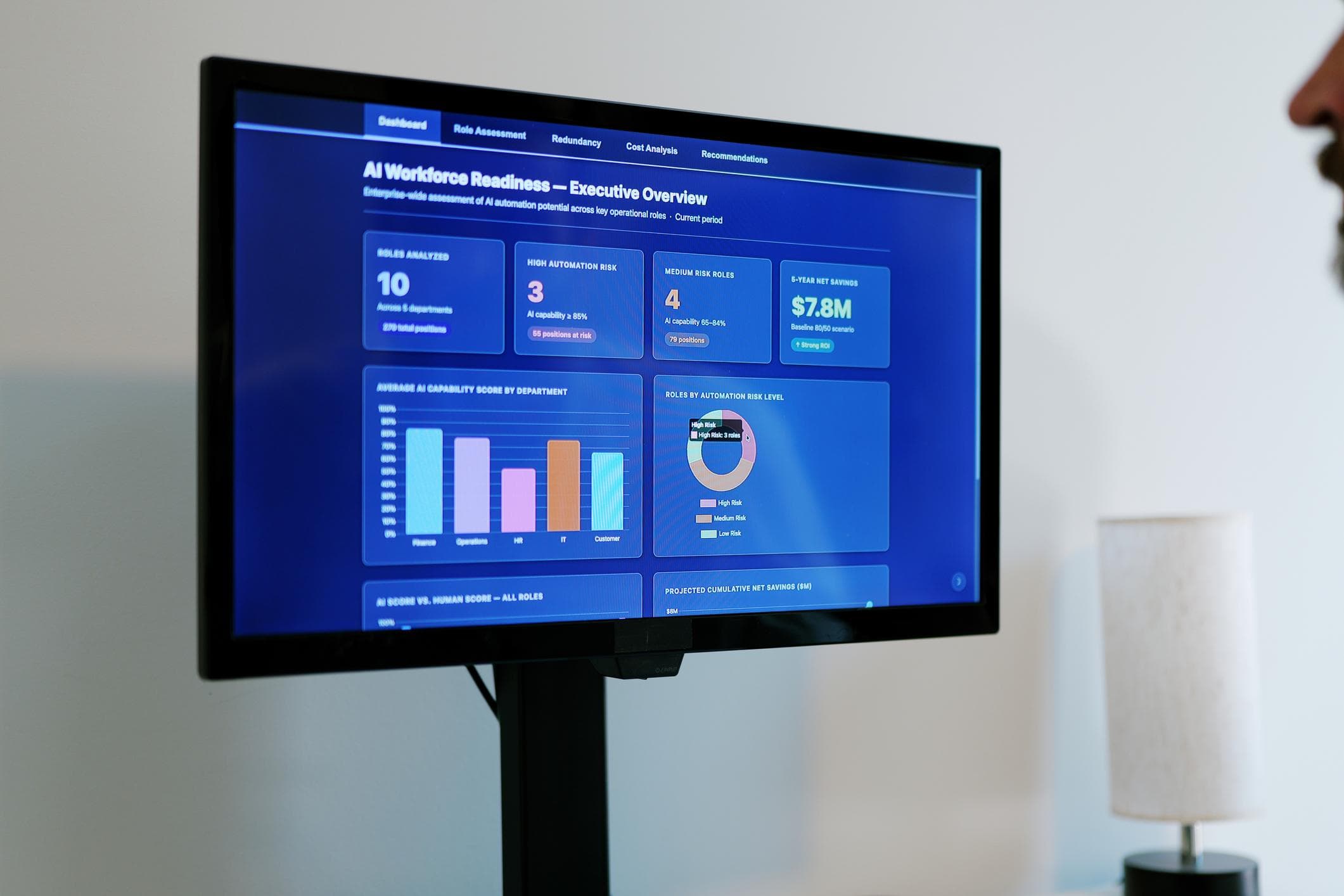
AI optimizes workforce allocation, utilization, and development continuously vs periodic planning.
Manthan Sharma
Author

Workforce optimization: 78% utilization vs 62% traditional through continuous AI-driven allocation.
Strategic Context and Competitive Implications
AI-Driven Workforce Optimization for Large Enterprises represents transformation creating structural competitive advantages. Organizations achieving this operate with 40-70% efficiency gains, 10-20x decision velocity, and cost structures enabling continuous innovation.Implementation window narrowing as technologies mature and playbooks emerge. Organizations committing in 2026-2027 capture first-mover advantages. Delay means permanent disadvantage.Strategic choice: lead transformation now or follow from disadvantaged position.
Implementation Framework and Success Factors
Implementation challenges are organizational not technical. Proven approach: high-impact workflows, governance first, change management, sustained commitment through 18-36 month transformation.Critical success factors: executive sponsorship, adequate governance investment, framework accountability models, systematic expansion, clear outcome metrics.Organizations treating as operational transformation succeed. Those treating as technology deployment fail despite greater investment.
Performance Transformation and Market Impact
Organizations implementing ai-driven workforce optimization for large enterprises achieve 2-5x throughput increases, 40-60% quality improvements, decision latency compressed 10-20x. Advantages compound through self-reinforcing cycles.By 2030 clear market differentiation: winners with permanent advantages vs laggards facing intensifying pressure across share, talent, customers, and capabilities.Strategic imperative: commit to transformation in 2026-2027 or accept permanent competitive disadvantage against enterprises establishing capabilities earlier.
Related articles
View all → Super Manager AGI
How Super Manager AGI Enables Continuous Enterprise Execution and Optimization
The periodic management review cycle is the fundamental rhythm of most enterprise management. Super Manager AGI is replacing it with continuous execution and optimisation a management model that adapts in real time rather than at monthly or quarterly intervals.
 Autonomous Operations
The Rise of Autonomous Business Operations in Large Enterprises
Autonomous business operations are not the future of large enterprises they are the present. The largest organisations in the world are already running significant portions of their operations autonomously. The question is no longer whether autonomous operations are viable. It is how fast the adoption will spread, and which enterprises will lead it.