AI for Inventory Forecasting: What Works and What Doesn't
AI-powered demand forecasting promises to eliminate stockouts and dead inventory simultaneously. In practice, it delivers on the promise for some categories and fails entirely for others. Understanding which is which before deployment saves months of expensive disappointment.
Nirmal Nambiar
Author

A personal care brand deployed an AI demand forecasting system across its entire SKU range. For its top 20 SKUs stable, high-velocity products with 18+ months of consistent sales history the system reduced stockout frequency by 60% and overstock by 35%. For its bottom 80 SKUs new products, seasonal items, and slow-moving tail inventory the system performed worse than the brand's existing manual estimates. The AI was not broken. It was deployed on data conditions where it cannot perform well. Understanding where AI forecasting works and where it does not is the prerequisite for deployment, not the post-mortem.
Where AI Forecasting Outperforms Human Judgment
AI demand forecasting reliably outperforms human judgment in three conditions: high-velocity SKUs with at least 12 months of stable sales history (the model has enough signal and the signal is consistent), products with identifiable external demand drivers that can be incorporated as model features (weather, holidays, promotional calendars), and large SKU portfolios where human planners lack the cognitive bandwidth to track each item's demand pattern individually.In these conditions, AI captures patterns seasonal amplitude, promotional lift decay rates, inventory-demand elasticity that human planners systematically miss or simplify. The performance improvement is typically 20-40% reduction in forecast error, which translates to proportionally lower safety stock requirements and proportionally lower stockout frequency.
Where AI Forecasting Fails
AI demand forecasting fails or underperforms in three conditions: new products with less than 6 months of sales history (insufficient data for the model to learn meaningful patterns), products with highly irregular demand driven by external events that are not captured in the feature set (a product that went viral once does not have a learnable virality pattern), and categories where demand is fundamentally driven by relationship and sales effort rather than market-level factors.In these conditions, statistical baselines, human judgment with market context, and hybrid approaches AI forecast anchored by human adjustment outperform pure AI forecasting. The deployment decision should map SKUs to conditions before selecting the forecasting method, not apply AI universally and measure the outcome.

The Founder's AI Stack for 2026
Related articles
View all → Autonomous Coordination
The Rise of Autonomous Enterprise Coordination Platforms
Enterprise coordination the alignment of people, processes, information, and resources across organisational boundaries has always been expensive, slow, and error-prone when managed through human intermediaries alone. Autonomous coordination platforms powered by AI are replacing the coordination overhead of large organisations with intelligent systems that synchronise the enterprise continuously and without manual intervention.
 AI Agents
How AI Agents Are Transforming Enterprise Workflow Intelligence
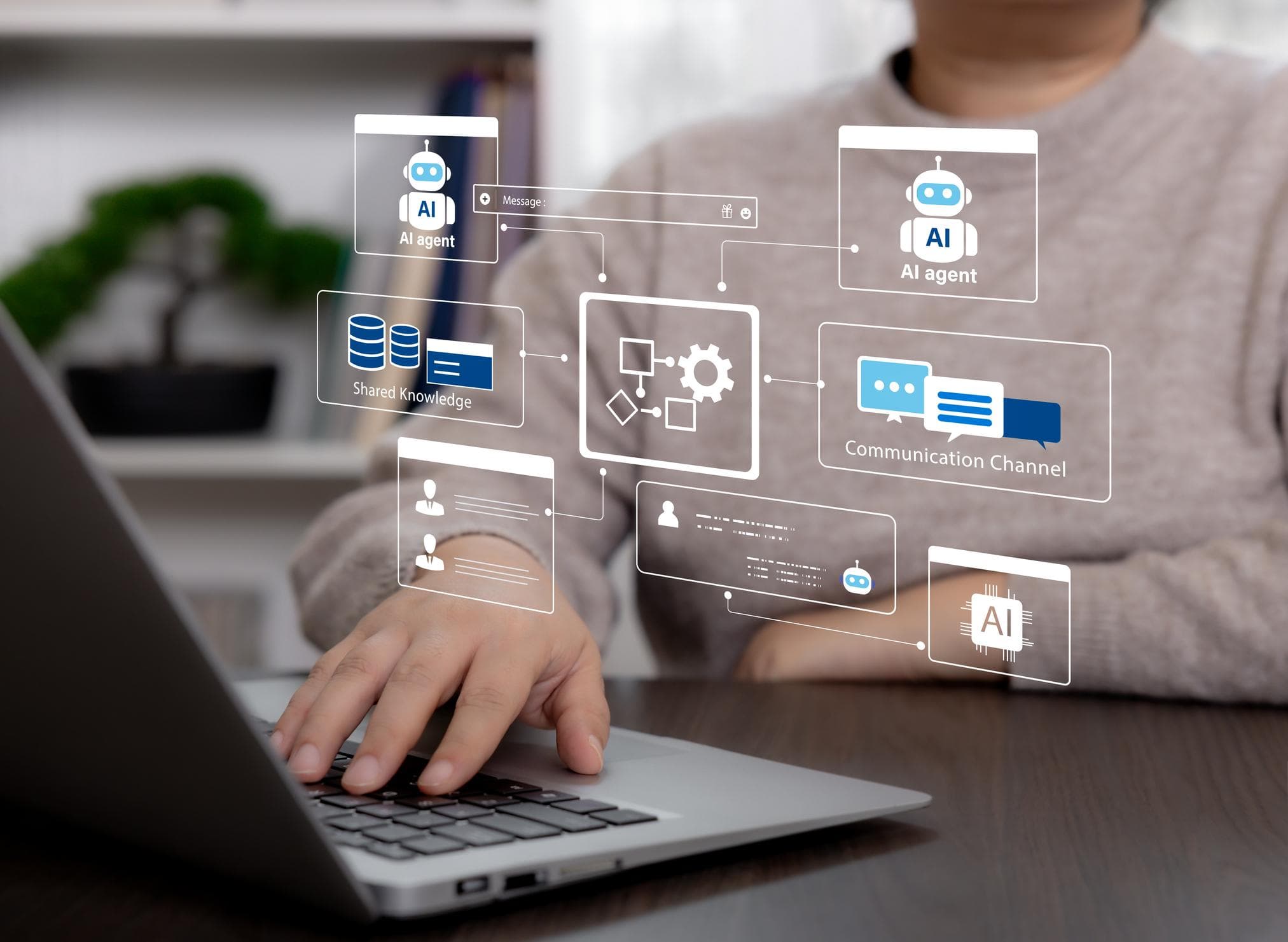
AI agents autonomous systems that perceive their environment, reason about objectives, and take action across enterprise workflows are moving from research concept to operational reality. The enterprises deploying AI agents at scale are discovering that workflow intelligence is not just about automation it is about creating organisational capability that compounds with every cycle.
 AI-Native Infrastructure
Why Global Enterprises Need AI-Native Operational Infrastructure
The operational infrastructure that global enterprises built in the pre-AI era was designed for a different competitive environment. Enterprises that try to layer AI on top of legacy operational infrastructure will capture a fraction of AI's potential. The ones that rebuild their operational foundations as AI-native will gain structural advantages their competitors cannot close.