AI-Generated Code: Who Owns the Copyright?
By early 2026, approximately 50% of enterprise code is AI-assisted. The copyright framework governing this code has not kept pace. Courts in the US, EU, and India are arriving at different answers. The legal ambiguity has real consequences for every company that ships software.
Prince Kumar
Author
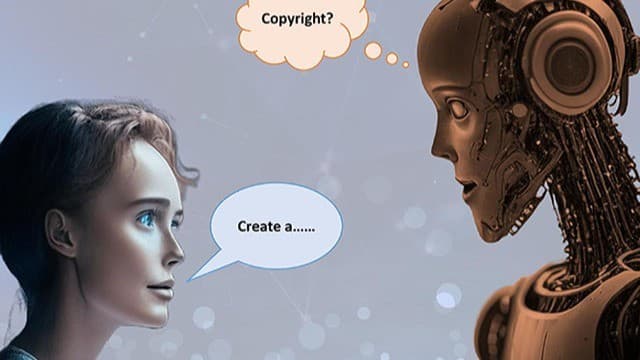
Copyright law was built on a foundational assumption: creative works are produced by human authors, and those authors receive the exclusive right to control their work's use and distribution. When a developer writes code, they own it (or their employer does, under a work-for-hire doctrine). When a developer prompts GitHub Copilot to write code and the tool produces a fifty-line function, the question of who owns that function the developer who wrote the prompt, the company that built the tool, the developers whose open-source code was in the training data, or nobody is one that copyright law did not anticipate and that courts around the world are actively wrestling with in 2026. By early 2026, approximately 50% of enterprise code contains AI-assisted elements. The ambiguity in who owns that code has real consequences: for licensing, for open-source compliance, for M&A due diligence, and for the ability to enforce intellectual property rights against competitors who copy your AI-assisted codebase.
What the Current Legal Framework Says
The US Copyright Office has been the most explicit in articulating a position: copyright protection requires human authorship. In a series of decisions in 2023 and 2024, the Copyright Office declined to register copyright for works generated autonomously by AI, while indicating that works where humans made sufficient creative contributions alongside AI tools could be eligible for protection of the human-contributed elements. The practical implication for code: a developer who uses GitHub Copilot to autocomplete a line or two within a larger function they authored likely retains copyright over the function as a whole. A developer who prompts an AI to generate a complete module from a high-level description has a less clear copyright claim over the output.The EU's approach under the AI Act focuses more on transparency and liability than on copyright ownership per se, but the EU Copyright Directive's application to AI training data specifically, the question of whether training on copyrighted code without licence violates copyright has produced significant litigation activity. GitHub Copilot faced a class action lawsuit in the US in 2022 alleging that training on public code repositories without licence and generating code that replicates licensed code violated copyright. The case has proceeded through courts and remains unresolved as of 2026, but has produced settlements and policy changes that reflect the legal risk.
The Training Data Problem
Separate from the question of who owns AI-generated code is the question of whether AI code generators are themselves infringing copyright by training on copyrighted code. GitHub Copilot was trained on public code repositories, including repositories with GPL, MIT, Apache, and other licences. When Copilot generates code that closely resembles code in its training data a pattern that researchers have documented, with Copilot reproducing recognisable fragments from specific licensed repositories it potentially distributes copyrighted code without the attribution or licence compliance that those licences require.The practical risk for organisations using AI code generators: there is no reliable way to know whether a block of AI-generated code contains fragments derived from licensed source code, and there is no reliable way to know what licence obligations attach to those fragments if it does. Legal teams at large technology companies have begun requiring AI-generated code to be reviewed against known-licensed codebases before shipping. Some companies have banned AI code generators entirely from use in code that will be distributed under specific open-source licences, specifically to avoid licence contamination claims.
The Indian Legal Context
India's Copyright Act 1957 does not specifically address AI-generated works. The Copyright (Amendment) Act 2012 extended protection to computer-generated works under Section 2(d)(vi), which grants copyright to the person who causes the work to be created. Some legal scholars argue this provision could extend to AI-generated code the person who causes the AI to generate the code (i.e., the person who writes the prompt or configures the system) would own the copyright. Others argue the provision was designed for simple automation and does not cover the complexity of generative AI.Indian courts have not yet issued significant rulings on AI and copyright, but the issue is likely to reach the courts as Indian technology companies many of which are significant GitHub Copilot and AI coding tool users face intellectual property disputes in domestic and international proceedings. The lack of clear domestic legal guidance creates specific risk for Indian technology companies that ship AI-assisted code into markets with more developed AI copyright frameworks, particularly the US and EU.
What Enterprise Organisations Should Do Right Now
- Conduct an audit of which AI code generation tools are being used by engineering teams, which licences govern those tools' training data and outputs, and what the tool vendor's indemnification policy covers in the event of copyright claims
- Establish a policy on the use of AI code generators for code that will be distributed under specific open-source licences specifically GPL, which has copyleft provisions that could be triggered by AI-generated fragments from GPL-licensed training data
- Require AI-generated code to be reviewed for potential licence contamination before inclusion in products distributed to customers or released as open source, using available scanning tools
- Include AI code provenance questions in M&A due diligence for technology acquisitions the target company's AI code generation practices affect the clean ownership of the codebase being acquired
- Monitor the Copilot class action litigation and regulatory developments in the EU and US that are likely to produce more definitive guidance within the next twelve to twenty-four months

Related articles
View all → Autonomous Coordination
The Rise of Autonomous Enterprise Coordination Platforms
Enterprise coordination the alignment of people, processes, information, and resources across organisational boundaries has always been expensive, slow, and error-prone when managed through human intermediaries alone. Autonomous coordination platforms powered by AI are replacing the coordination overhead of large organisations with intelligent systems that synchronise the enterprise continuously and without manual intervention.
 AI Agents
How AI Agents Are Transforming Enterprise Workflow Intelligence
AI agents autonomous systems that perceive their environment, reason about objectives, and take action across enterprise workflows are moving from research concept to operational reality. The enterprises deploying AI agents at scale are discovering that workflow intelligence is not just about automation it is about creating organisational capability that compounds with every cycle.
 AI-Native Infrastructure
Why Global Enterprises Need AI-Native Operational Infrastructure
The operational infrastructure that global enterprises built in the pre-AI era was designed for a different competitive environment. Enterprises that try to layer AI on top of legacy operational infrastructure will capture a fraction of AI's potential. The ones that rebuild their operational foundations as AI-native will gain structural advantages their competitors cannot close.