AI-Powered Enterprise Coordination for Cross-Functional Business Teams
Cross-functional coordination is one of the highest-cost, highest-friction activities in enterprise management. AI-powered coordination systems are reducing this friction dramatically and the teams that adopt them are moving faster, with fewer misalignments and less coordination overhead.
Nirmal Nambiar
Author

The cross-functional team marketing, product, operations, and finance working together toward a shared objective is the organisational unit through which most significant enterprise work gets done. It is also the organisational unit with the highest coordination cost. Each function brings different data, different priorities, different timelines, and different definitions of success. Aligning these differences requires meetings, negotiations, escalations, and the constant flow of status communications that keep everyone working from the same picture of reality. AI-powered coordination systems that maintain a shared operational picture across all team members in real time, surface alignment gaps before they become conflicts, automate the routine coordination communications that consume significant team bandwidth, and route decisions to the right people at the right time are reducing the overhead of cross-functional coordination significantly.
Where Cross-Functional Coordination Breaks Down
Cross-functional coordination failures follow predictable patterns. The most common is information asymmetry: different functions working from different versions of the same data, with no mechanism to ensure that the product team's demand forecast is the same one the operations team is using for production planning, or that the marketing team's launch timeline is consistent with the supply chain team's inventory readiness date. This asymmetry is not caused by negligence it is caused by the absence of a shared, authoritative information layer that all functions access in real time.The second most common failure is decision routing breakdown: situations that require cross-functional decision-making that fall into the gaps between individual functional accountability, with no clear owner and no process for resolving them without escalation. The third is timeline misalignment: functions operating on different planning cycles and review cadences, with no coordination mechanism that surfaces timeline conflicts before they create downstream delays. AI-powered coordination systems address all three failure patterns by providing the shared information layer, the automated decision routing, and the cross-functional timeline visibility that make these failures less likely.
AI-Powered Coordination Capabilities
The Shared Intelligence Layer
The foundation of AI-powered cross-functional coordination is a shared intelligence layer a real-time view of the operational environment that is accessible to all team members and that automatically synthesises data from all relevant functional systems. When the marketing team updates the campaign launch date, the shared intelligence layer automatically flags the implications for supply chain readiness. When the operations team identifies a production delay, the shared intelligence layer automatically surfaces the impact on the marketing launch timeline and the financial plan. This automated impact propagation eliminates the information asymmetry that is the root cause of most cross-functional coordination failures.
Automated Coordination Communications
A significant portion of cross-functional coordination overhead is consumed by the production and distribution of status communications: weekly update emails, meeting preparation materials, progress reports, and alignment confirmations. AI systems that generate these communications automatically synthesising current status from operational data, identifying the key updates and decisions required, and distributing them to the right team members in the right format reduce the human effort of coordination communications by 60 to 80 percent in well-implemented deployments. The time freed from status communication production is redirected toward the judgment-intensive coordination work that AI cannot handle: resolving genuine conflicts between functional priorities and making strategic trade-offs.
Cross-Functional AI Coordination Questions
- What are the most common coordination failures in your cross-functional teams and are they primarily caused by information asymmetry, decision routing gaps, or timeline misalignment?
- How much time do your cross-functional team members currently spend on status communication production and distribution and what would redirecting this time toward higher-value work enable?
- Do you have a shared, real-time information layer that all functions in your cross-functional teams access or do different functions work from different data sources with no automated reconciliation?
- What is the current time between a significant change in one function's plan and all dependent functions becoming aware of it and adjusting their plans accordingly?
- What AI-powered coordination tools have you evaluated for your highest-friction cross-functional relationships and what would a structured pilot of the most promising option look like?
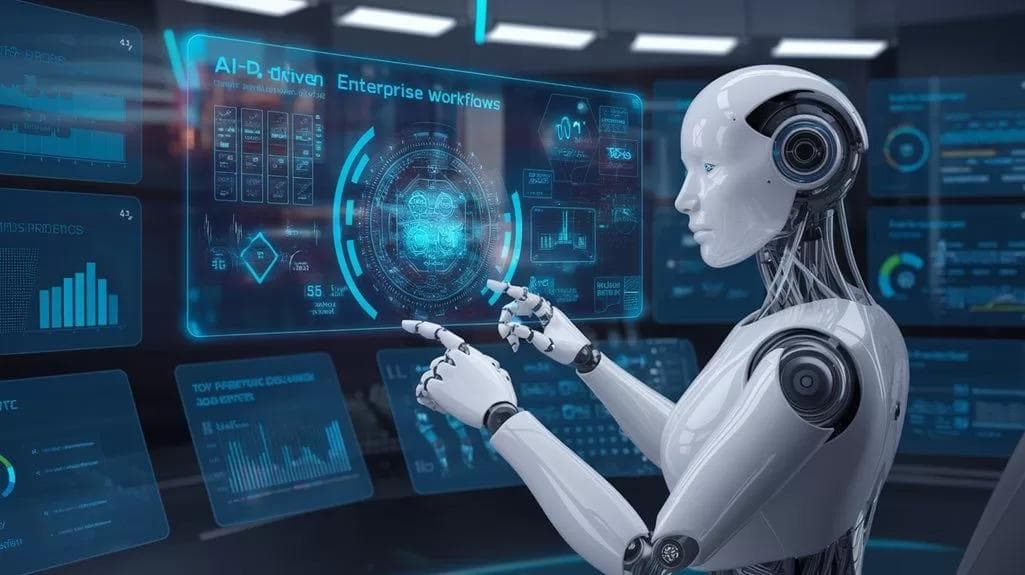
The Future of Enterprise Transformation with Autonomous AI Workflows
Related articles
View all → Autonomous Coordination
The Rise of Autonomous Enterprise Coordination Platforms
Enterprise coordination the alignment of people, processes, information, and resources across organisational boundaries has always been expensive, slow, and error-prone when managed through human intermediaries alone. Autonomous coordination platforms powered by AI are replacing the coordination overhead of large organisations with intelligent systems that synchronise the enterprise continuously and without manual intervention.
 AI Agents
How AI Agents Are Transforming Enterprise Workflow Intelligence
AI agents autonomous systems that perceive their environment, reason about objectives, and take action across enterprise workflows are moving from research concept to operational reality. The enterprises deploying AI agents at scale are discovering that workflow intelligence is not just about automation it is about creating organisational capability that compounds with every cycle.
 AI-Native Infrastructure
Why Global Enterprises Need AI-Native Operational Infrastructure
The operational infrastructure that global enterprises built in the pre-AI era was designed for a different competitive environment. Enterprises that try to layer AI on top of legacy operational infrastructure will capture a fraction of AI's potential. The ones that rebuild their operational foundations as AI-native will gain structural advantages their competitors cannot close.