The Future of Enterprise Transformation with Autonomous AI Workflows
Enterprise transformation programmes have historically struggled with execution discipline at scale. Autonomous AI workflows are changing this handling the coordination complexity of large-scale transformation with a consistency and speed that human programme management cannot match.
Aditya Sharma
Author
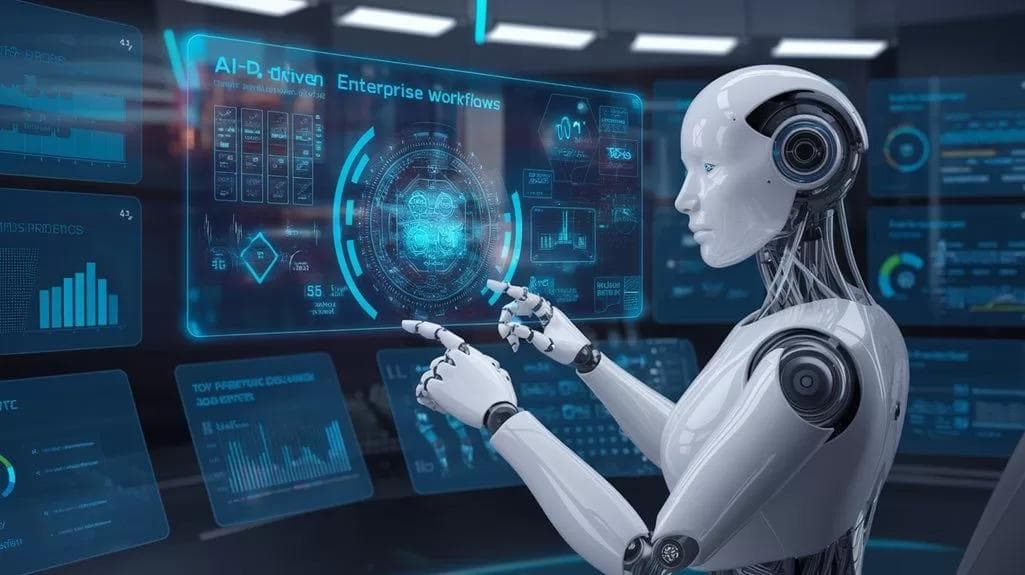
The enterprise transformation programme is one of the most resource-intensive and failure-prone activities in business management. McKinsey research has consistently found that 70 percent of large-scale enterprise transformation programmes fail to achieve their objectives a failure rate that has remained stubbornly high despite decades of refinement in transformation methodology. Autonomous AI workflows are introducing a qualitatively different capability to the transformation management toolkit. Not tools that help humans manage transformation complexity, but systems that handle significant portions of that complexity autonomously monitoring progress, coordinating dependencies, identifying risks, generating communications, and managing the routine programme management overhead that currently consumes the majority of PMO bandwidth.
What Autonomous AI Workflows Bring to Transformation
Autonomous AI workflows contribute to enterprise transformation success across three dimensions. The first is continuous monitoring at full programme scope. Human PMO teams can maintain close oversight of critical path workstreams but inevitably give less attention to the secondary and tertiary workstreams that collectively represent the majority of programme complexity. Autonomous monitoring systems that track every workstream continuously flagging deviations from plan, identifying emerging risks, and surfacing dependency conflicts in real time provide full-scope programme visibility that human PMO teams cannot achieve.The second dimension is consistent execution discipline over time. Transformation programmes fail disproportionately in their middle phases, when initial momentum has faded and completion is not yet visible enough to re-energise commitment. Autonomous AI workflows maintain execution discipline regardless of programme phase. The third dimension is rapid adaptation to changed circumstances. When a transformation programme needs to adjust its approach, autonomous workflows can propagate the implications of that change across all affected workstreams more rapidly and completely than manual replanning processes.
Implementing Autonomous Workflows in Transformation
The Workflow Design Requirement
Autonomous AI workflows for enterprise transformation require more rigorous upfront workflow design than traditional programme management approaches. The workflows that will run autonomously must be specified with sufficient precision that the AI system can determine, at each step, what the correct action is what constitutes successful completion of a task, what conditions should trigger escalation to human oversight, and what actions should be taken when dependencies are at risk. This design investment is significant but it pays dividends throughout the programme by reducing the ongoing coordination overhead that autonomous workflows eliminate.
Human Oversight Integration
Autonomous AI workflows in enterprise transformation do not eliminate the need for human programme leadership they change what human programme leadership does. Programme directors and PMO leaders operating with autonomous workflow support focus on the aspects of transformation management that require human judgment: stakeholder relationship management, strategic decision-making when priorities conflict, cultural change leadership, and the handling of genuinely novel situations that fall outside the autonomous workflow parameters. This is a more strategic and more impactful role than traditional programme management and organisations that make this transition effectively report higher programme leadership satisfaction alongside better programme outcomes.
Autonomous Transformation Workflow Questions
- In your most recent large-scale transformation programme, what proportion of PMO bandwidth was consumed by routine coordination, status reporting, and communications versus genuine programme leadership?
- What are the highest-risk workstreams in your current or planned transformation and would continuous autonomous monitoring of those workstreams change your risk management approach?
- Do you have the workflow documentation and data infrastructure required to implement autonomous AI workflow management in your transformation programme?
- What governance framework would you need to deploy autonomous AI workflows with confidence and how would you define the escalation boundary between autonomous execution and human decision authority?
- What would a 30 percent improvement in transformation programme execution discipline through autonomous monitoring and coordination mean for your programme completion timeline and success probability?
How AI Agents Can Streamline Complex Enterprise Operations at Scale
Related articles
View all → AI-Native Infrastructure
Why Global Enterprises Need AI-Native Operational Infrastructure
The operational infrastructure that global enterprises built in the pre-AI era was designed for a different competitive environment. Enterprises that try to layer AI on top of legacy operational infrastructure will capture a fraction of AI's potential. The ones that rebuild their operational foundations as AI-native will gain structural advantages their competitors cannot close.
 Strategic Execution
AI-Powered Enterprise Execution for Faster Strategic Outcomes
Strategic advantage in the current era is not determined by the quality of strategy alone it is determined by the speed at which strategy is executed. AI-powered enterprise execution systems are compressing the time from strategic decision to operational outcome in ways that are redefining competitive dynamics across every sector.
 SuperManager AGI
How Super Manager AGI Enables Scalable Enterprise Execution Across Global Teams
Global enterprise execution is the coordination of work, information, and decisions across time zones, languages, legal jurisdictions, and cultural contexts a challenge that has historically required substantial middle-management infrastructure. SuperManager AGI is redesigning this challenge by providing the coordination layer that human middle management was providing, at a fraction of the cost and a multiple of the speed.