AI Workflow Intelligence: The Next Frontier of Enterprise Transformation
AI Workflow Intelligence the capability of AI systems to understand, optimise, coordinate, and autonomously execute enterprise workflows with the contextual reasoning of an experienced operational expert is the next frontier of enterprise transformation. It moves AI from a support tool for human workflows to an active participant in workflow management and execution.
Manroze
Author
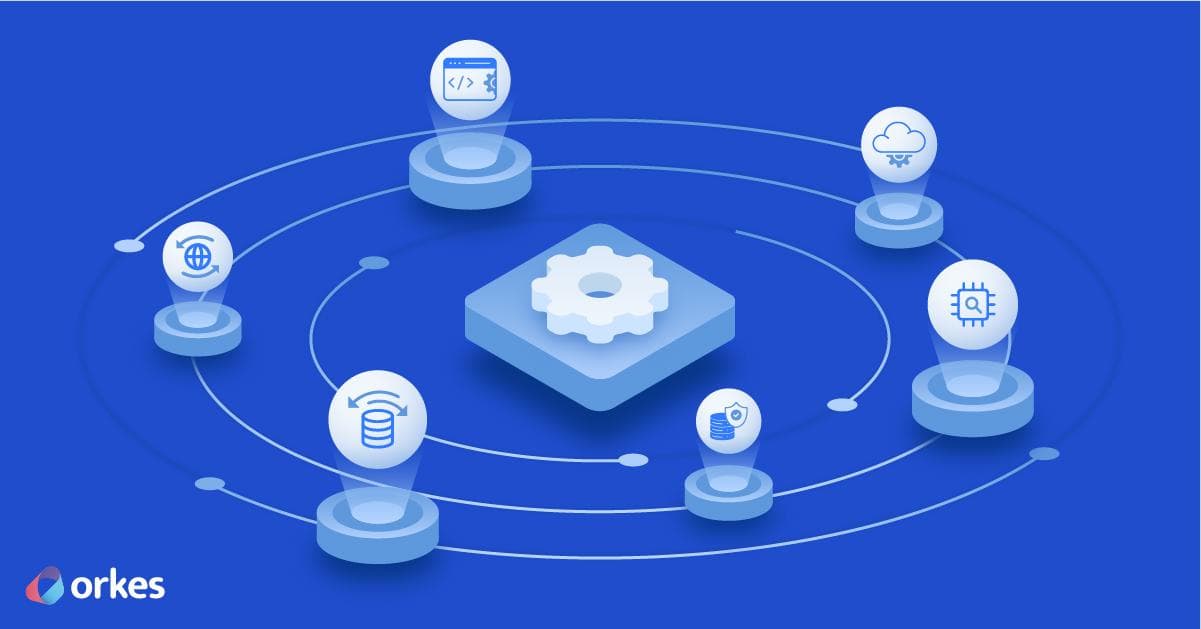
The enterprise workflow transformation journey has progressed through three distinct phases over the past thirty years. The first phase was workflow documentation: mapping and documenting business processes to create the operational clarity that consistent execution requires. The second phase was workflow automation: using technology to automate the execution of documented, rule-governed process steps reducing the human effort required for routine workflow tasks without fundamentally changing the structure of the workflow. The third phase, which is arriving now, is AI Workflow Intelligence: the application of AI reasoning, contextual understanding, and adaptive execution capability to enterprise workflows in ways that transform not just the efficiency of workflow execution but the intelligence with which workflows are managed. AI Workflow Intelligence is not another iteration of workflow automation it is a qualitatively different capability that enables workflows to be managed not by executing predefined rules but by pursuing defined outcomes with the judgment and adaptability of an experienced operational professional. The workflow that is managed by AI Workflow Intelligence does not stop when it encounters an unexpected situation it reasons about the situation, determines the appropriate response given the workflow's objective and the enterprise's policies, and adapts its execution accordingly. This adaptive, goal-directed execution capability is what distinguishes AI Workflow Intelligence from the rule-based automation that preceded it, and it is the capability that makes the next frontier of enterprise transformation possible.
The Three Dimensions of AI Workflow Intelligence
AI Workflow Intelligence operates across three dimensions that together constitute the full capability. The first dimension is workflow understanding: the AI system's ability to comprehend the purpose, structure, context, and stakeholder dynamics of an enterprise workflow not as a sequence of predefined steps to be executed, but as a goal-directed process whose specific execution should be determined by the current operational context, the workflow's objective, and the applicable policies and constraints. Workflow understanding is what enables the AI system to handle novel situations within a workflow's scope without failing or escalating because it understands the workflow's purpose and can determine the appropriate response to a novel situation by reasoning from that purpose.The second dimension is workflow optimisation: the AI system's continuous evaluation of workflow performance against the workflow's intended outcomes cycle time, quality, cost, compliance and its proactive identification and implementation of improvements that advance those outcomes. AI workflow optimisation is not a periodic exercise conducted by a process improvement team; it is a continuous function built into the workflow management system that identifies improvement opportunities in real time and implements those improvements within the defined authority framework. The third dimension is workflow orchestration: the AI system's capability to coordinate the activities of the multiple participants, systems, and sub-processes that constitute a complex enterprise workflow managing dependencies, resolving conflicts, escalating exceptions, and ensuring that the workflow's components are executing in the coordination that produces the intended outcome.
Enterprise Domains Where AI Workflow Intelligence Creates the Most Value
AI Workflow Intelligence creates its highest value in the enterprise workflow domains that combine high operational importance with high coordination complexity the workflows where the cost of coordination failure is significant and the opportunity for AI-enabled improvement is large. Customer lifecycle management is the first high-value domain: the workflow that manages a customer's journey from initial acquisition through onboarding, expansion, renewal, and retention spans multiple functional teams, multiple systems, and multiple months and its coordination complexity is a primary driver of the customer experience inconsistencies that determine customer retention rates. AI Workflow Intelligence that manages the customer lifecycle workflow end-to-end coordinating sales, implementation, customer success, billing, and product teams; adapting the workflow to each customer's specific context; and executing the routine steps autonomously produces customer experience outcomes that human-coordinated customer lifecycle management consistently fails to achieve at scale.New product introduction is the second high-value domain: the workflow that takes a product from design approval through regulatory clearance, manufacturing ramp-up, supply chain establishment, marketing preparation, sales enablement, and commercial launch involves the most cross-functional coordination complexity of any enterprise workflow and the cost of coordination failure is measured in months of launch delay and millions of dollars of lost revenue. AI Workflow Intelligence that manages new product introduction workflow coordination tracking every cross-functional dependency, proactively identifying and resolving coordination conflicts, and ensuring that every team has the information and the handoffs they need to proceed compresses launch timelines and improves launch quality in ways that human-coordinated new product introduction processes rarely achieve consistently.
Building AI Workflow Intelligence Capability
Building AI Workflow Intelligence capability requires investment in four areas that together create the technical and organisational foundation for intelligent workflow management. The workflow knowledge layer is the structured representation of the enterprise's workflows their objectives, their steps, their stakeholders, their policies, their normal patterns, and their typical exception types that the AI workflow intelligence system uses as its operational knowledge base. Building this layer requires the process documentation investment that many enterprises have deferred and the knowledge management capability that converts documented processes into machine-readable workflow models.The contextual data layer provides the AI workflow intelligence system with the operational context it needs to make intelligent workflow decisions the customer data, the supplier data, the financial data, the project data, and the policy data that are relevant to each workflow step's decision requirements. This layer is built on the unified data infrastructure described in earlier sections the single data layer that makes cross-system operational context accessible in real time. The AI reasoning and decision layer is the AI system that applies workflow knowledge and contextual data to make intelligent workflow decisions the core AI capability that distinguishes AI Workflow Intelligence from rule-based automation. Super Manager AGI provides this layer as a deployment-ready platform, integrating workflow knowledge, contextual data, and AI reasoning into a production-grade AI Workflow Intelligence system. The governance and oversight layer defines the authority boundaries and escalation protocols that ensure AI workflow decisions are made within the appropriate scope of autonomous authority and that decisions above that scope are escalated to human judgment with the context required for efficient decision-making.

How Super Manager AGI Can Eliminate Enterprise Operational Blind Spots
Related articles
View all → AI-Native Infrastructure
Why Global Enterprises Need AI-Native Operational Infrastructure
The operational infrastructure that global enterprises built in the pre-AI era was designed for a different competitive environment. Enterprises that try to layer AI on top of legacy operational infrastructure will capture a fraction of AI's potential. The ones that rebuild their operational foundations as AI-native will gain structural advantages their competitors cannot close.
 Agentic AI
The Evolution of Enterprise Operations in the Age of Agentic AI
Agentic AI AI systems that pursue goals, take actions, and adapt to feedback without requiring step-by-step human instruction is not an incremental evolution of enterprise automation. It is a structural shift in what operational systems can do and what human operators are for.
 Enterprise AI
The Enterprise Operating Model After the Rise of Autonomous AI
The enterprise operating model that was built for human coordination hierarchies, approval chains, monthly reviews, and manual handoffs is being structurally disrupted by autonomous AI systems that act, coordinate, and close loops without waiting for the next scheduled meeting. The organisations that redesign their operating model around AI execution will define the next decade of enterprise performance.