Automating Repetitive Tasks: Where to Start First
Not all automations are equal. The founder who automates social media scheduling before automating settlement reconciliation has chosen a lower-value automation over a higher-value one and the unautomated reconciliation continues to cost ₹1.5 lakh per quarter while the automated social media posts save 3 hours per week.
Aditya Sharma
Author
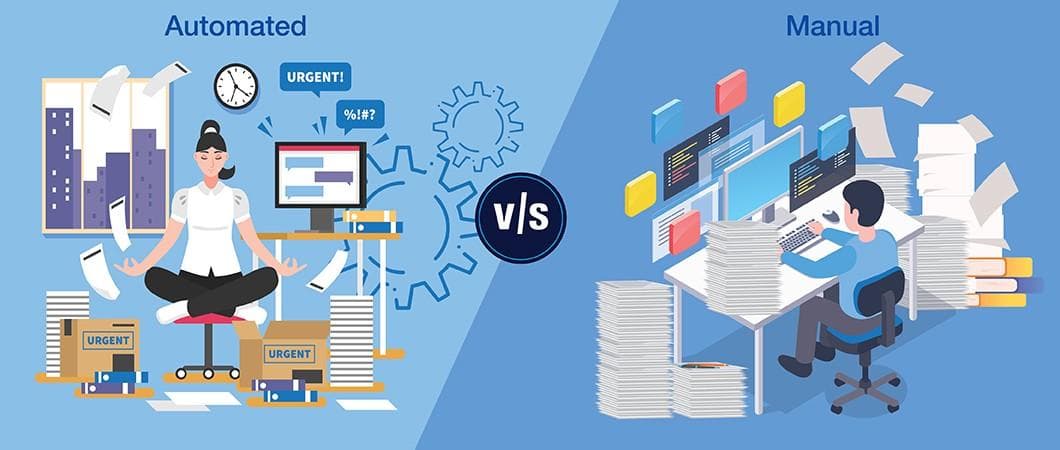
The automation prioritisation problem is the same as any investment prioritisation problem: limited time and budget for implementation, a long list of potential automations, and the need to identify which ones deliver the highest return per unit of implementation investment. The instinct is often to automate the tasks that are most visible and most immediately frustrating the daily data export, the social media scheduling, the email template management. These are real inefficiencies. They are rarely the highest-value automation opportunities available. The highest-value automations are almost always the ones that address the most expensive manual processes the ones consuming the most skilled labour time, generating the most errors at the highest per-error cost, or creating the largest gap between signal and decision by introducing information latency into time-sensitive operational loops.
The Automation Prioritisation Matrix
Every potential automation can be evaluated on two dimensions: the annual cost of the manual process it replaces (the 'break cost' including labour time, error cost, and opportunity cost) and the implementation complexity (the time and money required to build the automation). Dividing the annual break cost by the implementation cost produces the automation ROI ratio the number of times the implementation investment is recovered in year one. Automations with ROI ratios above 5x should be prioritised immediately. Those between 2 and 5x should be planned for the following quarter. Those below 2x should be deferred until higher-priority automations are implemented.Applying this matrix to the standard D2C operational automation list: settlement reconciliation automation typically has an annual break cost of ₹8 to ₹24 lakh (unrecovered discrepancies plus analyst time) and an implementation cost of ₹25,000 to ₹60,000 ROI ratio of 130x to 400x. Post-purchase WhatsApp communication has an annual break cost of ₹10 to ₹25 lakh in LTV erosion from poor customer experience and WISMO cost, against an implementation cost of ₹36,000 to ₹96,000 per year ROI ratio of 100x to 260x. Social media scheduling automation has an annual break cost of ₹60,000 to ₹1.2 lakh in content manager time, against an implementation cost of ₹12,000 to ₹36,000 ROI ratio of 3x to 10x. The social media automation is real but represents 10 to 100x less value than the operational automations that should precede it.
The First Five Automations in Priority Order
- Settlement reconciliation: nightly automated reconciliation across all marketplace channels with discrepancy alerts and dispute package generation highest ROI of any available automation for brands above ₹30L monthly GMV
- Post-purchase customer communication: automated WhatsApp sequence from order confirmation through delivery confirmation and 24-hour post-delivery check-in highest retention impact of any available automation
- Inventory reorder alerts: automated days-of-cover monitoring with reorder threshold alerts and draft purchase order generation highest stockout prevention value of any available automation
- Performance marketing CAC monitoring: automated campaign CAC calculation with threshold alerts that fire within hours of a campaign exceeding the profitable threshold highest marketing efficiency value of any available automation
- Daily operations brief: automated morning summary of key operational metrics from all connected data sources, delivered by 8am highest founder time recovery of any available automation
The Implementation Sequence That Minimises Risk
Implementing automations in parallel building five simultaneously multiplies the risk of each one. A failed implementation that corrupts data in one system can propagate to others if they are all connected and running simultaneously. The correct implementation sequence is serial: complete and validate one automation before starting the next. Each automation goes through three stages: build (configure the automation in a staging environment connected to real but not production data), validate (run the automation in parallel with the manual process for two weeks, comparing outputs to confirm accuracy), and deploy (switch to the automated process as the primary and deprecate the manual process). The parallel validation period running both manual and automated simultaneously is the most important step and the one most often skipped in the interest of implementation speed. It is what catches the edge cases and data quality issues that only appear with real operational data before they cause operational failures in production.
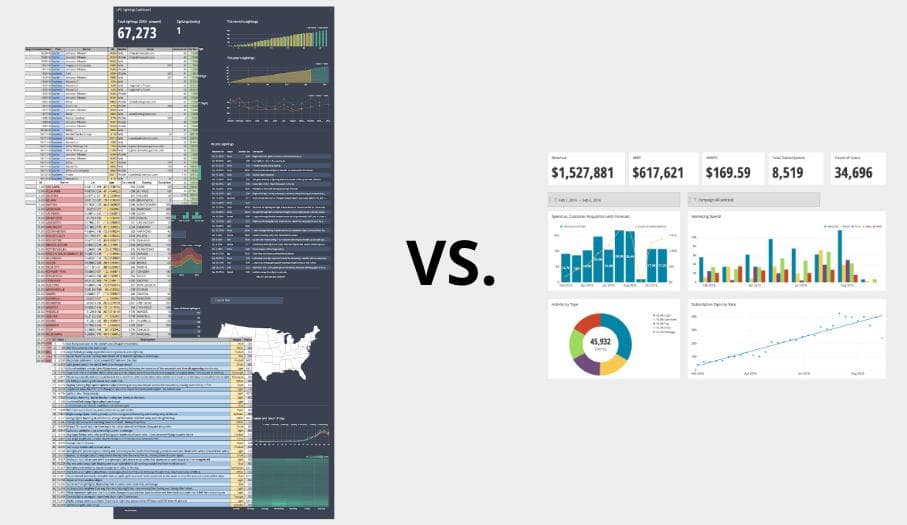
Daily vs Weekly Metrics: What Actually Matters
Related articles
View all →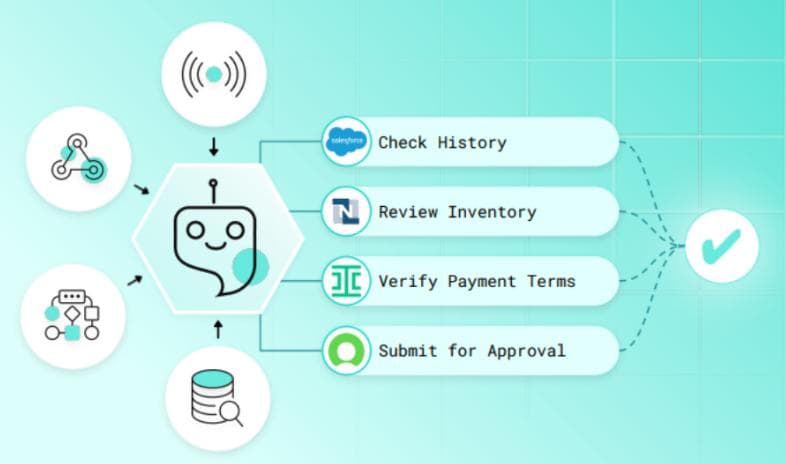 AI Execution
Why AI Execution Systems Will Define the Future of Enterprise Operations
The next frontier of enterprise competitive advantage is not strategy it is execution. AI execution systems that translate strategic intent into coordinated operational action, faster and more reliably than any human-managed process, are becoming the defining infrastructure of enterprise performance in every sector.
 Autonomous Coordination
The Rise of Autonomous Enterprise Coordination Platforms
Enterprise coordination the alignment of people, processes, information, and resources across organisational boundaries has always been expensive, slow, and error-prone when managed through human intermediaries alone. Autonomous coordination platforms powered by AI are replacing the coordination overhead of large organisations with intelligent systems that synchronise the enterprise continuously and without manual intervention.
 AI Agents
How AI Agents Are Transforming Enterprise Workflow Intelligence
AI agents autonomous systems that perceive their environment, reason about objectives, and take action across enterprise workflows are moving from research concept to operational reality. The enterprises deploying AI agents at scale are discovering that workflow intelligence is not just about automation it is about creating organisational capability that compounds with every cycle.