The Enterprise OS of the Future Will Be AI-Native
The traditional enterprise operating model is built on human coordination: humans make decisions by reviewing dashboards, humans coordinate workflows through meetings and emails, humans execute processes by operating software systems, and humans monitor performance through reports and analytics. This model creates an organizational operating system where humans are the processors executing instructions and software systems are memory storing state. The AI-native enterprise inverts this architecture: AI agents execute operational workflows autonomously, humans define strategic objectives and exception handling policies, software systems provide orchestration infrastructure coordinating agent activities, and monitoring systems track autonomous operations detecting scenarios requiring human judgment. This inversion is not incremental improvementit is a fundamental reimagining of how enterprises operate at the architectural level, comparable to the shift from mainframes to client-server computing or from on-premise to cloud infrastructure.
Nirmal Nambiar
Author
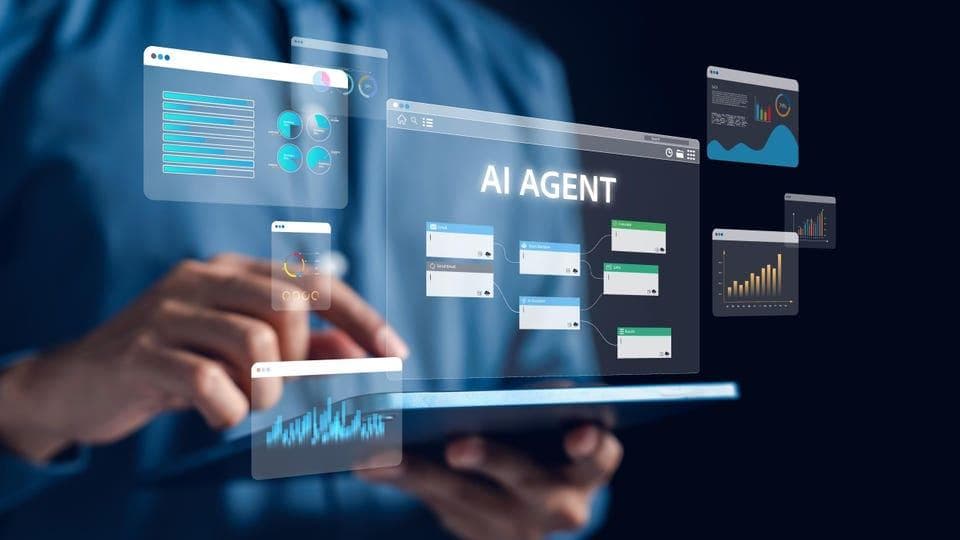
The enterprise operating system is the collection of processes, systems, and organizational structures that coordinate how work gets done. Traditional enterprise OS architecture emerged in the 20th century around human coordination capabilities: hierarchical reporting structures because humans can effectively manage 7-10 direct reports, functional silos because humans organize knowledge by specialty, sequential approval workflows because humans review decisions one at a time, and periodic planning cycles because human coordination requires synchronization points. This architecture made sense when human decision-making was the constraint and technology existed primarily to support human work. The AI-native enterprise OS is designed around autonomous agent capabilities rather than human coordination constraints: flat orchestration networks because agents coordinate through APIs rather than management hierarchies, cross-functional agent teams because agents access information from any domain without specialization barriers, parallel approval workflows because agents can evaluate thousands of scenarios simultaneously, and continuous planning because agents monitor conditions in real-time rather than waiting for coordination windows. The architectural differences create fundamental performance characteristics: traditional enterprise OS scales linearly with human headcount and hits coordination bottlenecks as complexity increases, while AI-native OS scales with computational infrastructure and maintains coordination efficiency as operational complexity grows. Organizations operating with AI-native architectures will achieve throughput levels that human-coordinated enterprises cannot match: decision latency measured in minutes rather than days, operational capacity unconstrained by human coordination bandwidth, quality consistency maintained through automated execution rather than depending on human reliability, and cost structures where incremental capacity requires infrastructure investment rather than headcount growth. The transition from traditional to AI-native enterprise OS is the most significant organizational transformation since the corporation emerged as an organizational form in the industrial revolution.
The Strategic Landscape: Why This Transformation Defines the Next Decade
The shift described in the enterprise os of the future will be ai-native represents more than incremental technological progressit represents a fundamental restructuring of how enterprises create and capture value. The organizations that recognize this pattern early and position themselves accordingly will gain first-mover advantages that compound: they will develop organizational capabilities that competitors cannot easily replicate, establish market positions that become self-reinforcing through network effects or ecosystem development, and build operational advantages that translate directly to superior unit economics. The strategic window is measured in quarters, not years, because the underlying technologies enabling this transformation have reached production viability and early adopters are already demonstrating proof points that validate the model.The historical pattern is consistent across major technology transitions: enterprises that recognized personal computing, client-server architecture, internet connectivity, mobile computing, and cloud infrastructure as architectural shifts rather than incremental improvements gained sustained advantages over competitors that treated these transitions as technology upgrades. The enterprise os of future will be ai-native follows the same patternit is not about adopting new tools but about reconceiving how enterprises operate at the foundational level. The organizations that understand this distinction and commit to architectural transformation rather than incremental improvement will establish competitive positions that persist for decades. The organizations that treat this as another technology wave to be adopted gradually will find themselves competing from permanently disadvantaged positions against enterprises operating under fundamentally different economic and operational models.
Implementation Realities: The Gap Between Vision and Execution
The vision of transformation described here is directionally correct but operationally challenging because it requires capabilities and changes that most enterprises have not developed. The gap between recognizing the strategic opportunity and successfully executing the transformation is where most initiatives fail. The implementation challenges are not primarily technicalthe underlying technologies largely exist and are improving rapidly. The challenges are organizational, architectural, and governance-related: enterprises must redesign workflows around autonomous execution rather than human coordination, establish governance frameworks that enable autonomous operations while maintaining risk controls, develop organizational capabilities for managing AI systems at scale, and navigate change management as roles evolve from execution to oversight and strategy.The enterprises succeeding with these transformations share consistent implementation patterns: they start with contained deployments that prove value and build organizational confidence before attempting enterprise-wide transformation, they invest heavily in governance and monitoring infrastructure recognizing that autonomous operations require transparency and control, they treat implementation as operational transformation rather than technology deployment focusing on workflow redesign and organizational change alongside technical implementation, they establish clear success metrics tied to business outcomes rather than technology adoption measuring value delivery not deployment completion, and they plan for multi-year journeys recognizing that organizational transformation takes longer than technology deployment. The most critical success factor is executive commitment that persists through inevitable implementation challenges: autonomous operations deliver transformative value but require sustained investment and organizational adaptation that only executive-level commitment can maintain through the difficult middle period where costs are visible but full benefits have not yet materialized.
The Competitive Endgame: What Winning Looks Like in 2030
By 2030, the competitive landscape in enterprise markets will clearly separate into two tiers: enterprises that completed the transformation to enterprise os of future will be ai-native and achieved the operational and economic advantages it enables, and enterprises that attempted incremental adoption without committing to architectural transformation and find themselves competing from structurally disadvantaged positions. The first tier will operate with coordination efficiency, decision velocity, and operational consistency that human-coordinated models cannot match. Their unit economics will reflect these advantages: lower operational costs through autonomous execution, higher quality through consistent automated processes, and faster time-to-market through elimination of coordination bottlenecks. These advantages will compound: operational efficiency generates cash that funds further AI investment, superior execution quality attracts better talent and customers, and faster market response enables opportunities that competitors cannot pursue.The second tier will face intensifying competitive pressure as first-tier enterprises capture market share through superior economics and execution capability. The pressure will manifest in multiple dimensions: pricing pressure as autonomous operations enable lower costs, quality expectations rising as customers experience consistent execution from AI-native competitors, talent attraction challenges as the best employees gravitate toward enterprises with advanced operational models, and strategic disadvantage as coordination constraints prevent responses to market opportunities that AI-native competitors can pursue. The path from second tier to first tier will become increasingly difficult as first-tier advantages compound and the organizational transformation required becomes more extensive. The strategic imperative is clear: commit to transformation now while implementation paths are still accessible, or accept permanent competitive disadvantage against enterprises that made this transition earlier. The window for action is 2026-2028. Organizations that successfully execute transformation during this period will establish advantages that persist through 2030 and beyond. Organizations that delay will find themselves competing from positions that become increasingly untenable as operational and economic gaps widen.

The Next Billion-Dollar Enterprise Companies Will Be Agentic
Related articles
View all → AI-Native Infrastructure
Why Global Enterprises Need AI-Native Operational Infrastructure
The operational infrastructure that global enterprises built in the pre-AI era was designed for a different competitive environment. Enterprises that try to layer AI on top of legacy operational infrastructure will capture a fraction of AI's potential. The ones that rebuild their operational foundations as AI-native will gain structural advantages their competitors cannot close.
 Agentic AI
The Evolution of Enterprise Operations in the Age of Agentic AI
Agentic AI AI systems that pursue goals, take actions, and adapt to feedback without requiring step-by-step human instruction is not an incremental evolution of enterprise automation. It is a structural shift in what operational systems can do and what human operators are for.
 Enterprise AI
The Enterprise Operating Model After the Rise of Autonomous AI
The enterprise operating model that was built for human coordination hierarchies, approval chains, monthly reviews, and manual handoffs is being structurally disrupted by autonomous AI systems that act, coordinate, and close loops without waiting for the next scheduled meeting. The organisations that redesign their operating model around AI execution will define the next decade of enterprise performance.