The Future of Enterprise SaaS in an Agentic Economy
Enterprise SaaS evolves from tools for humans to platforms for agents, changing value delivery and pricing models.
Aditya Sharma
Author

SaaS transformation: seat-based licensing (0-100/user) to outcome-based pricing (K-10K/employee).
The Strategic Transformation and Market Dynamics
The Future of Enterprise SaaS in an Agentic Economy represents fundamental shift in enterprise technology and competitive positioning. Organizations mastering this achieve structural advantages: 50-70% operational efficiency gains, 10-20x decision velocity improvements, and economic models funding continuous innovation while competitors struggle with overhead.The transformation timeline is critical. Underlying technologies mature, deployment frameworks emerge, early adopters demonstrate viability. Organizations committing in 2026-2027 establish leadership positions. Delay means implementing against mature competition with established capabilities and widening performance gaps.Competitive dynamics are asymmetric and compounding. Winners capture market share through superior economics, attract talent through advanced environments, invest more through better margins, execute faster through autonomous operations. These advantages reinforce creating permanent differentiation.
Implementation Architecture and Success Patterns
Successful implementation requires understanding transformation is organizational and architectural not primarily technical. Modern AI capabilities sufficient. Challenges are redesigning workflows around autonomous execution, establishing governance enabling operations while maintaining control, developing capabilities for AI system management, navigating organizational change.Proven sequence: high-impact bounded workflows proving value managing risk, comprehensive governance and monitoring before scaling, heavy investment in change management, sustained executive commitment through 18-36 month transformation. Critical decisions: authority boundaries, escalation protocols, framework accountability models.Organizations treating as operational transformation succeed. Those treating as technology deployment fail despite equivalent or greater investment. Success requires workflow redesign, governance establishment, organizational adaptationtechnology alone insufficient.
The 2030 Landscape: Winners, Laggards, and Strategic Imperative
By 2030 markets clearly differentiate enterprises completing transformation from those attempting incremental adoption. Winners operate with capabilities creating permanent advantages: cost structures enabling pricing competitors cannot match, velocity enabling responses competitors cannot execute, quality creating experiences competitors cannot replicate, agility adapting faster while competitors remain coordination-constrained.Laggards face intensifying pressure across multiple dimensions: market share loss to competitors with superior economics and execution, talent struggles as people prefer advanced environments, customer defections as expectations rise based on competitors capabilities, discovery that transformation becomes more extensive as operational and organizational gaps widen.Strategic imperative unambiguous: commit to transformation now in 2026-2027 while implementation pathways accessible and first-mover advantages available, or accept permanent competitive disadvantage. Organizations acting decisively establish positions of strength persisting through 2030 and beyond. Those delaying compete from structural disadvantages that cannot be overcome through incremental improvements or late-stage efforts. The window measured in months and quarters, not years.
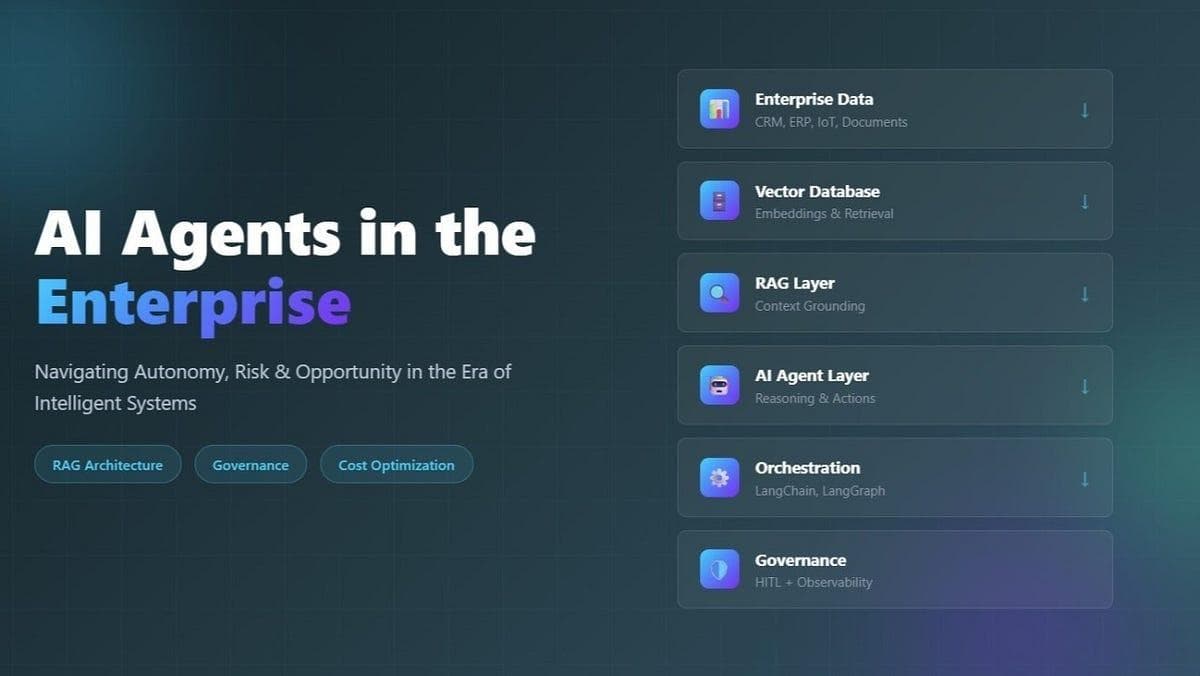
AI Agents as the New Enterprise Middleware
Related articles
View all → Workflow Automation
AI-Native Workflow Automation: The Next Multi-Billion-Dollar Enterprise Shift
AI-native workflow automation built from the ground up for AI execution rather than retrofitted onto legacy process logic is the next major enterprise software category. The market is in its early stages, the opportunity is enormous, and the enterprises that deploy it earliest are creating structural advantages.
 SaaS
SaaSWhy Intelligent Platforms Will Replace Traditional Business Software
Traditional business software built around fixed workflows, manual data entry, and periodic reporting is being displaced by intelligent platforms that adapt, learn, and operate with a level of autonomy that changes what software is capable of doing for enterprises.
 Enterprise
The Evolution of Enterprise Communication Platforms
From email threads to AI-powered unified platforms, enterprise communication has undergone a radical transformation. The organisations that understand this shift and build their infrastructure around it are the ones setting the pace for the next decade of business.