How AI Is Changing Marketing for D2C Brands in 2026
The D2C brands gaining market share in 2026 are not the ones with the largest budgets. They are the ones using AI to run more experiments, personalise more effectively, and make creative decisions faster than their competitors.
Aditya Sharma
Author

Two D2C brands in the same category launched new products in the same month. Brand A followed its standard launch playbook: two weeks to brief the creative agency, one week for production, one creative concept tested. Brand B used AI tools to generate twelve creative concepts in two days, tested five simultaneously, identified the best-performing in week one, and scaled the winner with AI-assisted creative variations. By week three, Brand B had more customer data, lower customer acquisition cost, and higher conversion rate than Brand A not because Brand B had more money, but because it had more decision cycles.
Where AI Delivers the Biggest Marketing Gains
Creative production velocity: AI tools allow D2C brands to test more creative concepts, ad variations, and landing page approaches in the same time and budget as competitors testing fewer. In performance marketing, where the winning creative degrades over weeks and needs continuous replacement, velocity of creative production is a direct competitive advantage.Audience personalisation: AI-powered segmentation identifies customer cohorts with significantly different purchase propensities and enables personalised messaging at a scale that was previously available only to enterprise brands with large data science teams. A brand with 20,000 customers can personalise communication for twenty audience segments using AI tools that cost ₹5,000 per month. The same personalisation without AI would require a team member dedicated to segmentation and campaign management.
Where AI Does Not Replace Human Marketing Judgment
Brand positioning, emotional resonance, and the long-term brand narrative still require human judgment. AI can produce grammatically correct, structurally sound marketing content at high volume. It cannot reliably produce content that is genuinely distinctive, emotionally resonant, or strategically differentiated because distinctiveness and resonance depend on insight about the specific customer and category that AI tools do not have unless it is explicitly provided.The effective model for 2026 is AI for volume, velocity, and optimisation; human for positioning, insight, and creative direction. The brands that use AI to replace creative direction rather than to amplify it produce high volumes of generic content that performs average. The brands that use human insight to set the creative direction and AI to execute and iterate at speed are the ones gaining share.

From Spreadsheets to AI: The Data Transition Guide for Growing Businesses
Related articles
View all →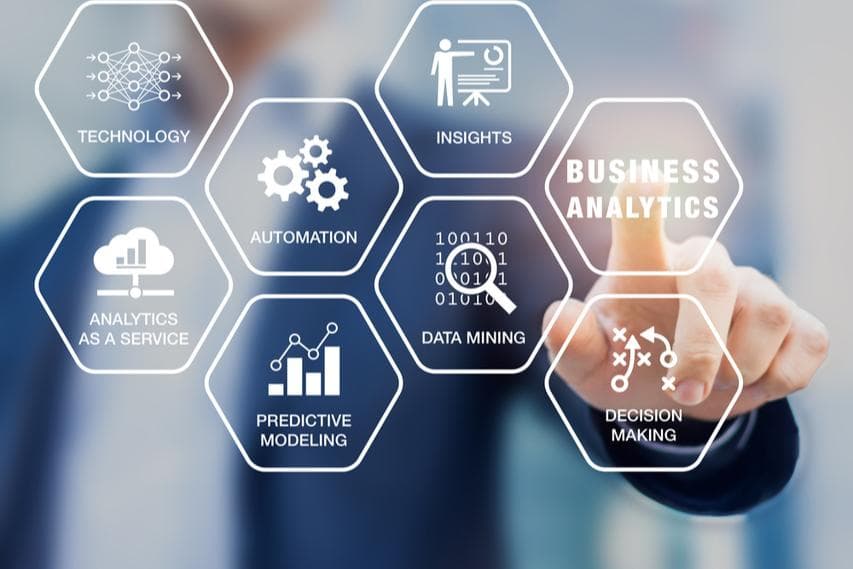 Growth
The Future of Enterprise Growth Through AI Innovation
AI is not just improving the efficiency of existing growth strategies it is enabling entirely new growth models. The enterprises that understand how to use AI as a growth driver, not just a cost reducer, are accessing markets, customer segments, and revenue streams that were previously out of reach.
 Scalability
AI-Powered Systems for Enterprise Scalability and Resilience
The ability to scale without proportional cost increases and to absorb shocks without operational failure is what separates enterprises that grow sustainably from those that grow into crisis. AI-powered systems are the infrastructure through which scalability and resilience are built.
 Operations
The Rise of Intelligent Business Operations at Scale
Scaling a business used to mean scaling headcount. Intelligent operations combining AI, automation, and real-time data are changing this equation, allowing enterprises to grow output without proportional growth in operational cost.