How Edge Computing Will Redefine Enterprise Infrastructure
The assumption that all enterprise computation flows to a centralised cloud is breaking down under the weight of latency requirements, data sovereignty rules, and bandwidth costs. Edge computing is not a cloud alternative it is a new layer of the enterprise infrastructure stack that changes everything below it.
Manroze
Author
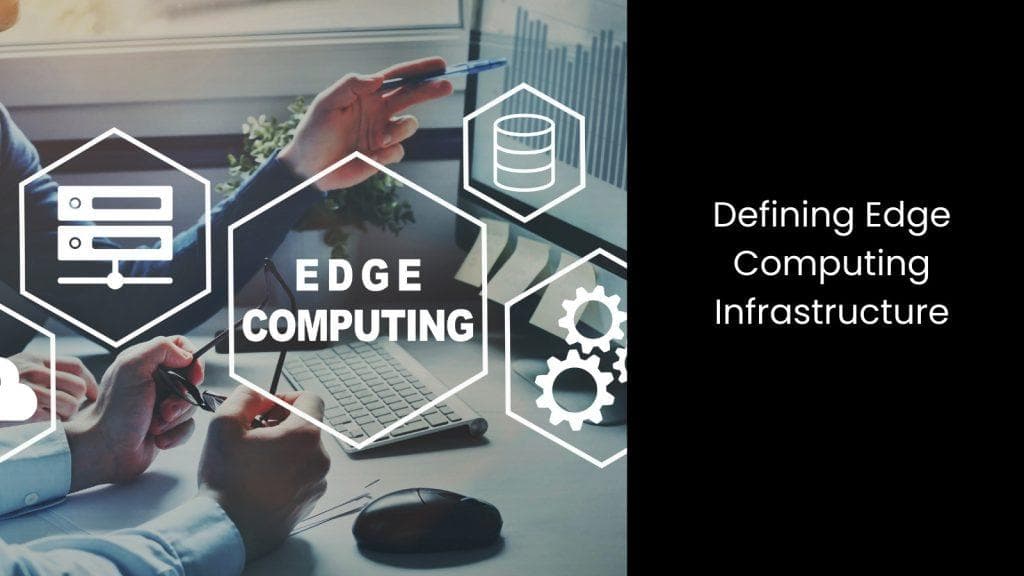
A manufacturing plant runs 200 computer vision cameras monitoring assembly line quality in real time. Each camera generates 4K video at 30 frames per second. Sending all of this to a cloud data centre for processing would consume more bandwidth than the plant's entire network allocation and introduce 80 to 200 milliseconds of latency enough delay that a defective product would pass through three more assembly stations before the defect was detected and a stop signal could be sent. The only viable architecture processes the video at the camera or at an edge server in the plant, extracts the quality signal, and sends only the structured alert data to the cloud. This is the edge computing logic applied to manufacturing. The same logic applies to autonomous vehicles that cannot wait for a cloud round-trip to decide whether to brake, to retail environments where real-time inventory and customer flow data drives immediate operational decisions, and to healthcare devices where patient monitoring requires millisecond response times that cloud latency cannot support. Edge computing is not about moving computation away from the cloud out of preference. It is about the structural reality that certain classes of computation are architecturally incompatible with centralised cloud processing because of latency, bandwidth, data sovereignty, or reliability requirements and must be executed at or near the data source.
The Four Structural Drivers of Enterprise Edge Adoption
The enterprise edge computing adoption curve is being driven by four converging forces. First, latency requirements: as enterprise operations increasingly depend on real-time AI inference quality control vision systems, fraud detection at point of sale, autonomous equipment control the round-trip latency to a cloud data centre is architecturally incompatible with the required response time. Edge inference, running AI models locally or at a nearby edge server, provides the millisecond response times that real-time operational AI requires. Second, data volume economics: the proliferation of IoT sensors, industrial cameras, and telemetry devices is generating data volumes that are prohibitively expensive to transmit to the cloud in full. Edge processing that filters, aggregates, and compresses data at the source sending only meaningful signals rather than raw data dramatically reduces bandwidth costs and cloud storage requirements.Third, data sovereignty and compliance: regulations in the European Union, India, China, and a growing list of jurisdictions impose requirements on where certain categories of data can be processed and stored. Enterprises operating across multiple regulatory regimes cannot always route all data through a single centralised cloud without violating data localisation requirements. Edge infrastructure that processes data locally, within the regulatory jurisdiction where it is generated, is increasingly a compliance requirement rather than an architectural preference. Fourth, connectivity reliability: industrial environments offshore platforms, mining sites, agricultural operations, maritime vessels cannot always guarantee reliable cloud connectivity. Edge computing architectures that operate autonomously when cloud connectivity is interrupted, synchronising when connectivity is restored, provide operational resilience that cloud-dependent architectures cannot.
The Edge Infrastructure Stack: What Enterprises Are Building
Layer 1: Device edge intelligence at the sensor
The device edge is the most constrained layer of the edge stack: purpose-built hardware with limited compute, memory, and power budgets running highly optimised inference models. Microcontrollers and purpose-built AI chips from vendors like NVIDIA, Google, and Intel are enabling AI inference at the device level cameras that classify what they see without sending video to a server, vibration sensors that detect equipment anomaly patterns locally, and wearable devices that perform health signal analysis on-device. The strategic consideration for enterprises is not just the hardware it is the model compression and optimisation capability required to run useful AI models within device constraints, and the over-the-air update infrastructure required to maintain and improve these models at scale.
Layer 2: Local edge on-premises processing nodes
The local edge layer servers deployed in the enterprise environment, whether a factory floor, a retail location, or a hospital provides the compute capacity for workloads that exceed device edge capabilities but cannot tolerate cloud latency or cannot be transmitted off-premises for compliance reasons. Local edge servers running Kubernetes-based container orchestration allow enterprise IT teams to deploy and manage edge workloads using the same tooling as cloud workloads, simplifying operations across the hybrid infrastructure. The local edge layer is where most enterprise AI inference workloads will run in the next five years: sufficient compute for complex models, close enough to data sources for low latency, and within the regulatory boundary for data sovereignty compliance.
Layer 3: Regional edge telco and cloud provider edge nodes
Telecommunications providers and cloud providers are deploying edge computing infrastructure at regional points of presence data centres at the edge of the network, closer to enterprise locations than central cloud regions. These regional edge nodes, often integrated with 5G network infrastructure, provide a middle layer between on-premises edge and centralised cloud: lower latency than cloud, more compute than local edge, and managed infrastructure that does not require enterprise capital expenditure. For enterprises that need edge capability without on-premises hardware investment, regional edge offerings from AWS Outposts, Azure Edge Zones, and telco-partnered MEC platforms are the practical starting point.
Layer 4: Cloud integration the coordinating layer
Edge computing does not replace cloud it extends it. The cloud remains the layer for model training, historical data analysis, enterprise application integration, and the workloads where latency is not a constraint and centralised compute is economically efficient. The architectural challenge is not choosing between edge and cloud but designing the data flow and compute allocation logic that routes each workload to the layer best suited to its requirements. Enterprises that build this hybrid orchestration capability understanding which workloads belong at which layer, and building the data pipeline and model management infrastructure to coordinate across layers are the ones that will realise the full value of edge investment.
The Edge Infrastructure Readiness Diagnostic
- Have you identified the specific operational processes in your enterprise where latency, bandwidth, or data sovereignty requirements make cloud-only architectures inadequate, and quantified the operational cost of these limitations?
- Do you have an inventory of the IoT devices, industrial sensors, and edge-generating data sources in your enterprise environment, and do you understand the data volumes they generate and the processing requirements they have?
- Have you assessed your data sovereignty obligations across all regulatory jurisdictions where you operate, and identified which data categories cannot be routed through centralised cloud infrastructure without compliance risk?
- Do you have the infrastructure management capability to operate and maintain edge hardware in distributed locations including over-the-air model updates, remote diagnostics, and edge-to-cloud data pipeline management?
- Have you designed a total cost of ownership model that accounts for the edge hardware capital expenditure, operational management costs, and bandwidth savings against the pure cloud alternative for your highest-priority edge use cases?

Related articles
View all → AI Agents
AI Execution Agents: The Missing Infrastructure Layer for Digital Transformation
Digital transformation programmes have invested trillions in data, cloud, and analytics infrastructure. Most have not invested in the execution layer the AI agents that translate digital insight into operational action. Without this layer, digital transformation creates better visibility into problems without creating the capability to solve them faster.
 Digital Infrastructure
Why Digital Infrastructure Will Become a Strategic Asset
Businesses that once treated their technology stack as an operational cost are now discovering that digital infrastructure is the foundation on which competitive advantage is either built or lost. The shift is structural and it is accelerating.
 Smart Infrastructure
How Smart Infrastructure Will Power Future Enterprises
The infrastructure that enterprises operate on physical, digital, and energy is becoming intelligent. Smart infrastructure that monitors itself, optimises its own performance, and adapts to changing demand is not a future concept. It is being deployed now, and the enterprises leading this deployment are building operational advantages their competitors will struggle to close.