Last-Mile Delivery: The Make-or-Break Factor for Customer Experience
The brand that makes a ₹799 product and delivers it in two days with real-time tracking is building customer equity. The brand that makes the same product and delivers it in seven days, with no proactive communication, is destroying it regardless of how good the product is. Last-mile delivery is not a logistics function. It is a brand function.
Manroze
Author
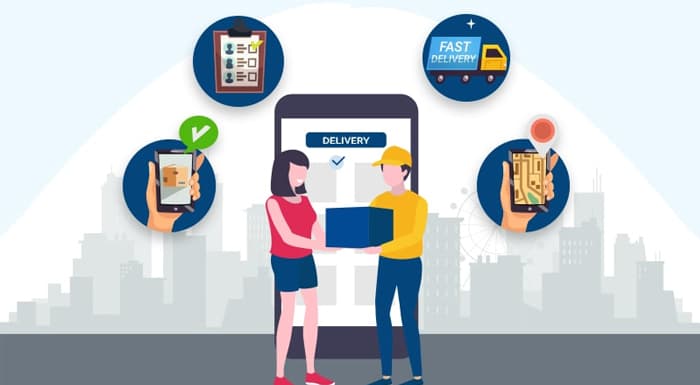
In Indian ecommerce, the product experience and the delivery experience are two separate purchase outcomes and a significant fraction of customers make their repeat purchase decision based on the delivery experience rather than the product alone. Research on Indian ecommerce customer satisfaction consistently finds that delivery speed, delivery reliability, and proactive communication during the delivery process have stronger correlations with repeat purchase probability than product quality ratings for the majority of product categories. This is counterintuitive for product-focused founders the assumption is that if the product is good, the delivery details are secondary. The data suggests otherwise. A great product delivered poorly produces a customer who is ambivalent about reordering. A good product delivered excellently produces a customer who reorders with high probability and recommends the brand to others. Last-mile delivery is not a cost centre to be minimised. It is a customer experience investment with measurable return on repeat purchase rate and brand referral.
The Five Components of Last-Mile Experience That Drive Repeat Purchase
1. Delivery speed against commitment
The delivery experience that builds customer loyalty is not the fastest delivery in absolute terms it is reliable delivery against the promise made at checkout. A brand that commits to 4 to 5 day delivery and delivers in 4 days has exceeded expectation. A brand that commits to 2 to 3 day delivery and delivers in 4 days has failed against expectation regardless of the absolute speed. Indian ecommerce research finds that delivery-versus-commitment performance is the primary driver of CSAT for the delivery experience, more than absolute delivery time. The implication: commit to delivery windows that are achievable at the 90th percentile of actual delivery performance in each geography, rather than citing the best-case courier commitment time as the customer-facing promise.
2. Proactive tracking communication
The customer who knows where their package is and when to expect it generates 30 to 45% fewer WISMO (where is my order) support queries and reports higher satisfaction with the delivery experience even when the delivery time is identical to a customer who received no proactive communication. Automated WhatsApp or SMS updates at order dispatch, out-for-delivery, and delivery confirmation are the minimum viable proactive communication standard. The incremental investment is ₹2 to ₹5 per order. The payback is the reduction in customer service cost (₹20 to ₹40 per WISMO query resolved by a human agent), the improvement in customer satisfaction, and the repeat purchase rate uplift from customers who experienced a brand that communicated with them.
3. First-attempt delivery success rate
Each failed delivery attempt degrades the customer experience and increases the probability of RTO. The specific interventions that maximise first-attempt delivery success: address validation at checkout (flagging ambiguous or incomplete addresses before the order is placed), pre-delivery customer notification 4 to 8 hours before the delivery attempt (giving the customer time to confirm availability), and courier selection by delivery geography performance (routing orders to the courier with the highest first-attempt delivery success rate for the specific pin code).
4. Packaging integrity at delivery
The unboxing experience is the first physical interaction the customer has with the brand and a damaged package, a product that arrives with broken seal, or a box that has clearly been opened and resealed produces an immediate negative brand impression that no subsequent communication can fully undo. Packaging design for transit integrity not just aesthetic appeal is a last-mile experience investment. The minimum standard: packaging that survives the physical stress of the courier network at the 95th percentile of handling conditions, including the drop tests, compression tests, and moisture exposure that characterise Indian courier transit.
5. Post-delivery experience completion
The delivery experience does not end when the package is handed over. It ends when the customer has opened the package, confirmed that what arrived matches what was ordered, and had any issues resolved. An automated post-delivery check-in message at 24 hours 'your order has arrived! Is everything as expected?' serves two functions: it completes the delivery experience with a brand communication touchpoint, and it creates a structured channel for flagging delivery issues before they escalate into returns or negative reviews. Customers who feel heard at the point of a delivery issue have a significantly higher probability of remaining customers than those whose issue surfaces three days later in a return request.
The Last-Mile Performance Dashboard
Managing last-mile delivery as a customer experience function rather than a cost function requires tracking it at the customer experience metrics level, not just the logistics cost level. The specific metrics: first-attempt delivery success rate by courier partner and by pin code cluster (target above 82% across the network); average days from dispatch to delivery by geography (tracked against the delivery promise made at checkout); WISMO query rate as a percentage of total orders (target below 8% above this level indicates the proactive communication system is insufficient or delivery performance is degrading); and NPS segmented by delivery experience outcome (delivered on time, delivered late, failed delivery attempt).These metrics, tracked weekly and available to both the operations lead and the marketing team, enable the continuous improvement loop that makes last-mile delivery a genuine competitive advantage: the courier partners who underperform on delivery success rate lose volume to better-performing alternatives, the geographies with chronically low delivery success rates are flagged for marketing targeting adjustment, and the communication failures that drive WISMO query spikes are identified and resolved before they compound into brand reputation damage.
The 'Founder Trap': Doing Everything Yourself Is Slowing You Down
Related articles
View all → AI
AIThe Future of AI-Powered Digital Marketplaces
Digital marketplaces are evolving from transactional platforms into intelligent commerce ecosystems. AI is reshaping how buyers discover products, how sellers manage operations, and how platforms create value for everyone in the ecosystem and the pace of this transformation is accelerating.
 Customer Support
How AI Can Transform Enterprise Customer Support Systems
Customer support is one of the highest-cost, highest-impact functions in a growing enterprise. AI is transforming it from a cost centre with linear scaling constraints into an intelligent service layer that delivers better customer outcomes at a fraction of the traditional cost per interaction.
 Logistics
The Future of Smart Logistics and Autonomous Delivery Systems
Autonomous vehicles, drone delivery, AI-powered routing, and real-time supply chain visibility are moving from pilot projects to operational infrastructure. The logistics industry is undergoing its most significant transformation since containerisation and the businesses that adapt earliest will define the next era of commerce.