RTO (Return to Origin): The Silent Profit Killer in Ecommerce
An 18% RTO rate on a brand doing ₹50L monthly revenue is costing approximately ₹12₹15L per quarter in direct and indirect costs. Most founders see this as a logistics problem. It is a business model problemand the fix requires changes across acquisition, product, and fulfilment simultaneously.
Manthan Sharma
Author
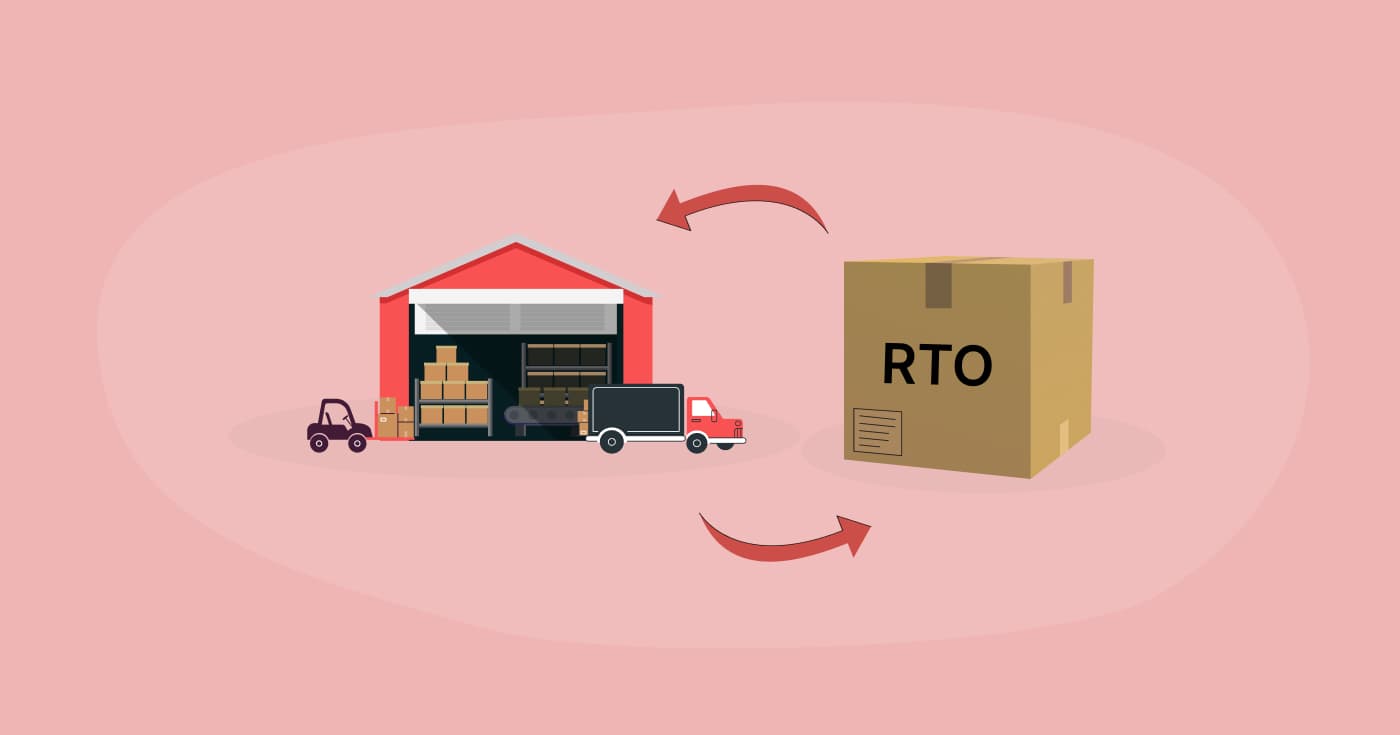
In Indian ecommerce, Return to Origin is the specific failure event where a package is dispatched to a customer, fails to be delivered despite one or more delivery attempts, and is returned to the sender's warehouse. It is distinct from a customer-initiated return (where the customer receives the product and chooses to send it back) and represents a fundamentally different and more expensive failurethe forward logistics cost is paid, the reverse logistics cost is paid, and no revenue is generated at all. An 18% RTO rate means that for every 100 orders dispatched, 18 generate zero revenue while consuming the full logistics cost of both a forward and reverse shipment. At ₹50 lakh monthly revenue with an average order value of ₹799 and 6,257 monthly orders, an 18% RTO rate is 1,126 failed deliveries per montheach costing approximately ₹200 to ₹350 in direct logistics and handling costs, totalling ₹2.25 lakh to ₹3.9 lakh per month in direct RTO costs alone. This is the visible part. The invisible parts are larger.
The Full RTO Cost Architecture
The complete cost of an RTO event has five components that most brands do not aggregate into a single figure. Forward shipping cost: ₹80 to ₹120 paid to the courier for the delivery attempts made before RTO is confirmed. Reverse shipping cost: ₹80 to ₹150 paid for the return shipment from the failed delivery location back to the warehouse. Warehouse handling cost: receiving the returned goods, inspecting condition, updating inventory recordsapproximately ₹30 to ₹60 per return package. Product condition degradation: RTO shipments frequently arrive with damaged packaging or compromised product conditionan average 15 to 20% of RTO returns require repackaging before resale, adding ₹20 to ₹80 per affected unit. Working capital cost: the cash tied up in a shipment that is in transit as an RTOtypically 8 to 12 days of capital locked in goods that are not generating revenue.These five components aggregate to ₹210 to ₹410 per RTO event in direct costs. Across 1,126 monthly RTO events, the direct cost is ₹2.37 to ₹4.6 lakh per month. But the acquisition cost dimension is the most expensive component: the marketing spend to acquire the customer who did not receive the product is entirely lost. At ₹500 CAC, 1,126 monthly RTOs represent ₹5.63 lakh in acquisition cost with zero revenue return. The total cost of an 18% RTO rate at ₹50 lakh monthly revenue: ₹8 to ₹10.2 lakh per month16 to 20% of revenue, entirely consumed by failed deliveries.
Why Indian D2C Brands Have High RTO Rates
India's high RTO ratesindustry averages run at 15 to 25% for COD-heavy D2C brands compared to 2 to 5% for prepaid-heavy brandsoriginate from a specific combination of structural factors. COD payment preference: Indian consumers significantly prefer Cash on Delivery as a payment method, particularly in Tier 2 and Tier 3 markets. COD orders have RTO rates 3 to 5 times higher than prepaid orders because the customer faces no financial consequence for refusing deliverythere is no committed payment at risk. A customer who ordered impulsively at 11pm and has second thoughts by delivery day can simply not answer the door at zero cost to themselves.Address quality in Indian e-commerce: India's address infrastructurepin codes that cover large geographic areas, building names without standardised numbering, locality names that are not in any databaseproduces a significantly higher rate of undeliverable addresses than in markets with standardised address systems. Courier partners' local delivery agents navigate this infrastructure with variable success depending on their specific knowledge of a locality. Fake and fraudulent orders: India's ecommerce market has a documented problem with fraudulent COD ordersorders placed with no intention of accepting delivery, sometimes systematically by competitors or by customers exploiting return policies. These orders have a 100% RTO rate by design.
The Five-Lever RTO Reduction System
Lever 1: COD verification before dispatch
An automated IVR call or WhatsApp message to every new COD customer above a value threshold, confirming the order and the delivery address before the package is dispatched, reduces RTO rates by 25 to 40% on the verified orders. Customers who do not respond or who indicate they do not want the order are removed from the dispatch queue before the forward logistics cost is committed. The verification cost (₹2 to ₹5 per call) is recovered in the first prevented RTO.
Lever 2: COD-to-prepaid conversion incentive
Offering a modest incentive₹30 to ₹50 cashback or a complimentary small productfor switching a COD order to prepaid at the time of order confirmation converts 15 to 25% of COD orders to prepaid. The incentive cost is significantly less than the expected RTO cost on the COD order at average RTO rates. Across a brand with 60% COD order share, converting 20% of COD orders to prepaid at a ₹40 incentive cost reduces the total RTO event count by approximately 20% while spending ₹40 per converted ordercompared to ₹210 to ₹410 per RTO event avoided.
Lever 3: Address verification at checkout
Integrating a real-time address verification API (Shipdelight, iVerify, or courier partner-specific tools) at the checkout stage flags undeliverable or ambiguous addresses before the order is placedprompting the customer to correct the address before completing the purchase. This lever specifically addresses the address quality dimension of RTO and reduces delivery failure rates by 10 to 15% on orders that would otherwise generate undeliverable address RTOs.
Lever 4: Courier selection optimised by geography
Different courier partners have different delivery success rates in different geographies. Delhivery may have strong performance in Maharashtra but weaker performance in specific districts of Uttar Pradesh where a different courier's local network density is higher. Tracking RTO rate by courier partner and by delivery pin code cluster, and dynamically routing orders to the courier with the best historical delivery success rate for each destination, reduces RTO rates by 12 to 20% on orders that would have been assigned to a less effective courier for that destination.
Lever 5: Re-attempt communication
When a delivery attempt fails and an NDR is logged, an automated WhatsApp message to the customer offering a specific re-delivery window choice increases the successful re-delivery rate on the second attempt by 20 to 30%. The message does two things: it confirms the customer actually wants the order (filtering out impulse orders that the customer has mentally abandoned), and it ensures the customer is available for the re-delivery by giving them agency over the timing.
The RTO Reduction ROI
A brand implementing all five levers simultaneously typically achieves a 35 to 50% reduction in RTO rate within 60 days. For the brand described above1,126 monthly RTOs at a total cost of ₹8 to ₹10.2 lakh per montha 40% RTO rate reduction saves ₹3.2 to ₹4.1 lakh per month. The implementation cost of the five levers combined (IVR system, address verification API, courier routing logic, WhatsApp automation) is approximately ₹25,000 to ₹60,000 in setup cost and ₹15,000 to ₹30,000 per month in ongoing tool costs. Payback period: under three weeks.

Related articles
View all → AI
AIThe Future of AI-Powered Digital Marketplaces
Digital marketplaces are evolving from transactional platforms into intelligent commerce ecosystems. AI is reshaping how buyers discover products, how sellers manage operations, and how platforms create value for everyone in the ecosystem and the pace of this transformation is accelerating.
 Customer Support
How AI Can Transform Enterprise Customer Support Systems
Customer support is one of the highest-cost, highest-impact functions in a growing enterprise. AI is transforming it from a cost centre with linear scaling constraints into an intelligent service layer that delivers better customer outcomes at a fraction of the traditional cost per interaction.
 Logistics
The Future of Smart Logistics and Autonomous Delivery Systems
Autonomous vehicles, drone delivery, AI-powered routing, and real-time supply chain visibility are moving from pilot projects to operational infrastructure. The logistics industry is undergoing its most significant transformation since containerisation and the businesses that adapt earliest will define the next era of commerce.