Speed of Execution vs Quality of Execution
Speed and quality are not opposites. The brand that executes slowly in the name of quality and the brand that executes quickly at the expense of quality are both making the same mistake treating speed and quality as a trade-off rather than as two properties that good operational design can achieve simultaneously.
Manthan Sharma
Author
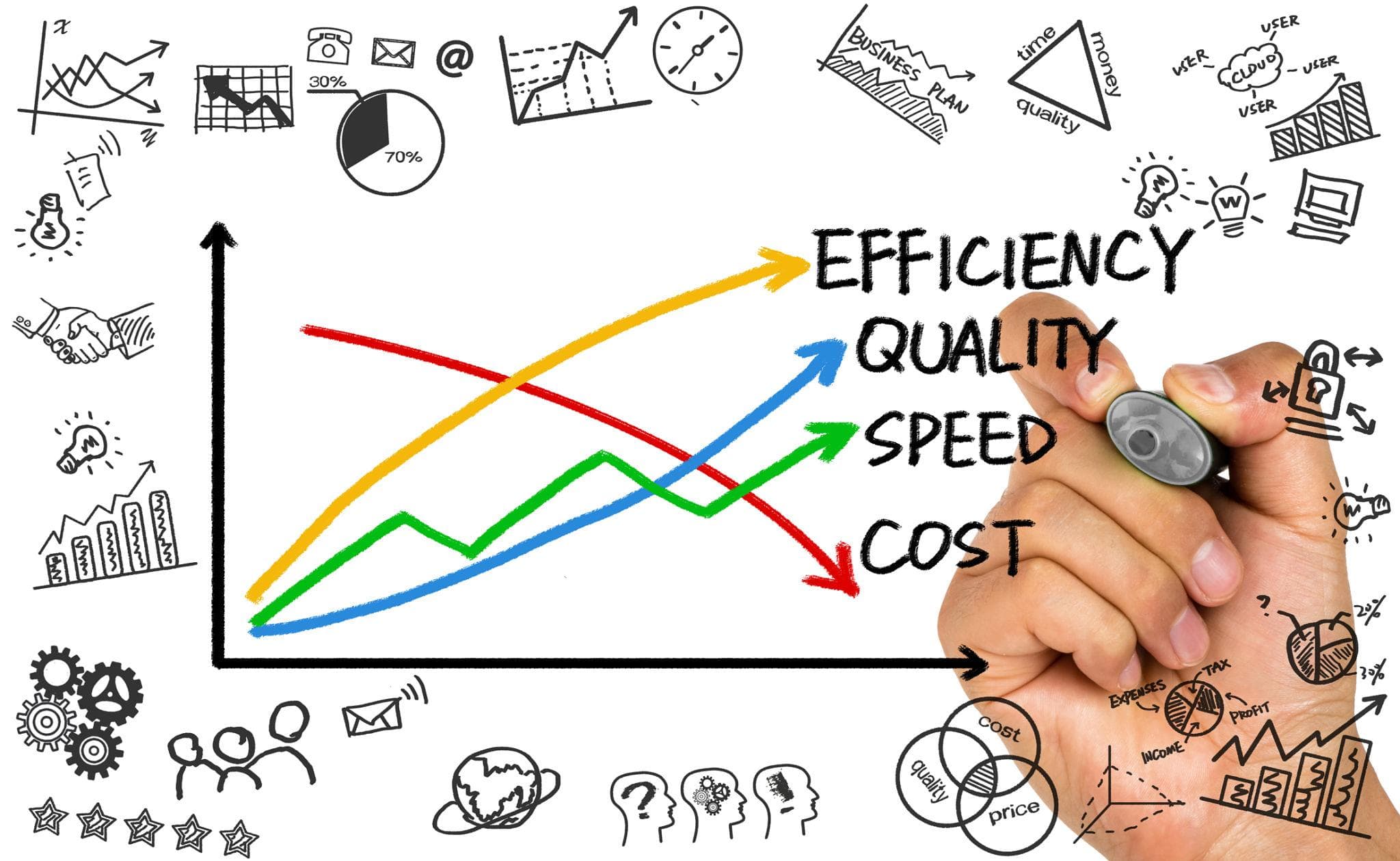
The speed-versus-quality trade-off is one of the most persistent and most misunderstood tensions in operational management. It is misunderstood because it is presented as a binary choice move faster or produce better quality when the actual situation is almost always a systemic failure to design for both simultaneously. The business that takes three weeks to launch a campaign because of approval cycles is not producing higher-quality campaigns than the one that launches in three days. It is producing campaigns delayed by approval overhead that adds process time without adding quality. The business that dispatches orders with high error rates is not executing faster than the one with high accuracy. It is executing the dispatch process with inadequate error-prevention systems. The speed-quality tension, when it appears to be a genuine choice, is almost always an indication that the operational system is poorly designed for one or both dimensions.
Where Speed and Quality Are Genuinely in Tension
The situations where speed and quality genuinely trade off where improving one requires accepting less of the other are specific and relatively rare in operational management. New product formulation development is one: the stability testing, safety assessment, and consumer testing that produces a high-quality formulation takes months, and compressing the timeline by skipping or shortening these steps genuinely reduces quality. New supplier qualification is another: the quality testing, site audit, and small-batch production that produces confidence in a new supplier's capability takes weeks, and compressing this timeline increases the risk that a quality issue reaches the commercial production stage.These are genuine speed-quality trade-offs, and they require a deliberate decision about where on the continuum the acceptable balance lies for the specific situation. But they are a minority of the operational decisions that present themselves as speed-quality trade-offs. The majority of apparent speed-quality tensions are actually speed-rework trade-offs: moving faster through a poorly designed process produces more errors, more rework, and more total time spent than moving at an appropriate pace through a well-designed process. The remedy is not slowing down. It is improving the process design so that high speed and high quality are simultaneously achievable.
The Process Design Principle That Achieves Both
The process design principle that achieves high speed and high quality simultaneously is error prevention at the point of execution rather than error detection at the end. A dispatch process that requires the warehouse worker to visually check the pick list, manually compare it to the packing slip, and confirm the address is slow and error-prone visual checking is cognitively demanding and fatigues under volume. The same process with barcode scanning at pick (scan the SKU, system confirms it matches the order), automatic address print from the OMS (eliminating manual address entry), and a single packing-stage weight check (confirming the package weight matches the expected weight for the order contents) is both faster and more accurate because the error prevention is built into the execution steps rather than added as a quality check after execution.Error prevention at the point of execution is faster than error detection after execution because it eliminates the rework cycle the detection, the correction, the re-dispatch, and the customer communication that a post-execution error generates. The fastest path to a correct outcome is not the fastest execution of an error-prone process. It is a well-designed process that produces correct outcomes at the first attempt.
Related articles
View all → Autonomous Coordination
The Rise of Autonomous Enterprise Coordination Platforms
Enterprise coordination the alignment of people, processes, information, and resources across organisational boundaries has always been expensive, slow, and error-prone when managed through human intermediaries alone. Autonomous coordination platforms powered by AI are replacing the coordination overhead of large organisations with intelligent systems that synchronise the enterprise continuously and without manual intervention.
 AI Agents
How AI Agents Are Transforming Enterprise Workflow Intelligence
AI agents autonomous systems that perceive their environment, reason about objectives, and take action across enterprise workflows are moving from research concept to operational reality. The enterprises deploying AI agents at scale are discovering that workflow intelligence is not just about automation it is about creating organisational capability that compounds with every cycle.
 Enterprise Management
The Future of Enterprise Management Through AI Execution Layers
Enterprise management is being restructured by AI execution layers intelligent systems that sit between strategic direction and operational action, translating intent into coordinated execution at a speed and consistency that human management hierarchies cannot match. The enterprises that deploy these layers effectively are redefining what management means and what managers do.