The Future of Enterprise Coordination Through Multi-Agent AI Systems
Multi-agent AI systems networks of specialised AI agents that coordinate with each other to accomplish complex enterprise goals represent the next frontier of enterprise AI deployment. Where single agents handle isolated workflows, multi-agent systems handle the interconnected, cross-functional complexity that constitutes the majority of high-value enterprise operational challenges.
Aditya Sharma
Author
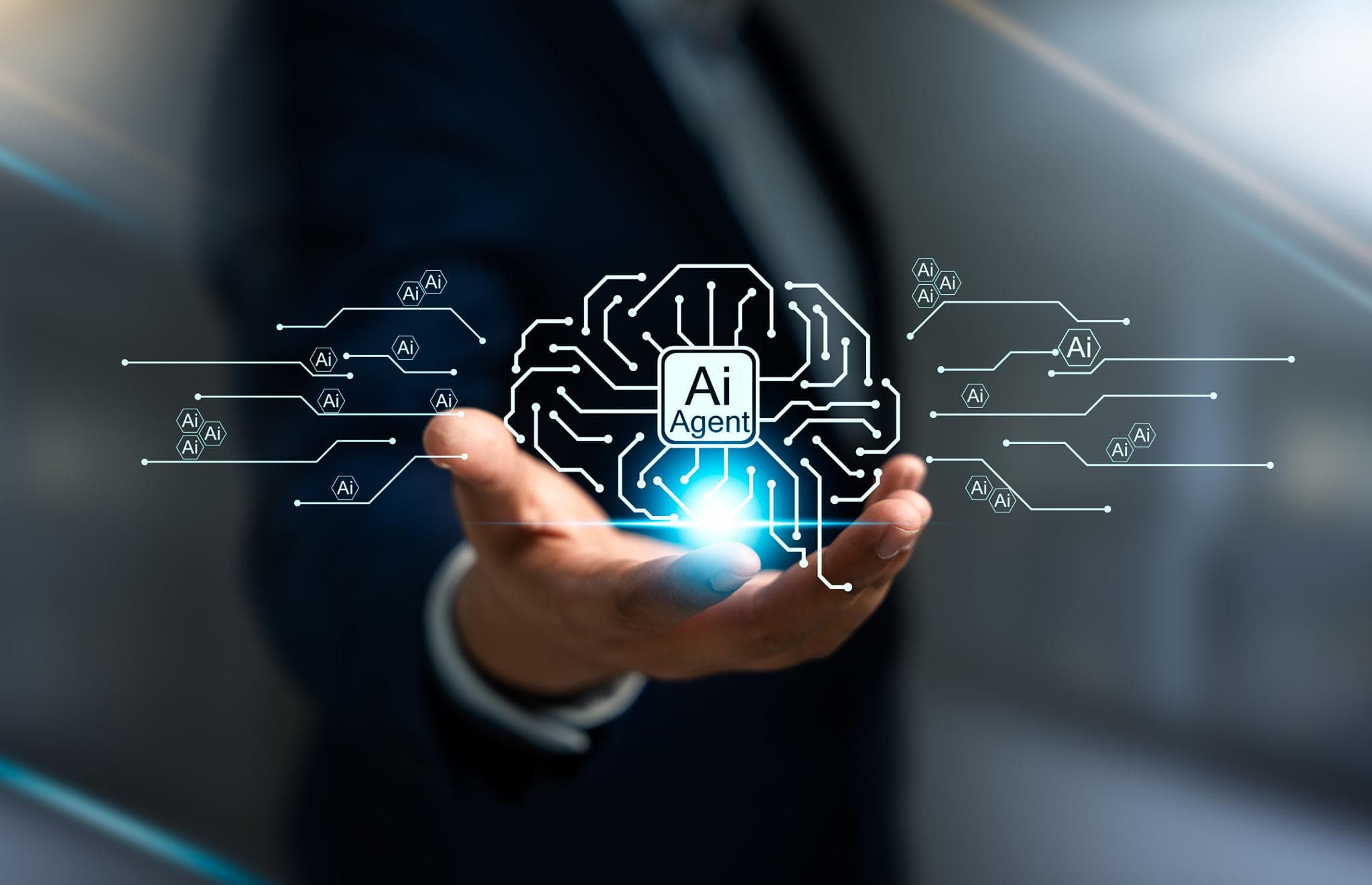
The evolution of enterprise AI deployment has followed a progression from single-task AI tools to multi-task AI platforms to, now, multi-agent AI systems. Single-task AI tools a demand forecasting model, a document classification system, a fraud detection algorithm perform a specific, narrow function well and generate value within their specific domain. Multi-task AI platforms large language models, AI assistants, workflow automation platforms perform a broader range of functions within a unified system and generate value across multiple domains. Multi-agent AI systems networks of specialised AI agents that can perceive their environment, communicate with each other, coordinate their actions, and collectively pursue complex goals that no individual agent could achieve alone represent the most capable and the most complex AI deployment model, and the one with the highest potential value for the enterprise operational challenges that are too complex for any single agent to manage. The transition to multi-agent AI systems is not primarily driven by the availability of individual agent capabilities those capabilities are increasingly mature and widely deployed. It is driven by the recognition that the most valuable enterprise operational challenges are inherently multi-dimensional, requiring the coordination of multiple specialised capabilities simultaneously, and that multi-agent architectures are the right tool for inherently multi-dimensional challenges.
Why Enterprise Coordination Requires Multi-Agent Architecture
The enterprise operational challenges that generate the most value and create the most coordination overhead are inherently multi-dimensional in ways that single-agent systems cannot handle. New product introduction requires the coordination of product development, regulatory approval, manufacturing ramp-up, supply chain establishment, pricing strategy, sales force enablement, marketing launch, and customer service preparation each a distinct operational domain requiring specialised expertise, each dependent on the outputs and timing of the others, and all requiring simultaneous coordination to achieve the target launch timeline. A single AI agent can handle any one of these domains but not all of them simultaneously with the depth of specialisation that each domain requires.Multi-agent architecture addresses this challenge by decomposing the complex goal into domain-specific sub-goals, assigning each sub-goal to a specialised agent with the domain expertise and system integrations required to pursue it, and providing an orchestrating coordination layer that manages the dependencies, timing constraints, and conflict resolution between the specialised agents' activities. The result is a system that achieves both depth each domain handled by an agent with full specialisation and breadth all domains handled simultaneously with coordinated timing that no single agent and no human coordination team can match.
The Architecture of Multi-Agent Enterprise Coordination
Multi-agent enterprise coordination systems have four architectural components that together enable the complex, coordinated AI operations that high-value enterprise challenges require. The orchestrator layer is the meta-agent responsible for goal decomposition, task assignment, dependency management, conflict resolution, and progress monitoring across the full multi-agent system. The orchestrator does not perform domain-specific operational work it manages the coordination of the agents that do, ensuring that the multi-agent system collectively pursues the enterprise goal rather than each agent independently optimising its own sub-goal.The specialist agent layer consists of the domain-specific agents responsible for the operational work in each domain: the procurement agent, the logistics agent, the financial agent, the customer success agent, the project management agent, each with the system integrations, domain knowledge, and authority frameworks appropriate to its operational domain. The inter-agent communication layer provides the structured communication protocols through which agents share operational context, communicate dependencies, request coordination from other agents, and report their status to the orchestrator. The shared operational context layer maintains the unified view of the enterprise's operational state that all agents require to make decisions that are consistent with the overall goal preventing the locally optimal but globally suboptimal decisions that each agent would make operating in isolation with only its own domain context.
Super Manager AGI as Multi-Agent Coordination Infrastructure
Super Manager AGI is designed to function as the coordination infrastructure for enterprise multi-agent systems providing the orchestration layer, the shared operational context, the inter-agent communication protocols, and the governance framework that enable multi-agent enterprise coordination at production scale. The design philosophy of Super Manager AGI reflects the insight that the most valuable multi-agent coordination is not the coordination of the most sophisticated individual agents, but the coordination of the most tightly integrated and context-aware multi-agent system the system where each agent knows what the other agents know, can request and provide assistance to other agents in real time, and contributes to and benefits from the shared operational context that makes the multi-agent system collectively more capable than the sum of its individual parts.The practical implication of this design philosophy is that Super Manager AGI's value increases with the breadth and depth of the enterprise's deployment: the more operational domains that are covered by integrated agents, the richer the shared operational context, and the more powerful the cross-domain coordination that the multi-agent system can provide. The enterprise that deploys Super Manager AGI across procurement, supply chain, finance, and customer operations has a multi-agent coordination system that can manage the complex operational interdependencies between these four domains the procurement decision that affects the supply chain that affects the financial forecast that affects the customer delivery commitment in ways that no single-domain deployment can provide. The trajectory of enterprise multi-agent AI deployment is from isolated single-domain agents toward increasingly integrated multi-agent ecosystems and Super Manager AGI is the coordination infrastructure designed to make that trajectory manageable, governable, and continuously valuable.
How Super Manager AGI Helps Enterprises Move from Automation to Autonomy
Related articles
View all → AI-Native Infrastructure
Why Global Enterprises Need AI-Native Operational Infrastructure
The operational infrastructure that global enterprises built in the pre-AI era was designed for a different competitive environment. Enterprises that try to layer AI on top of legacy operational infrastructure will capture a fraction of AI's potential. The ones that rebuild their operational foundations as AI-native will gain structural advantages their competitors cannot close.
 Agentic AI
The Evolution of Enterprise Operations in the Age of Agentic AI
Agentic AI AI systems that pursue goals, take actions, and adapt to feedback without requiring step-by-step human instruction is not an incremental evolution of enterprise automation. It is a structural shift in what operational systems can do and what human operators are for.
 Enterprise AI
The Enterprise Operating Model After the Rise of Autonomous AI
The enterprise operating model that was built for human coordination hierarchies, approval chains, monthly reviews, and manual handoffs is being structurally disrupted by autonomous AI systems that act, coordinate, and close loops without waiting for the next scheduled meeting. The organisations that redesign their operating model around AI execution will define the next decade of enterprise performance.