The Illusion of Profitability in Fast-Growing Brands
Fast-growing brands frequently appear profitable on a P&L while consuming cash at a rate that makes their survival structurally uncertain. The hidden costs working capital absorption, deferred liabilities, platform settlement lags, and the full cost of returns are real, compounding, and almost never visible in the revenue and gross margin figures that founders celebrate.
Aditya Sharma
Author

The P&L showed ₹14.2 lakh of net profit for the month. The bank account showed ₹3.1 lakh on the last day of the same month down from ₹11.8 lakh at the start. The founder spent twenty minutes trying to reconcile the two numbers before the CFO explained what had happened: the ₹14.2 lakh of accounting profit was real, but it was accompanied by ₹22.9 lakh of working capital consumption inventory purchased to support next month's projected growth, marketplace settlements that would arrive in fourteen days, and a tax liability that would be due in six weeks. The business was profitable on paper. It was cash-negative in reality. And this gap between accounting profit and actual cash generation was not a one-month anomaly. It was the structural financial condition of a fast-growing brand that had never built the financial model to make working capital dynamics visible alongside P&L performance. The illusion of profitability in fast-growing brands is one of the most consequential financial misunderstandings in the D2C ecosystem and it is the primary reason that brands with impressive revenue growth and apparent P&L profitability encounter existential cash crises that their founders did not see coming.
Why the P&L Lies to Fast-Growing Founders
A profit and loss statement is an accrual accounting document it records revenue when it is earned and expenses when they are incurred, regardless of when cash changes hands. In a stable, slow-growing business, the difference between P&L profit and cash generation is small and predictable. In a fast-growing business, the difference can be enormous because growth itself consumes cash in ways that the P&L does not capture.The most significant source of the gap is working capital growth. A business that grows from ₹40 lakh to ₹80 lakh monthly revenue over six months needs to carry approximately twice as much inventory at the end of the period as it did at the start. That additional inventory investment the cash paid to suppliers for goods that have not yet been sold does not appear as an expense on the P&L. It appears as an asset on the balance sheet. The P&L reports the margin on the goods sold. It does not report the cash consumed to build the inventory required to generate the next month's sales. Founders who read their P&L without simultaneously reading their cash flow statement and balance sheet are reading an incomplete and systematically misleading picture of their business's financial health.
Building Financial Visibility That Matches Reality
The financial reporting infrastructure that a fast-growing D2C brand needs to avoid the profitability illusion has three components that must operate together. The first is a cash flow statement that runs alongside the P&L on the same cadence weekly for a brand growing faster than 15% month-on-month, monthly for more stable businesses. The cash flow statement must capture not only operating cash flows but working capital movements the cash consumed by inventory build, the cash not yet received from marketplace settlements, and the cash committed to future supplier payments.The second component is a working capital model that projects the cash requirement of the business's projected growth rate for every ₹10 lakh of additional monthly revenue the brand plans to generate, what additional inventory investment is required, what additional settlement lag cash is needed, and what additional operational infrastructure investment must be made? This model, run thirty to sixty days ahead of the actual growth, makes the working capital requirement of growth visible before it becomes a cash crisis. The third component is a true unit economics model one that includes the full cost of returns, the full cost of customer acquisition including all agency and platform fees, and the full cost of fulfilment including the returns handling cycle not the simplified contribution margin calculation that most founders use as a proxy. Together, these three components replace the profitability illusion with financial clarity. The business may still be profitable genuinely profitable but the founder will know it for certain rather than discovering the opposite when the bank account reaches a number that makes payroll uncertain.
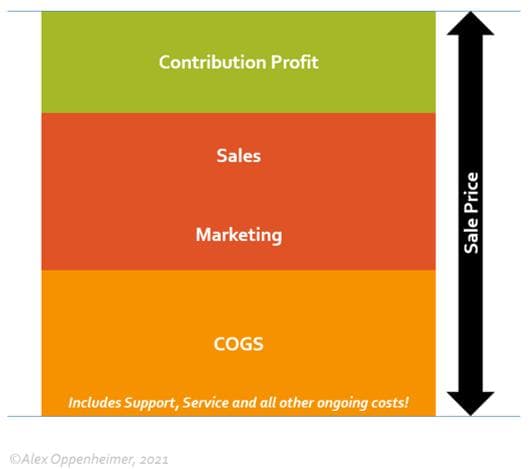
Contribution Margin vs Gross Margin: What Founders Miss
Related articles
View all → AI
AIThe Future of AI-Powered Digital Marketplaces
Digital marketplaces are evolving from transactional platforms into intelligent commerce ecosystems. AI is reshaping how buyers discover products, how sellers manage operations, and how platforms create value for everyone in the ecosystem and the pace of this transformation is accelerating.
 Customer Support
How AI Can Transform Enterprise Customer Support Systems
Customer support is one of the highest-cost, highest-impact functions in a growing enterprise. AI is transforming it from a cost centre with linear scaling constraints into an intelligent service layer that delivers better customer outcomes at a fraction of the traditional cost per interaction.
 Logistics
The Future of Smart Logistics and Autonomous Delivery Systems
Autonomous vehicles, drone delivery, AI-powered routing, and real-time supply chain visibility are moving from pilot projects to operational infrastructure. The logistics industry is undergoing its most significant transformation since containerisation and the businesses that adapt earliest will define the next era of commerce.