Why Discounts Attract the Wrong Customers
Every discount event fills the funnel with price-sensitive buyers. The problem is that price-sensitive buyers are the customers least likely to return, least likely to recommend, and most likely to wait for the next discount rather than paying full price creating a retention treadmill that gets more expensive with each cycle.
Prince Kumar
Author
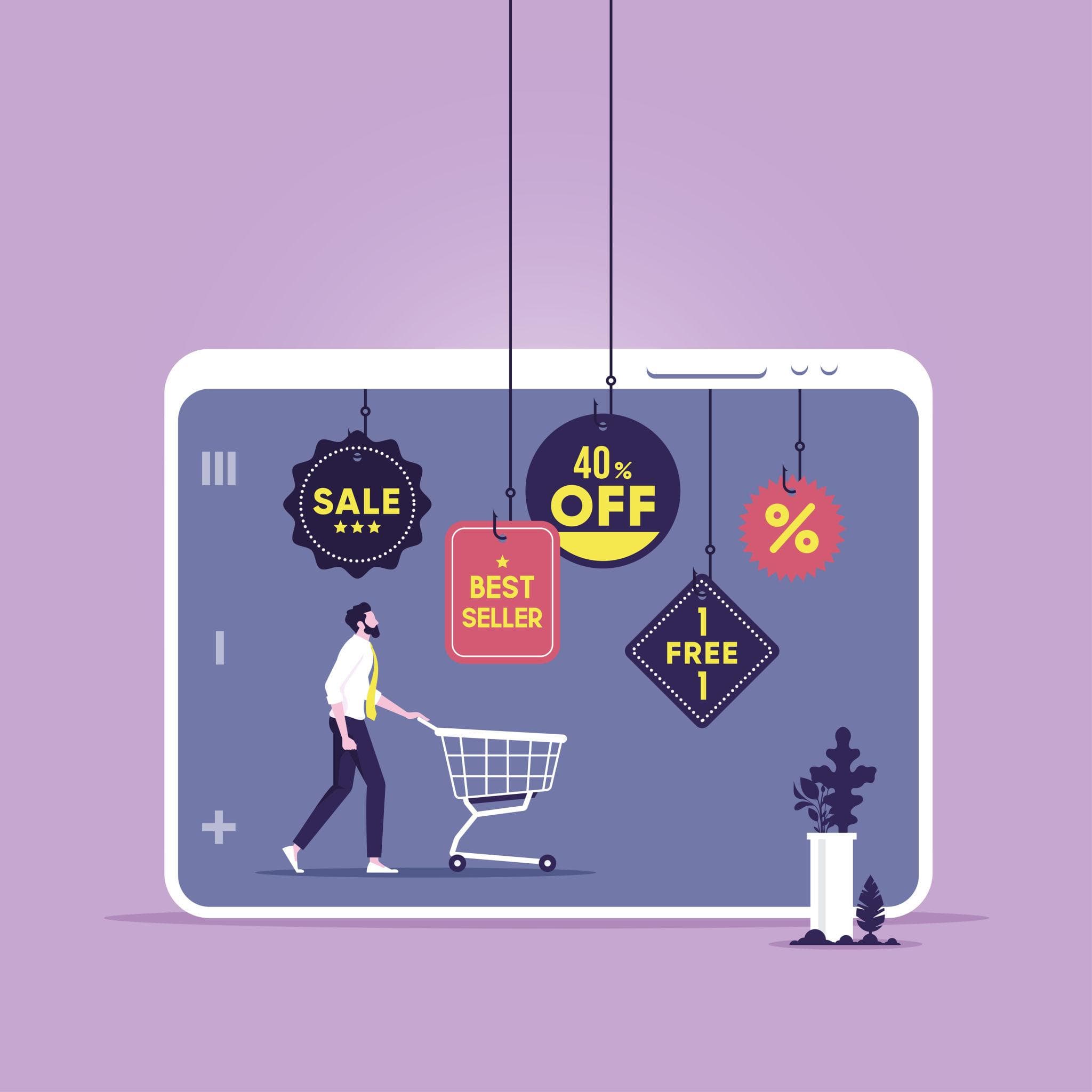
The discount attracts a customer. The discount also selects a customer specifically, the customer whose purchase decision was primarily price-driven. This selection effect is the mechanism that makes discounting progressively more expensive over time: each discount event acquires a higher proportion of price-sensitive customers who will return only for the next discount, increasing the brand's dependency on discounting to maintain revenue, and reducing the proportion of the customer base that provides the high-LTV, high-referral, full-price purchasing behaviour that makes a consumer brand genuinely profitable. The brand that runs four discount events per year for three consecutive years has trained its audience to expect discounts as the normal operating mode and has simultaneously filtered out of its addressable acquisition pool the customers who would have bought at full price without the discount.
The Selection Mechanics of Discount Acquisition
A discount event reaches two distinct customer segments simultaneously. The value-aligned customer who was already considering purchasing at full price but was waiting for a reason to commit this customer was going to buy regardless, and the discount merely accelerated their purchase timing while reducing the margin on a sale that would have occurred anyway. And the price-driven customer who would not have purchased at full price and is buying specifically because the discount has reduced the price to within their threshold this customer's purchase decision is entirely price-conditional. Their subsequent purchase behaviour is also price-conditional: they will return when the next discount event makes the price acceptable again, and they will not return between discount events.The proportion of each segment in a given discount event varies by brand maturity, category, and audience targeting. For most Indian D2C brands running broad-audience discount campaigns, the price-driven segment represents 40 to 60% of discount-event acquisitions. This means 40 to 60% of the acquisition cost spent on the discount event acquires customers whose expected LTV conditional on discount-only purchasing behaviour is often insufficient to recover the acquisition cost over any reasonable time horizon.
Measuring the Discount Selection Effect in Your Business
The cleanest measurement of the discount selection effect is a cohort comparison: compare the 90-day and 180-day repeat purchase rate of customers acquired during discount events against customers acquired in the weeks immediately before and after the same events (at full price). For most brands, this comparison reveals a 15 to 30 percentage point gap in 90-day retention between discount-acquired and full-price-acquired cohorts confirming that the discount event is systematically acquiring a lower-quality customer cohort even when the headline acquisition numbers look strong.The second measurement is average purchase frequency and AOV for repeat purchasers from each cohort. Customers who first purchased at a discount and return tend to purchase at lower average order values (because they are waiting for the lowest available price) and at lower purchase frequency (because they purchase only when a discount is available). Customers who first purchased at full price and return tend to purchase more frequently and at higher average order values.
Acquiring Quality Customers Without Discounting
- Lead with product education rather than price reduction content that demonstrates the specific problem your product solves, the specific results customers have achieved, and the specific quality difference from lower-priced alternatives acquires customers who are choosing on value rather than price
- Use free-with-purchase incentives rather than price discounts a complimentary product worth ₹150 added to orders above ₹699 creates a perceived value event without reducing the price anchor or attracting exclusively price-driven buyers
- Build a referral programme that rewards existing customers for bringing in new ones the customer acquired through a friend's recommendation is typically value-aligned (they heard about the product from someone who loves it) rather than price-driven, and has demonstrably higher retention rates
- Invest in earned media and organic content that drives qualified discovery the customer who found the product through a dermatologist recommendation, a trusted review publication, or organic search for a specific problem is arriving at the product with purchase intent grounded in need rather than in price
Related articles
View all → AI
AIThe Future of AI-Powered Digital Marketplaces
Digital marketplaces are evolving from transactional platforms into intelligent commerce ecosystems. AI is reshaping how buyers discover products, how sellers manage operations, and how platforms create value for everyone in the ecosystem and the pace of this transformation is accelerating.
 Customer Support
How AI Can Transform Enterprise Customer Support Systems
Customer support is one of the highest-cost, highest-impact functions in a growing enterprise. AI is transforming it from a cost centre with linear scaling constraints into an intelligent service layer that delivers better customer outcomes at a fraction of the traditional cost per interaction.
 Logistics
The Future of Smart Logistics and Autonomous Delivery Systems
Autonomous vehicles, drone delivery, AI-powered routing, and real-time supply chain visibility are moving from pilot projects to operational infrastructure. The logistics industry is undergoing its most significant transformation since containerisation and the businesses that adapt earliest will define the next era of commerce.