Why Inventory Accuracy Is Harder in Omnichannel Than You Think
Single-channel inventory management is a solved problem. Omnichannel inventory management tracking the same SKU across a direct website, two marketplaces, three quick commerce platforms, and retail distribution simultaneously is an entirely different operational challenge that most brands discover the hard way, after they have already committed to the channel expansion.
Aditya Sharma
Author
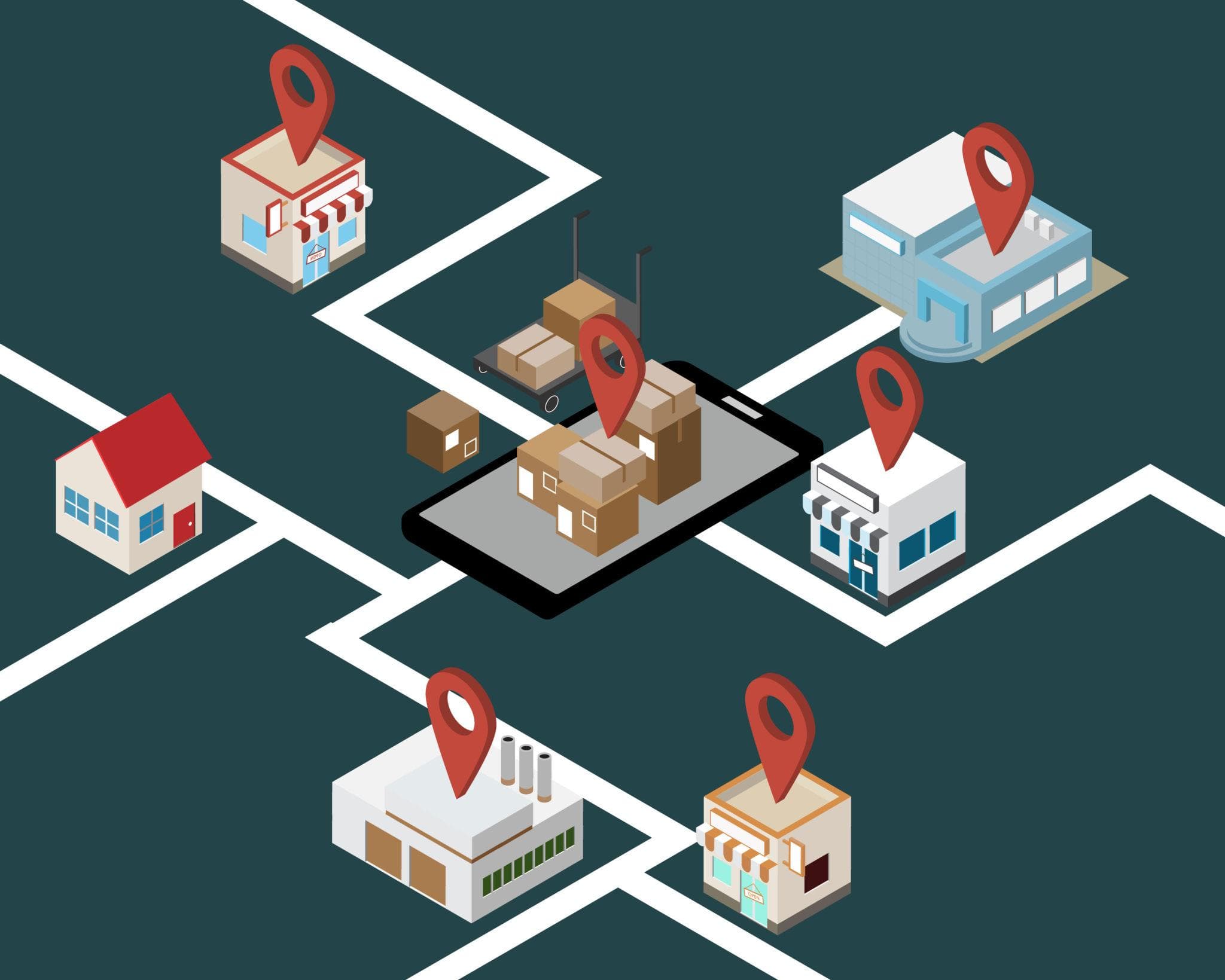
The brand had 847 units of its hero SKU in stock across all locations on a Tuesday morning. The Shopify store showed 847 units available. The Amazon listing showed 847 units. The Blinkit dark stores collectively held 124 of those units, which were not visible to the Shopify or Amazon inventory count because the dark store allocation had been made manually the previous week and the inventory management system had not been updated to reflect the separation. On Wednesday, the brand ran a flash sale on Shopify that sold 312 units. Amazon independently processed 89 sales from its own demand. Blinkit fulfilled 47 orders. Total units sold: 448. Total units remaining: 399. But the Shopify system showed 535 units remaining (847 minus 312), the Amazon system showed 758 units remaining (847 minus 89), and the Blinkit dark stores physically held 77 units. Three systems, three different numbers, none of them correct. Overselling on Amazon began within four hours. This is the omnichannel inventory accuracy problem not a failure of any single system, but a failure of the architecture that connects them, with consequences that compound with every channel added to the mix.
Why Each New Channel Multiplies Inventory Complexity
The complexity of inventory management does not scale linearly with the number of channels it scales exponentially. A single-channel brand has one inventory pool to manage, one system to keep accurate, and one set of demand signals to respond to. A two-channel brand has the same inventory pool distributed across two demand streams that must be balanced in real time over-allocating to one channel creates artificial scarcity in the other, under-allocating creates the overselling problem. A five-channel brand with inventory distributed across a central warehouse, two marketplace fulfilment centres, and three quick commerce dark store networks has a combinatorial complexity problem: any allocation decision across five nodes with different demand velocities, different lead times for replenishment, and different safety stock requirements can produce either stockouts or excess inventory at multiple nodes simultaneously.The specific complexity drivers that make omnichannel inventory accuracy difficult are: asynchronous inventory updates (each channel's system updates its inventory count on its own schedule, creating windows during which the same unit has been sold in one channel but is still showing as available in another), physical inventory fragmentation (the same total inventory count is distributed across multiple physical locations, each of which can drift from the recorded position due to receiving errors, picking errors, and return processing delays), and demand signal fragmentation (the forecast model that was accurate for a single-channel demand stream may be systematically inaccurate when the demand is split across five channels with different seasonal patterns, promotional calendars, and consumer demographics).
The Overselling Problem and Its Downstream Cost
Overselling accepting an order for a product that is not actually available for fulfilment is the most immediately visible consequence of inventory accuracy failure in omnichannel operations, and its downstream cost is frequently underestimated. The direct cost is the cancellation: the customer receives a cancellation notification, the marketplace or platform records the cancellation against the brand's seller performance metrics, and the brand incurs a customer service cost for handling the cancellation query. Each of these has a measurable financial value.The indirect cost is more significant: the cancellation experience is one of the most trust-destroying interactions a consumer can have with a brand online. The consumer who ordered a product, received a shipping confirmation, and then received a cancellation notification three days later has had an expectation set and violated a qualitatively worse experience than never receiving the order confirmation at all. The trust damage from a cancellation has been shown in consumer research to produce NPS scores comparable to a product quality failure, and generates negative review content at a disproportionately high rate relative to the frequency of the event. At scale, the cumulative NPS and review impact of chronic overselling due to inventory accuracy failure is a material drag on the organic acquisition that reviews and ratings support.
Building Omnichannel Inventory Accuracy: The Architecture
The architecture that enables accurate inventory management across multiple channels has three required components. The first is a single inventory ledger: one system that is the authoritative source of inventory truth across all channels and physical locations, updated in real time by every inventory event (sale, return, transfer, receipt) regardless of which channel or location generated the event. This system sits above the channel-specific inventory management systems and pushes available-to-sell quantities to each channel's listing management API after reserving appropriate safety stock at each node.The second component is channel-specific inventory allocation logic: the rules that determine how much of the total available inventory is made available to each channel at any point in time, based on the channel's historical demand velocity, upcoming promotional calendar, lead time for replenishment, and the brand's strategic priority for each channel. This allocation logic must be dynamic adjusting in real time as sales velocity shifts across channels rather than static allocations set weekly or monthly. The third component is exception alerting: automated notifications when any channel's inventory falls below a defined threshold, when the total available inventory across all channels falls below the safety stock level for any SKU, or when the inventory discrepancy between the ledger and any physical location exceeds a defined tolerance. Without this alerting, inventory accuracy problems are discovered through customer complaints and order cancellations rather than through proactive monitoring and the discovery-through-failure cycle is both more expensive and more damaging to brand reputation than the proactive system that prevents it.

Quick Commerce vs Profitability: Can Brands Survive 10-Minute Delivery?
Related articles
View all → Autonomous Coordination
The Rise of Autonomous Enterprise Coordination Platforms
Enterprise coordination the alignment of people, processes, information, and resources across organisational boundaries has always been expensive, slow, and error-prone when managed through human intermediaries alone. Autonomous coordination platforms powered by AI are replacing the coordination overhead of large organisations with intelligent systems that synchronise the enterprise continuously and without manual intervention.
 AI Agents
How AI Agents Are Transforming Enterprise Workflow Intelligence
AI agents autonomous systems that perceive their environment, reason about objectives, and take action across enterprise workflows are moving from research concept to operational reality. The enterprises deploying AI agents at scale are discovering that workflow intelligence is not just about automation it is about creating organisational capability that compounds with every cycle.
 Enterprise Management
The Future of Enterprise Management Through AI Execution Layers
Enterprise management is being restructured by AI execution layers intelligent systems that sit between strategic direction and operational action, translating intent into coordinated execution at a speed and consistency that human management hierarchies cannot match. The enterprises that deploy these layers effectively are redefining what management means and what managers do.