Why You Need Fewer Dashboards, Not More
The business with six dashboards and no clarity has not invested in data infrastructure. It has invested in data anxiety. The business with one well-designed dashboard and a clear decision protocol is making better decisions in ten minutes per day than the one spending forty minutes reviewing six.
Manthan Sharma
Author
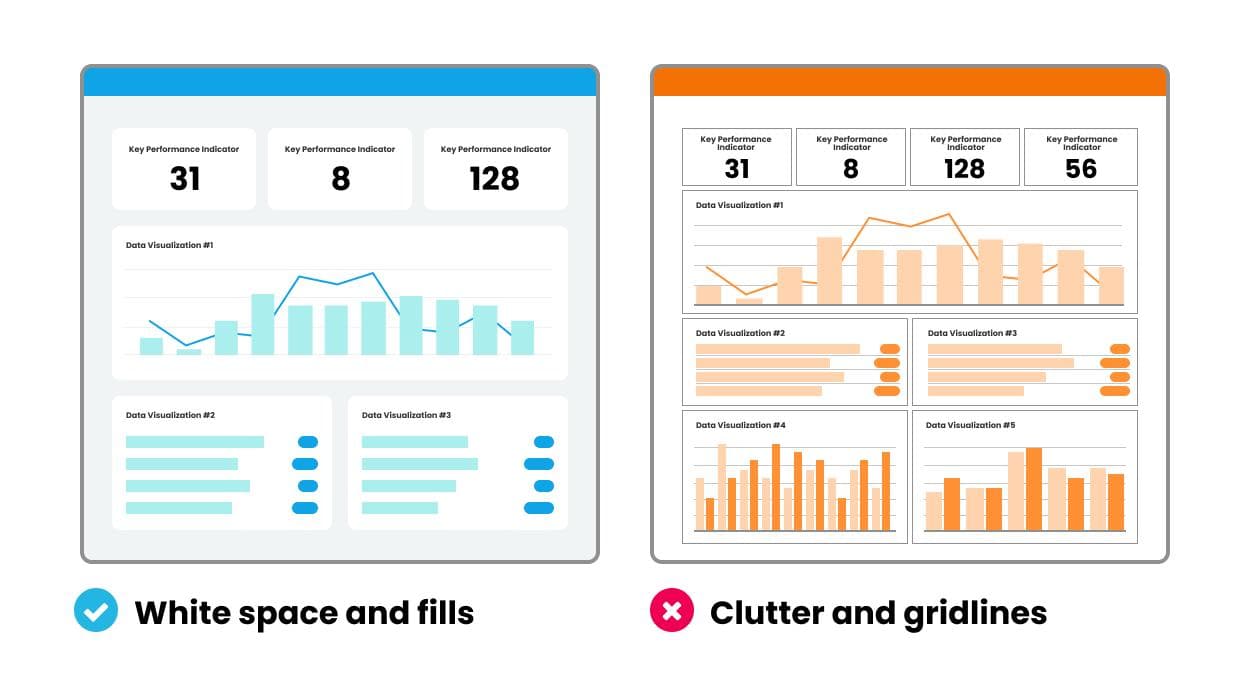
The proliferation of dashboards in growing businesses follows a predictable pattern. The marketing team builds a campaign performance dashboard in Meta Ads Manager. The operations team adds a Shopify analytics dashboard. The finance person creates a Google Sheets dashboard for the P&L. Someone adds a Looker Studio dashboard that pulls from multiple sources. The logistics team builds a courier performance tracker. Each dashboard was built for a reason to answer a specific question at a specific time. None of them were designed together. None of them use the same metric definitions. None of them are read by the same set of people for the same set of decisions. The result is a dashboard landscape that is simultaneously abundant and useless abundant in numbers, useless as a decision-making tool because the decision-maker cannot determine which dashboard to trust for which question.
The Three Problems That Multiple Disconnected Dashboards Create
Problem one: metric definition inconsistency. The CAC in the marketing dashboard is total ad spend divided by total new customers. The CAC in the finance dashboard is total acquisition cost including agency fees divided by net retained customers. Both are defensible calculations. Neither is the same number. When the founder asks the marketing lead and the finance person for this week's CAC and gets two different answers, neither is wrong but the meeting that follows to reconcile them consumes time that could have been spent acting on the number. This inconsistency is not resolved by having a conversation. It is resolved by agreeing on a single canonical definition and building it into the single authoritative source.Problem two: update schedule misalignment. The Shopify dashboard updates in real time. The Google Sheets financial dashboard is updated weekly when the finance person runs the reconciliation. The courier tracking dashboard updates daily. A decision that requires combining commercial performance data with financial performance data and logistics data cannot be made correctly using dashboards that were last updated at different times one is this morning's data, one is last week's data, and one is yesterday's data. The combined view is a snapshot of three different moments in time, not a coherent current state of the business.Problem three: no alert infrastructure. Dashboards are passive they display data when someone looks at them. The operational decision that could have been made at 2pm on Tuesday (when the campaign CAC crossed the threshold in the Meta dashboard that nobody checked until Thursday's review) was made on Thursday instead, after two additional days of above-threshold spend. The dashboard that requires someone to check it to be useful is a significantly weaker tool than a system that pushes an alert to the relevant person at the moment the threshold is crossed.
The One-Dashboard Design Principle
The one-dashboard design principle is not a literal requirement that the entire business runs on a single screen. It is a design philosophy: every metric that a specific decision-maker needs to make their most consequential decisions should be available in a single view, with a single set of canonical definitions, updated on a single schedule, and linked to a single set of alert thresholds. The founder's single view contains the five to seven metrics described in the morning brief article. The marketing lead's single view contains their channel-specific performance metrics. The operations lead's single view contains the inventory, fulfilment, and NDR metrics. Each view is designed for a specific decision-maker and a specific set of decisions.The distinction from the multi-dashboard proliferation is not the number of screens. It is the design intention. Each view is designed backward from the decisions it needs to inform the metrics selected because they drive specific actions, the thresholds set because they have been validated as the level at which action is required, and the update schedule matched to the decision cycle rather than to the technical capability of the data tool. This design intention is what most dashboard projects lack they are designed forward from the available data rather than backward from the required decisions.

Related articles
View all → Operational Intelligence
Why Enterprise Leaders Must Adopt AI-Driven Operational Intelligence
Operational intelligence the real-time, comprehensive understanding of what is happening across an enterprise and why has always been the foundation of effective leadership. AI is making a quality of operational intelligence available to enterprise leaders that was previously impossible to achieve, and the leaders who adopt it are making fundamentally better decisions than those who do not.
 Decision Intelligence
The Future of Enterprise Decision Intelligence Through AI Coordination
Decision intelligence the systematic improvement of decision quality through better data, better analysis, and better coordination of decision inputs is being transformed by AI. The enterprises that build AI-coordinated decision intelligence are making better decisions faster than their competitors will ever catch up with.
 Decision Bottlenecks
How Intelligent AI Systems Can Reduce Enterprise Decision Bottlenecks
Decision bottlenecks are the silent tax on enterprise performance. They are everywhere, accepted as inevitable, and collectively responsible for more lost revenue, more operational failures, and more missed opportunities than almost any other management problem. AI can eliminate most of them.