Why Workflow Intelligence Will Replace Workflow Automation
Workflow automation executes predefined sequences: when trigger occurs, execute steps A→B→C→D. This approach works for stable, repetitive processes but fails when environments change, exceptions arise, or conditions require judgment. Workflow intelligence exhibits adaptive capability: understands workflow objectives not just sequences, adapts execution based on context and conditions, handles exceptions through escalation rather than failure, learns from outcomes to improve performance, and coordinates across workflows maintaining consistency. The distinction is fundamental: automation reduces execution effort but requires constant human maintenance as conditions change; intelligence reduces coordination overhead by transferring decision authority to systems that adapt to changing conditions. Organizations deploying intelligent workflows report 5-10x more value than traditional automation because intelligent systems handle the variability that breaks rule-based automation.
Manthan Sharma
Author
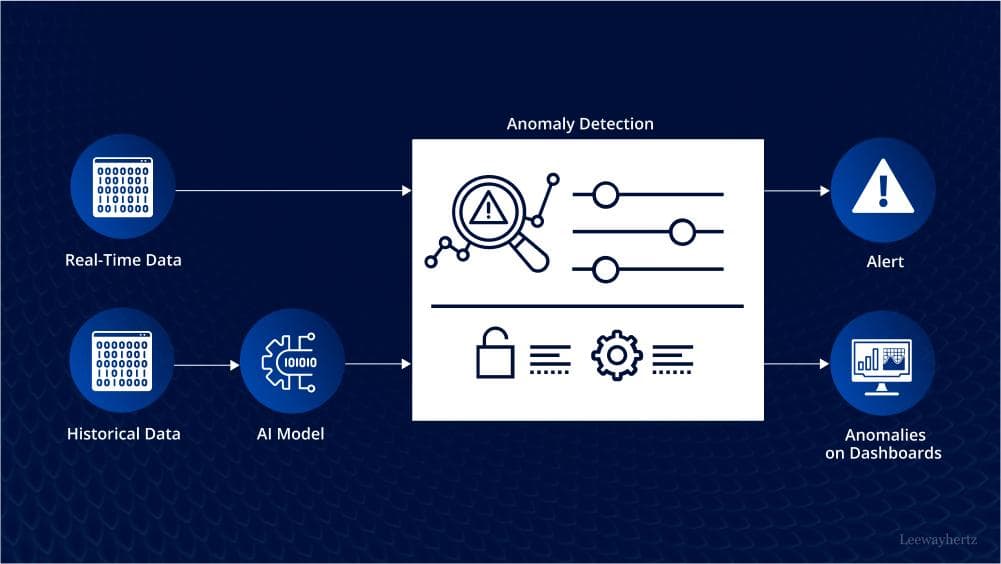
Procurement workflow traditionally automated: when inventory drops below reorder point, create PO with predefined supplier and quantities, route for approval based on dollar threshold, send to supplier via EDI. Automation works until: supplier changes terms, material shortages require alternative sourcing, price fluctuations affect approval thresholds, or demand patterns change quantities. Each exception breaks automation requiring human intervention. Exception rate: 60% of POs. Intelligent procurement workflow: monitors inventory, supplier performance, pricing trends, and demand forecasts; makes procurement decisions considering multiple factors (cost, quality, reliability, strategic relationships, capacity constraints); adapts to changing conditions (price volatility, supplier issues, demand shifts) without rule modifications; handles exceptions through escalation when scenarios exceed authority or certainty thresholds. Exception rate: 15% because intelligence handles variability. The transformation is not better automationit is intelligent systems that understand objectives and adapt rather than executing rigid sequences.
The Strategic Imperative: Why This Capability Determines Market Position
The capability described in why workflow intelligence will replace workflow automation is not optional for enterprises competing in markets where operational velocity, execution consistency, and coordination efficiency determine competitive outcomes. Organizations lacking this capability face structural disadvantages that compound over time: operational overhead consuming 30-50% of capacity that competitors eliminate through autonomous coordination, decision latency measured in days or weeks while competitors respond in hours, quality inconsistency from human variability while competitors maintain algorithmic consistency, and cost structures requiring headcount growth for capacity expansion while competitors scale computationally.The transformation described represents a transition from one operational paradigm to another comparable to previous shifts that reshaped competitive landscapes: from manual to automated manufacturing, from physical to digital distribution, from on-premise to cloud infrastructure. Organizations that recognize paradigm shifts and commit resources to transformation early establish competitive positions that persist for decades. Organizations that treat paradigm shifts as incremental improvements discover they are competing from permanently disadvantaged positions as performance gaps widen beyond what catch-up efforts can address.The implementation timeline is a critical strategic variable. The underlying technologies enabling this transformation have reached production viability and early adopters are demonstrating operational proof points. Organizations committing to transformation in 2026-2027 will build capabilities while implementation pathways remain accessible and first-mover advantages are available. Organizations delaying until 2028-2029 will face mature competition from enterprises with established capabilities, will compete in talent markets where the best people prefer advanced operational environments, and will discover that the organizational transformation required becomes more extensive as operational gaps widen. The window for establishing leadership positions is narrowing rapidly.
Implementation Framework: The Path from Concept to Operational Reality
Successful implementation requires understanding that the transformation is primarily organizational and architectural rather than technical. Modern AI capabilities are sufficient for most enterprise use cases. The implementation challenges are redesigning workflows around autonomous execution rather than human coordination, establishing governance frameworks enabling autonomous operations while maintaining control, developing capabilities for managing AI systems at scale, and navigating organizational change as roles evolve. Organizations that approach implementation as operational transformation succeed; organizations treating it as technology deployment fail despite equivalent or greater technology investment.The proven implementation sequence starts with high-impact, well-bounded workflows that prove value while managing risk. Supply chain coordination, customer service operations, financial processing, and HR workflows frequently serve as effective proving grounds because they combine clear value opportunities with manageable risk profiles. Organizations establish comprehensive governance and monitoring infrastructure before scaling deployment, demonstrating that autonomous operations operate within risk controls. They invest in organizational change management treating transformation as operational not technical change. They maintain sustained executive commitment through the 18-36 month transformation timeline required to achieve enterprise-scale value.The most critical success factor is establishing clear accountability models for autonomous operations. Traditional accountability focuses on decision-level responsibility (who approved this action). Agentic accountability focuses on framework-level responsibility (who designed the governance, monitoring, and escalation protocols within which autonomous decisions occur). This shift enables autonomous operations at scale: humans cannot review thousands of daily decisions but can be accountable for frameworks governing those decisions. Organizations establishing framework accountability can deploy autonomous agents confidently; organizations attempting decision-level accountability cannot scale autonomous operations because accountability models cannot handle the volume.
The Performance Transformation and Competitive Implications
Organizations successfully implementing workflow intelligence will replace workflow automation achieve performance characteristics fundamentally different from traditional operational models. Operational throughput increases 2-5x with same or reduced headcount because autonomous coordination eliminates bottlenecks constraining capacity. Decision latency compresses 10-20x from days to hours because decisions execute when conditions trigger them rather than queueing for human review. Quality consistency improves 40-60% because automated execution maintains standards rather than depending on human reliability. Cost structures transform as marginal capacity requires infrastructure investment rather than headcount growth, fundamentally changing unit economics and enabling pricing that traditional competitors cannot match.These performance advantages create self-reinforcing competitive dynamics. Organizations with superior operational models capture market share through better pricing enabled by lower costs, attract better talent through superior operational environments where people focus on meaningful work rather than coordination overhead, invest more in innovation through better margins, and execute faster on market opportunities through superior decision velocity. Each advantage reinforces the others: market share growth funds capability investment, talent advantages enhance innovation, innovation creates customer preference, and execution velocity enables first-mover advantages. The competitive gaps between enterprises with advanced capabilities and those with traditional models widen rather than narrow over time.By 2030, markets will clearly differentiate between enterprises that completed this transformation and those attempting incremental adoption. Winners will operate with capabilities creating permanent advantages. Laggards will face intensifying pressure: losing market share to competitors with superior economics, struggling for talent as people prefer advanced environments, facing customer defections as expectations rise, and discovering that transformation required to catch up becomes more extensive as gaps widen. The strategic choice is commit to transformation now while pathways remain accessible, or accept permanent competitive disadvantage.

AI-Driven Enterprise Synchronization Across Teams & Departments
Related articles
View all → AI Agents
How AI Agents Are Transforming Enterprise Workflow Intelligence
AI agents autonomous systems that perceive their environment, reason about objectives, and take action across enterprise workflows are moving from research concept to operational reality. The enterprises deploying AI agents at scale are discovering that workflow intelligence is not just about automation it is about creating organisational capability that compounds with every cycle.
 Consulting
Why Consulting Firms Are Investing in AI Execution and Workflow Intelligence
The world's leading consulting firms are making significant investments in AI execution and workflow intelligence capabilities not just to automate their own internal operations, but to build the client service capabilities that their enterprise clients increasingly require. The consulting firm that can deliver AI execution strategy, deployment, and governance expertise is better positioned than the one that can only deliver AI advisory recommendations.
 Autonomous Systems
Beyond Automation: Designing Autonomous Business Systems
Automation executes predefined rules: when condition X occurs, take action Y. This approach works for stable, repetitive processes but fails when environments change, exceptions occur, or conditions require judgment rather than rule execution. Autonomous systems exhibit intelligence: they monitor environments continuously, detect patterns indicating action requirements, make decisions considering multiple factors and context, adapt to changing conditions without reprogramming, and handle exceptions through escalation protocols rather than failure. The distinction is fundamental: automation reduces human execution effort but still requires human design, monitoring, and exception handling. Autonomy reduces human coordination overhead by transferring decision authority to systems that operate with intelligence within governance boundaries. Enterprises deploying autonomous systems report that autonomy delivers 5-10x more value than traditional automation because autonomous systems can handle the variability and complexity that breaks rule-based automation.