AI-Driven Operational Excellence for Modern Global Organizations
Operational excellence in a global organisation has always been hard. Coordinating operations across time zones, regulatory regimes, cultures, and market conditions while maintaining consistent quality, efficiency, and customer experience is a management challenge of genuine difficulty. AI is not making this challenge disappear it is making it tractable.
Aditya Sharma
Author
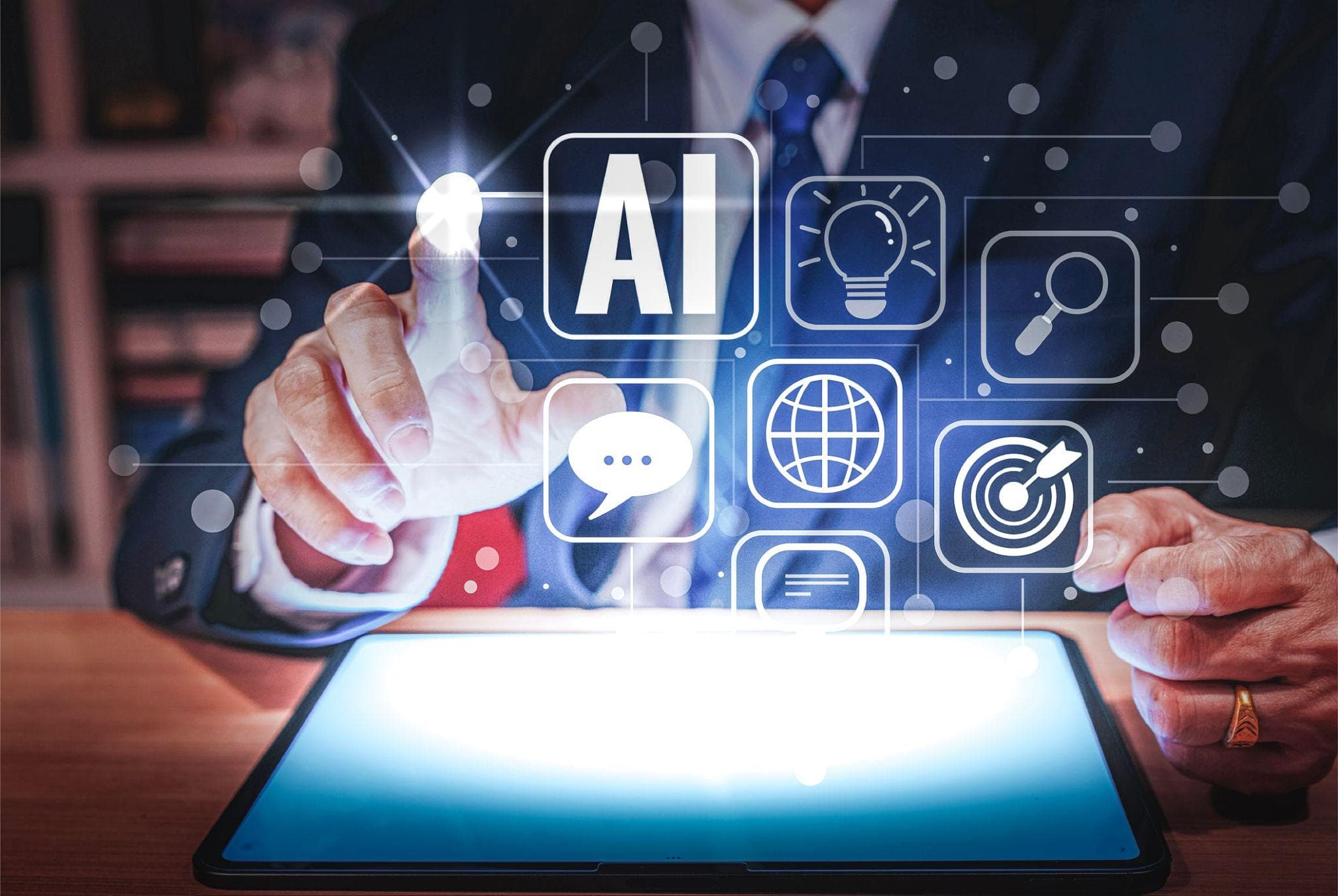
The operational excellence frameworks that dominated enterprise management thinking from the 1980s through the 2000s Six Sigma, Lean, Total Quality Management were built on a common philosophy: reduce variation, eliminate waste, and standardise processes to achieve consistent, high-quality outcomes at efficient cost. This philosophy produced genuine results for the organisations that applied it rigorously. It also produced genuine constraints: standardisation at global scale is difficult in organisations that operate across diverse markets, and the continuous improvement cycles that operational excellence frameworks depend on are slow measured in months and years rather than days and weeks. AI-driven operational excellence does not discard the principles of lean and quality management. It accelerates and scales them: using continuous data analysis to detect variation in real time rather than through periodic audits, using AI optimisation to eliminate waste dynamically rather than through structured improvement events, and using predictive modelling to prevent quality failures rather than detecting and correcting them after they occur. The result is an operational excellence programme that operates at the speed of the business environment rather than the speed of the improvement methodology which, for global organisations operating in fast-moving competitive markets, is the difference between operational excellence as a competitive advantage and operational excellence as a catch-up exercise.
The Limitations of Traditional Operational Excellence at Global Scale
Traditional operational excellence frameworks were developed in manufacturing environments characterised by physical production processes, relatively stable product designs, and geographically concentrated operations. The tools of lean manufacturing value stream mapping, kaizen events, standard work documentation are powerful in these environments. They become progressively less effective as the operational environment becomes more geographically distributed, more digitally mediated, and more variable in its inputs and outputs. A global financial services firm cannot map its value stream with sticky notes on a conference room wall. A global logistics network with thousands of route variations and real-time demand fluctuations cannot be improved by periodic kaizen events. A global software development operation cannot standardise its work in the way a physical assembly line can be standardised. The operational excellence frameworks that were developed for concentrated physical manufacturing need fundamental adaptation to apply effectively in the distributed, digital, variable operations of modern global enterprises.The second limitation of traditional operational excellence at global scale is the measurement lag that makes continuous improvement slow. Traditional quality management relies on sampling-based measurement inspecting a fraction of output to detect quality trends and periodic performance reviews to identify improvement opportunities. In a global operation generating millions of transactions, customer interactions, and operational events per day, sampling-based measurement misses the vast majority of the data that could drive improvement, and periodic reviews provide feedback that is months behind the current operational reality. AI-driven operational excellence solves both of these limitations: it provides full-population measurement across all operational events in all geographies simultaneously, and it delivers real-time feedback that makes continuous improvement genuinely continuous rather than periodic.
The Four Pillars of AI-Driven Operational Excellence
Pillar 1: Continuous real-time quality measurement
AI-driven quality management replaces sampling-based measurement with continuous full-population analysis monitoring every transaction, every customer interaction, every production unit, and every operational event for quality indicators in real time. Computer vision systems that inspect every unit on a production line, NLP systems that analyse every customer interaction for quality signals, and anomaly detection systems that flag every transaction that deviates from normal operational patterns these AI measurement capabilities provide a quality monitoring coverage and speed that sampling-based methods cannot approach. The enterprises that have deployed continuous AI quality measurement report 40 to 70% reductions in quality escape rates defects that reach customers rather than being caught in process driven by the elimination of the quality gaps that sampling inherently leaves.
Pillar 2: AI-optimised process variation reduction
Traditional variation reduction in operational excellence requires identifying the sources of variation through structured analysis statistical process control, root cause analysis, designed experiments and implementing fixes through structured improvement projects. AI-driven variation reduction compresses this cycle: machine learning models that identify variation patterns across millions of data points in hours rather than months, predictive models that identify the operational conditions that produce variation before the variation occurs, and autonomous process control systems that adjust operational parameters in real time to maintain process stability within target ranges. In manufacturing, logistics, and service operations, AI-optimised variation reduction is achieving quality improvements that traditional statistical process control methods reach only after years of improvement cycles.
Pillar 3: Dynamic waste elimination and efficiency optimisation
Traditional lean thinking identifies waste through value stream mapping and eliminates it through improvement projects that standardise the improved process. AI-driven efficiency optimisation identifies and eliminates waste dynamically adjusting process parameters, resource allocation, and workflow routing in real time to minimise waste given the current state of the operation. An AI system that continuously optimises energy consumption in a manufacturing facility, adjusting equipment parameters based on current production load, ambient conditions, and energy prices, is not just eliminating the waste identified in a one-time energy audit it is eliminating waste continuously as conditions change. This dynamic optimisation approach produces efficiency improvements that accumulate continuously rather than in discrete improvement project steps.
Pillar 4: Predictive performance management across global operations
AI-driven operational excellence enables performance management that predicts where performance will deteriorate before it does giving operational leaders the lead time to intervene before the deterioration produces customer or financial impact. Predictive performance models trained on the operational data of a global enterprise can identify the early indicators of performance decline in specific geographies, business units, or process categories equipment wear signatures that predict maintenance failures, customer behaviour patterns that predict satisfaction score deterioration, and operational metric combinations that predict service level breach with enough advance warning to act preventively. This predictive capability is the difference between operational excellence as a continuous improvement discipline and operational excellence as a fire-fighting exercise.
The AI Operational Excellence Readiness Diagnostic
- Have you assessed the measurement coverage of your current quality management system what proportion of your operational events are actually measured for quality, and what quality gaps exist in the unmeasured portion?
- Do you have the data infrastructure to support AI-driven continuous quality monitoring real-time data pipelines from operational systems, sufficient data volume to train AI quality models, and the integration architecture to connect AI quality systems to operational response mechanisms?
- Have you identified the specific sources of variation in your highest-cost or highest-impact operational processes, and assessed whether AI-driven variation reduction could improve your performance in these areas more effectively than traditional statistical process control?
- Is your efficiency optimisation approach dynamic continuously adjusting to current conditions or static implementing improvements from periodic projects and maintaining those improvements until the next project cycle?
- Have you built predictive performance models for your critical operational processes, and do you have the management system infrastructure to act on predictive performance alerts with sufficient speed to prevent the predicted deterioration?
The Future of Enterprise Leadership in an AI Augmented World
Related articles
View all → Autonomous Coordination
The Rise of Autonomous Enterprise Coordination Platforms
Enterprise coordination the alignment of people, processes, information, and resources across organisational boundaries has always been expensive, slow, and error-prone when managed through human intermediaries alone. Autonomous coordination platforms powered by AI are replacing the coordination overhead of large organisations with intelligent systems that synchronise the enterprise continuously and without manual intervention.
 AI Agents
How AI Agents Are Transforming Enterprise Workflow Intelligence
AI agents autonomous systems that perceive their environment, reason about objectives, and take action across enterprise workflows are moving from research concept to operational reality. The enterprises deploying AI agents at scale are discovering that workflow intelligence is not just about automation it is about creating organisational capability that compounds with every cycle.
 AI-Native Infrastructure
Why Global Enterprises Need AI-Native Operational Infrastructure
The operational infrastructure that global enterprises built in the pre-AI era was designed for a different competitive environment. Enterprises that try to layer AI on top of legacy operational infrastructure will capture a fraction of AI's potential. The ones that rebuild their operational foundations as AI-native will gain structural advantages their competitors cannot close.