AI Is Increasing Technical Debt
Everyone talks about how AI speeds up development. Nobody is talking about the debt it's quietly piling onto codebases at scale and what happens when that bill comes due.
Nirmal Nambiar
Author

The productivity numbers are real. AI tools help engineers ship code faster. Pull requests are merging quicker. Features that took weeks now take days. But there's a side effect nobody in the AI productivity conversation is being direct about: the code being generated and merged at this accelerated pace is accumulating technical debt at a rate that most engineering teams are not equipped to manage. The speed is real. So is the bill arriving later.
What Technical Debt Actually Means
Technical debt is the long-term cost of short-term shortcuts in code. It accumulates when code works but is written in a way that makes future changes harder duplicated logic, poor naming, missing documentation, tightly coupled dependencies, inconsistent patterns. It's not about bugs. Working code can carry massive technical debt. The debt only becomes visible when you need to change something.Technical debt has always existed. Developers under deadline pressure have always taken shortcuts. What AI has changed is the rate at which code can be generated and therefore the rate at which low-quality-but-functional code enters a codebase if review standards don't scale with output.
How AI Generates Technical Debt
- Pattern repetition without context: AI generates code that matches the statistical patterns in its training data, not code that fits the specific architecture of your system. The result is frequently technically correct but architecturally inconsistent.
- Duplication at scale: AI will generate a new utility function rather than finding and reusing an existing one, because it doesn't have full context of the codebase. At scale, this creates massive duplication.
- Shallow solutions: AI optimizes for solving the stated problem, not for solving it in a way that fits gracefully into the broader system. This produces code that works today and creates refactoring work tomorrow.
- Missing domain knowledge: AI does not know your team's conventions, your company's internal abstractions, or your product's historical decisions. Every generated file that doesn't align with those decisions adds entropy to the codebase.
- Accelerated review bottlenecks: Faros AI's 2025 report found that PR review time increased 91% with AI coding tools. Teams are merging more code than they can thoroughly review, and the code they're not reviewing carefully is the code most likely to carry debt.
The Data That Should Be Getting More Attention
The DORA 2025 report showed that only 24% of engineers fully trust AI-generated code. GitHub Copilot's code completion rate is 46%, but only 30% of that output is accepted after review. That means roughly 70% of AI-generated code is rejected suggesting the accepted 30% may not be held to a consistently high standard either, given the volume pressure.A 2025 analysis by Sourcegraph found that codebases with high AI-assisted development saw a 34% increase in code duplication and a 28% increase in cyclomatic complexity over 12 months. These are direct measures of technical debt. The velocity was real. So was the accumulated cost.
Why Teams Aren't Catching It
The pressure to ship has always competed with the discipline to maintain code quality. AI has shifted the balance further toward speed. When an engineer can generate a working feature in a few hours instead of a few days, the organizational pressure to review it at the same depth as a manually written feature is lower the code 'looks fine,' it passes tests, and the backlog is long.The engineers doing the reviewing are also the ones being measured on output. Spending two hours doing a deep architectural review of AI-generated code is not reflected in the same metrics as merging five more pull requests. The incentive structure does not support the review depth that high-velocity AI-assisted development actually requires.
What Responsible AI-Assisted Development Looks Like
- Architectural review as a gate, not a formality: AI-generated code should face higher architectural scrutiny than manually written code, not lower, because it lacks context about your system.
- Dedicated refactoring cycles: teams shipping at AI-assisted velocity need to schedule explicit debt-reduction work at the same cadence as feature development.
- Context injection: the best AI-assisted workflows give the model explicit context about the codebase's conventions, patterns, and existing abstractions before generating new code.
- Metrics that capture quality, not just velocity: tracking code duplication, complexity scores, and review depth alongside PR volume gives a more honest picture of what's actually happening.
- Ownership culture: every AI-generated file needs a human who is accountable for its long-term maintainability. Generated code that nobody owns is the fastest path to a debt crisis.
The Honest Conclusion
AI is increasing technical debt. Not because AI-generated code is bad it often isn't. But because the rate of code generation has outpaced the organizational capacity for quality review, and the incentives inside most teams reward velocity over maintainability. The debt is accumulating silently, in codebases that look productive by every surface metric, and it will come due when those teams try to scale, pivot, or maintain what they've built.The companies that will avoid this are not the ones shipping the most AI-assisted code. They are the ones that have treated AI's productivity gain as an opportunity to raise the quality bar, not just accelerate the volume. That requires leadership making an explicit choice and most haven't made it yet.

Prompt Engineering Is Dead Before It Even Began. The AI Bubble Is Here And It's Bigger Than Crypto
Related articles
View all → Autonomous Coordination
The Rise of Autonomous Enterprise Coordination Platforms
Enterprise coordination the alignment of people, processes, information, and resources across organisational boundaries has always been expensive, slow, and error-prone when managed through human intermediaries alone. Autonomous coordination platforms powered by AI are replacing the coordination overhead of large organisations with intelligent systems that synchronise the enterprise continuously and without manual intervention.
 AI Agents
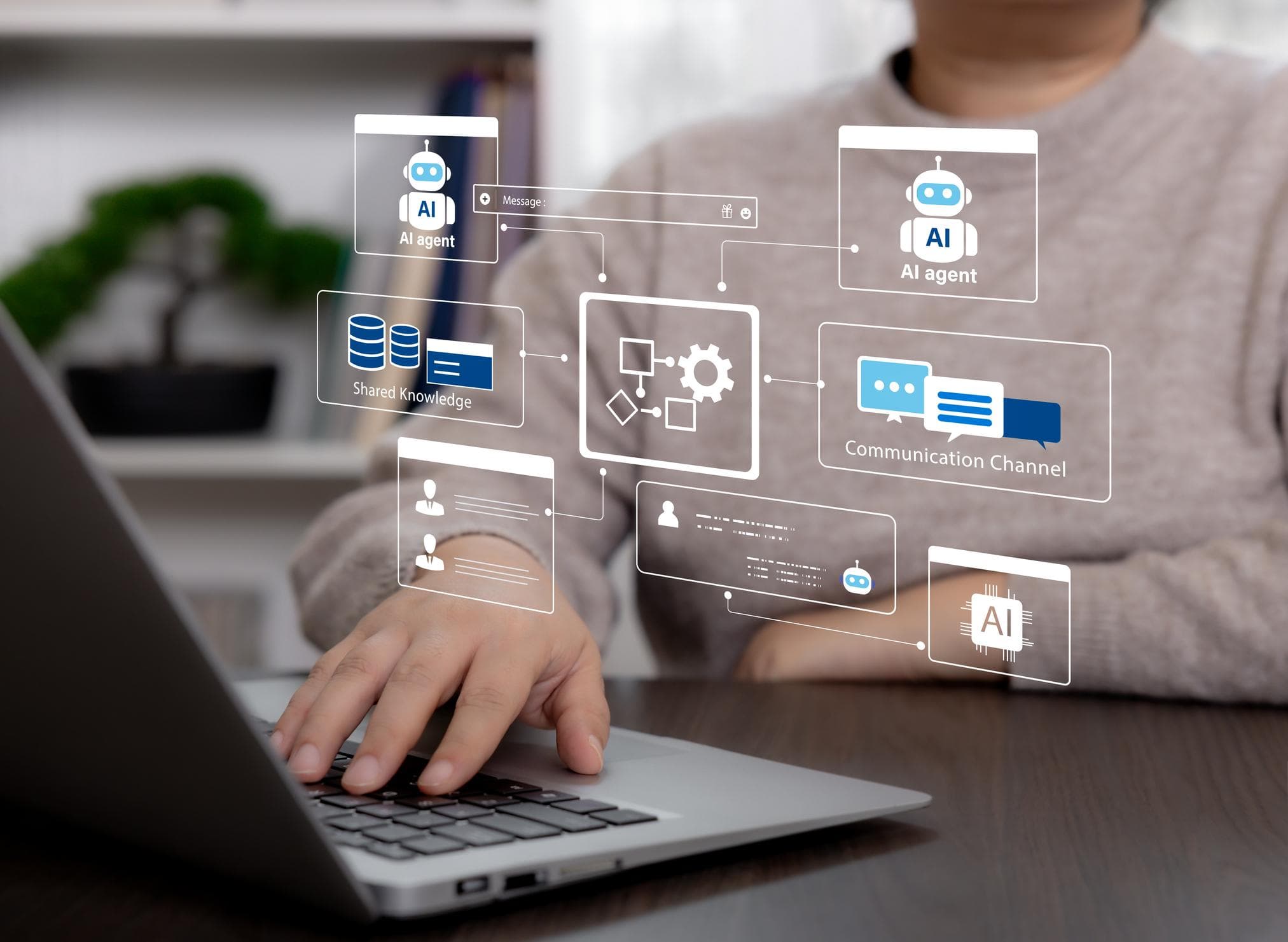
How AI Agents Are Transforming Enterprise Workflow Intelligence
AI agents autonomous systems that perceive their environment, reason about objectives, and take action across enterprise workflows are moving from research concept to operational reality. The enterprises deploying AI agents at scale are discovering that workflow intelligence is not just about automation it is about creating organisational capability that compounds with every cycle.
 AI-Native Infrastructure
Why Global Enterprises Need AI-Native Operational Infrastructure
The operational infrastructure that global enterprises built in the pre-AI era was designed for a different competitive environment. Enterprises that try to layer AI on top of legacy operational infrastructure will capture a fraction of AI's potential. The ones that rebuild their operational foundations as AI-native will gain structural advantages their competitors cannot close.