AI-Powered Sustainability Strategies for Global Businesses
Sustainability reporting was the compliance challenge of the last decade. Sustainability performance is the competitive challenge of this one. AI is the technology that makes the difference between sustainability as a reporting exercise and sustainability as an operational capability.
Manroze
Author
A global consumer goods company committed to net-zero emissions by 2040. The commitment was announced at a press conference with a credible science-based target and a roadmap. Three years later, the company's sustainability team has a problem that no amount of strategic commitment can solve: they do not actually know, within a 30% margin of error, what their total Scope 3 emissions are. The suppliers who provide 80% of their carbon footprint report emissions data annually, through a questionnaire, with minimal verification. The data arrives months after the reporting period, in inconsistent formats, with no way to validate whether the figures reflect actual operational emissions or estimated averages from industry databases. The company cannot optimise what it cannot measure and it cannot measure its emissions accurately enough to know whether its reduction programmes are working. This is the sustainability measurement problem that most global enterprises share. AI does not solve the strategic question of what sustainability commitments to make. But it does solve the operational question of how to measure, manage, and optimise sustainability performance with the accuracy and real-time visibility that effective execution requires.
The Sustainability Data Problem: Why AI Is the Right Solution
Sustainability management at enterprise scale involves a measurement problem that is structurally similar to the problems AI solves well: enormous data volume, heterogeneous data sources, complex calculation methodologies, and the need for continuous monitoring across thousands of variables. A global enterprise's carbon footprint spans energy consumption at hundreds of facilities across dozens of countries, transportation emissions across a logistics network of millions of shipments per year, supplier emissions across a supply chain of thousands of direct and indirect suppliers, and product lifecycle emissions across thousands of SKUs. Measuring this with manual processes and annual supplier surveys produces data that is too inaccurate, too delayed, and too incomplete to drive meaningful operational decision-making.AI-driven sustainability measurement changes the fundamental data architecture: instead of annual surveys, continuous data collection from energy management systems, logistics platforms, supplier ERP integrations, and IoT sensors; instead of industry-average emission factors, enterprise-specific emission calculations from actual operational data; instead of retrospective reporting, real-time dashboards that make sustainability performance visible to operational managers at the same frequency as financial performance. The enterprises that build this real-time sustainability intelligence capability are not just better positioned for regulatory compliance they are finding operational efficiency gains that reduce both emissions and costs simultaneously.
Four AI-Powered Sustainability Capabilities That Drive Business Value
Capability 1: Real-time Scope 1, 2, and 3 emissions measurement
AI-driven emissions measurement platforms integrate with enterprise energy management systems, utility data, logistics platforms, and supplier data sources to calculate emissions continuously rather than annually. Machine learning models trained on enterprise-specific operational data produce emission factor estimates that are significantly more accurate than industry-average proxies. Natural language processing and structured data extraction tools process supplier sustainability reports, invoices, and logistics manifests to extract emissions-relevant data from unstructured sources. The result is a real-time emissions ledger that allows operational teams to see the emissions impact of procurement decisions, logistics choices, and production scheduling in near real time rather than discovering the impact in the annual sustainability report.
Capability 2: AI-optimised supply chain decarbonisation
Supply chain emissions typically represent 70 to 90% of a global enterprise's total carbon footprint, but supply chain sustainability decisions supplier selection, sourcing geography, transportation mode, inventory positioning are currently made primarily on cost and service level criteria with emissions as a secondary consideration. AI-powered supply chain optimisation platforms that include emissions as an optimisation variable alongside cost and service level allow enterprises to identify supply chain configurations that reduce emissions without proportional cost increases finding the low-cost, low-emission sweet spot that pure cost optimisation misses. Enterprises deploying AI-optimised supply chain decarbonisation are reporting 15 to 25% Scope 3 reductions achievable with less than 5% total cost increase.
Capability 3: Predictive sustainability risk management
Climate-related physical risks extreme weather events, water stress, sea level rise and transition risks carbon pricing, stranded asset risk, changing consumer preferences create financial exposures that are increasingly material to enterprise valuation. AI-powered climate risk models that integrate physical climate scenario data with enterprise asset and supply chain location data allow enterprises to quantify their climate risk exposure under different warming scenarios and transition pathways. This capability is moving from voluntary best practice to regulatory requirement: the ISSB's IFRS S2 standard and similar frameworks in the EU, UK, and other jurisdictions require climate risk scenario analysis as a component of sustainability disclosure.
Capability 4: AI-driven energy optimisation at facility level
Facility-level energy consumption electricity, heating, cooling, industrial process energy typically represents 20 to 30% of a manufacturing or logistics enterprise's total emissions, and energy costs represent 5 to 15% of operating expenses in energy-intensive industries. AI-driven building energy management systems that learn facility-specific consumption patterns, optimise HVAC and lighting in real time, predict demand peaks and shift consumption to off-peak periods, and integrate rooftop solar and battery storage into energy management are delivering 15 to 30% energy cost reductions in commercial deployments. For enterprises with large real estate or manufacturing footprints, facility-level energy AI is one of the highest-ROI sustainability investments available today.
The AI Sustainability Strategy Diagnostic
- What is the current accuracy of your Scope 3 emissions measurement, and do you have the data infrastructure to move from annual survey-based measurement to continuous data collection from supply chain partners and logistics systems?
- Are emissions included as an optimisation variable in your supply chain, logistics, and procurement decision processes or are sustainability and cost objectives managed as separate, often competing priorities?
- Have you conducted a quantified climate risk assessment physical and transition risks under multiple warming scenarios, and do you understand the financial materiality of your climate risk exposure?
- Do you have facility-level energy management systems that use AI optimisation, or are your facilities managed with manual thermostat controls and periodic energy audits?
- Are your sustainability data and analytics capabilities sufficient to support the mandatory climate disclosures required in the jurisdictions where you operate and list or are you still building the measurement infrastructure that disclosure frameworks require?

The Future of Decentralized Digital Organizations
Related articles
View all → Autonomous Coordination
The Rise of Autonomous Enterprise Coordination Platforms
Enterprise coordination the alignment of people, processes, information, and resources across organisational boundaries has always been expensive, slow, and error-prone when managed through human intermediaries alone. Autonomous coordination platforms powered by AI are replacing the coordination overhead of large organisations with intelligent systems that synchronise the enterprise continuously and without manual intervention.
 AI Agents
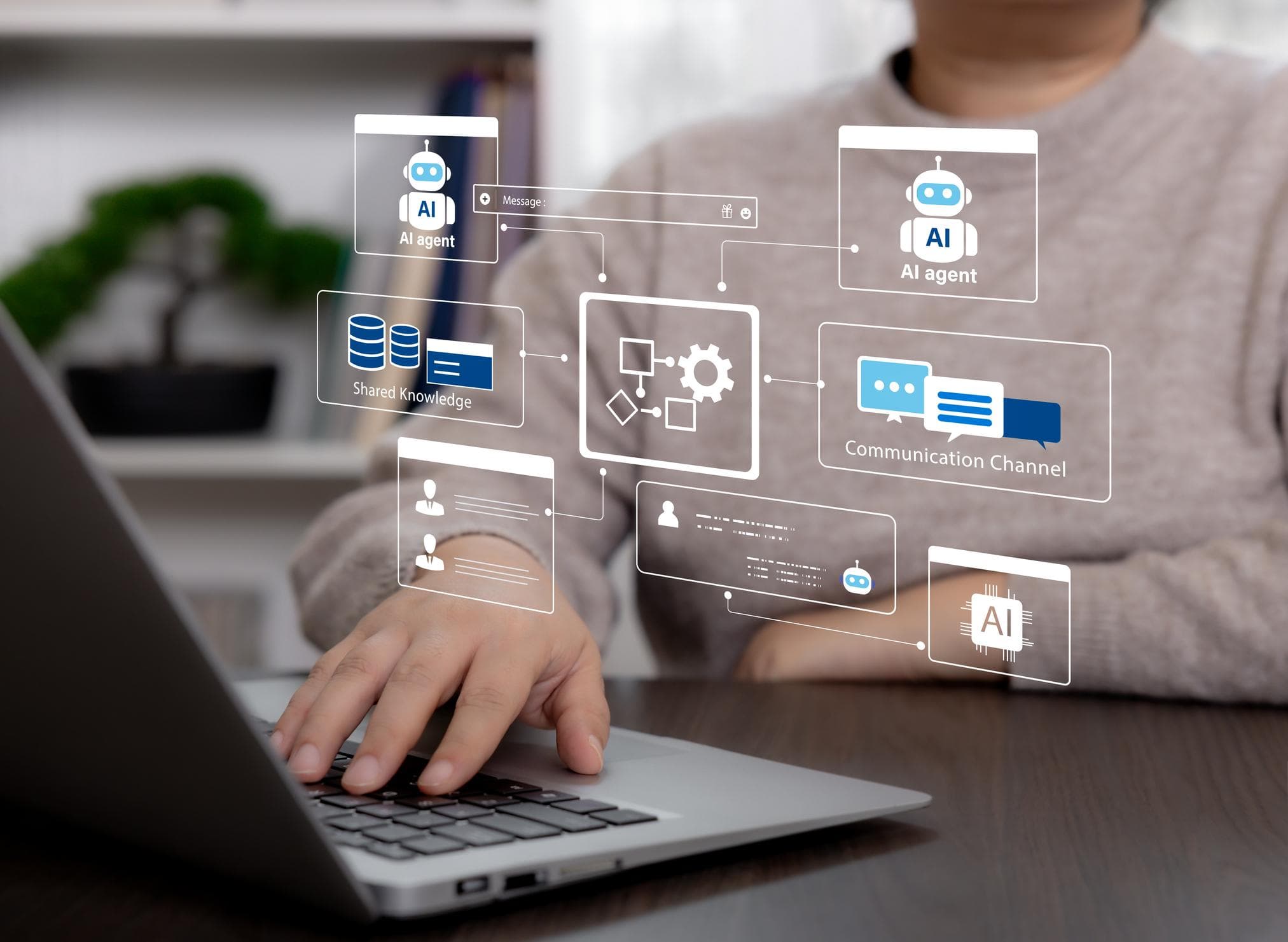
How AI Agents Are Transforming Enterprise Workflow Intelligence
AI agents autonomous systems that perceive their environment, reason about objectives, and take action across enterprise workflows are moving from research concept to operational reality. The enterprises deploying AI agents at scale are discovering that workflow intelligence is not just about automation it is about creating organisational capability that compounds with every cycle.
 AI-Native Infrastructure
Why Global Enterprises Need AI-Native Operational Infrastructure
The operational infrastructure that global enterprises built in the pre-AI era was designed for a different competitive environment. Enterprises that try to layer AI on top of legacy operational infrastructure will capture a fraction of AI's potential. The ones that rebuild their operational foundations as AI-native will gain structural advantages their competitors cannot close.