Enterprise Search Is Dead AI Context Systems Are Replacing It
Enterprise search assumes employees know what information they need and can formulate effective search queriesbut most valuable information discovery happens when employees do not know what they are looking for. Traditional search returns document lists ranked by keyword relevance, but relevance to a query is different from usefulness to a task. AI context systems replace search with proactive intelligence: instead of employees searching, AI monitors work context and surfaces information relevant to current tasks, synthesizes information from multiple sources rather than returning documents, and maintains organizational context that makes intelligence actionable. The shift is from 'search and retrieve' to 'monitor and deliver'employees receive information they need without having to know it exists or formulate searches to find it.
Manroze
Author
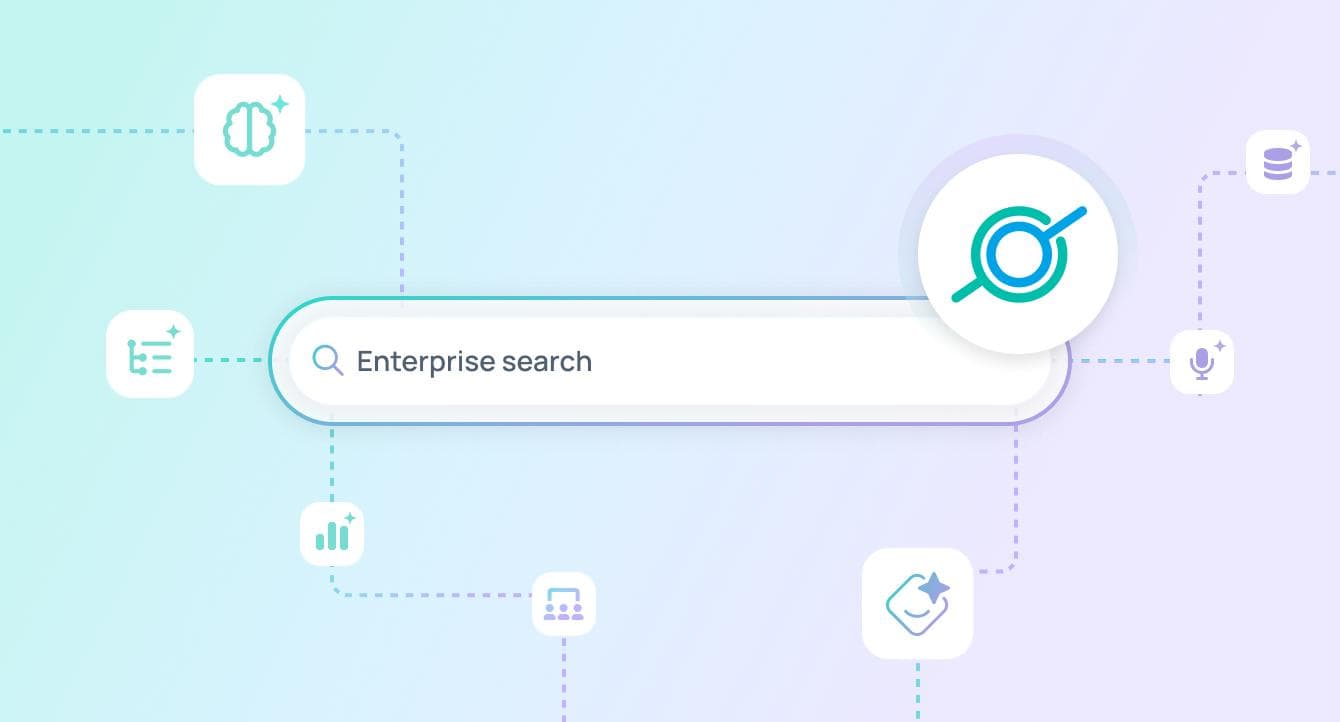
Sales team at SaaS company needs competitive intelligence, customer references, pricing guidelines, and product updates to close deals. Traditional search: sales reps search Confluence, review document lists, read multiple sources to synthesize information. Average time per research need: 35 minutes. Much relevant information never found because sales reps don't know it exists or don't formulate queries that surface it. AI context system: monitors sales context (deal stage, customer industry, competitive situation), automatically surfaces relevant competitive intelligence without sales rep requesting it, synthesizes information from product docs, past deals, and market research, and presents actionable intelligence in deal context. Average time to access needed information: 4 minutes. Deal velocity improved 22% because sales reps spend time selling rather than searching. This industry-specific transformation demonstrates how autonomous execution addresses unique operational challenges while maintaining industry-required governance, compliance, and risk controls. The organizations succeeding are those that understand autonomous operations is not a technology deployment but an operational model transformation.
Industry-Specific Challenges That Autonomous Agents Address
The industry addressed in enterprise search is dead ai context systems are replacing it faces operational constraints that make traditional human-coordinated approaches increasingly untenable. These are not generic efficiency challengesthey are industry-specific coordination problems created by regulatory requirements, operational complexity, or risk management needs that consume organizational capacity without creating differentiated value. The cost of these constraints is massive but often hidden in operational overhead budgets rather than measured as explicit coordination tax.Organizations in this industry report consistent patterns: coordination overhead consuming 30-50% of operational capacity as specialists spend time tracking, documenting, and coordinating rather than executing core work; compliance and audit burden creating delays and resource demands that scale faster than business growth; quality and risk management requiring constant human oversight because systems lack intelligence to maintain standards autonomously; and competitive disadvantage as organizations with more efficient operational models capture market share through better pricing or faster delivery. These patterns are not failures of executionthey are structural limitations of human-coordinated operations when industry-specific constraints create coordination complexity that exceeds human bandwidth.
Autonomous Execution Model Adapted for Industry Requirements
Successful autonomous agent deployment in this industry requires adapting the general execution model to industry-specific governance, compliance, and risk requirements. The adaptation is not simplificationit is careful design of authority boundaries, escalation criteria, and audit mechanisms that satisfy industry stakeholders (regulators, auditors, risk managers) while delivering operational efficiency through autonomous coordination. Generic AI agents fail in regulated industries because they do not understand industry-specific constraints. Industry-adapted agents succeed because they are designed with compliance and risk controls embedded rather than added afterward.The implementation architecture includes industry-specific components: compliance validation layers ensuring autonomous actions satisfy regulatory requirements before execution, risk monitoring systems detecting when autonomous decisions approach risk thresholds and triggering escalation, audit trail generation meeting industry-specific documentation requirements for regulatory review, and explainability mechanisms allowing human review of autonomous decision logic when needed. Organizations deploying these industry-adapted systems report outcomes that traditional efficiency projects cannot achieve: 40-70% reduction in coordination overhead while maintaining or improving compliance performance, 30-50% improvement in operational speed because work no longer queues for coordination, and 50-80% reduction in compliance-related errors because automated execution maintains consistent standards rather than depending on human vigilance across thousands of decisions. The strategic advantage is structural: competitors operating with human-coordinated models cannot match the operational efficiency and compliance consistency that autonomous execution delivers.
Implementation Strategy: Proving Value While Managing Industry Risk
The implementation approach for autonomous operations in regulated and complex industries must balance proving operational value against managing industry-specific risks that could undermine organizational acceptance if not addressed carefully. The failure pattern is attempting rapid deployment without establishing governance frameworks that satisfy industry stakeholders. The success pattern is systematic deployment that proves autonomous execution reliability in controlled scenarios before expanding scope. The sequence is: identify high-coordination workflows where autonomous execution can deliver measurable value while operating within manageable risk boundaries, deploy agents with explicitly bounded authority and comprehensive audit trails that demonstrate control rather than claiming it, measure both operational improvement (cycle time, cost) and governance maintenance (compliance, error rates) to demonstrate value delivery without risk increase, and expand to adjacent workflows systematically as each deployment proves autonomous execution works within industry constraints.The governance requirements for industry-specific autonomous operations are more demanding than general enterprise deployments because regulatory and liability exposure is higher. Organizations must establish clear accountability models defining who owns autonomous agent decisions even when humans do not review them, implement monitoring infrastructure that provides real-time visibility into autonomous operations for risk managers and auditors, maintain comprehensive audit trails that satisfy regulatory requirements even when decisions happen autonomously, and develop escalation protocols ensuring complex scenarios requiring judgment reach appropriate decision-makers with sufficient context. The CIOs and operational leaders succeeding with industry-specific autonomous deployments report that governance rigor is not a barrierit is an enabler: stakeholders accept autonomous operations when governance demonstrates control, and this acceptance allows operational efficiency that competitors without governance frameworks cannot access because their stakeholders block autonomous deployment. The strategic window is now: organizations that establish autonomous operations with robust governance in 2026-2027 will gain operational advantages that become increasingly difficult for competitors to match as autonomous execution becomes embedded in operational culture and systems architecture.

Related articles
View all → AI Agents
How AI Agents Are Transforming Enterprise Workflow Intelligence
AI agents autonomous systems that perceive their environment, reason about objectives, and take action across enterprise workflows are moving from research concept to operational reality. The enterprises deploying AI agents at scale are discovering that workflow intelligence is not just about automation it is about creating organisational capability that compounds with every cycle.
 Productivity
The Future of Enterprise Productivity in the AI Economy
AI is redefining what enterprise productivity looks like not by making people work harder or longer, but by fundamentally changing what people spend their time on and what they are capable of accomplishing. The enterprises that design for this shift will unlock productivity gains that traditional efficiency programmes cannot achieve.
 Enterprise Mobility
Why Enterprise Mobility Will Depend on Intelligent Systems
Enterprise mobility the ability of organisations to operate effectively from anywhere, on any device, at any time is evolving from a technology configuration challenge to an intelligent systems challenge. The enterprises that build the right intelligent mobility infrastructure will unlock workforce productivity advantages that static competitors cannot match.