How AI Can Improve Enterprise Risk Forecasting
Enterprise risk management has historically been backward-looking identifying risks after they have materialised and building controls to prevent recurrence. AI is enabling a fundamentally different approach: forward-looking risk forecasting that identifies emerging threats before they become losses.
Prince Kumar
Author
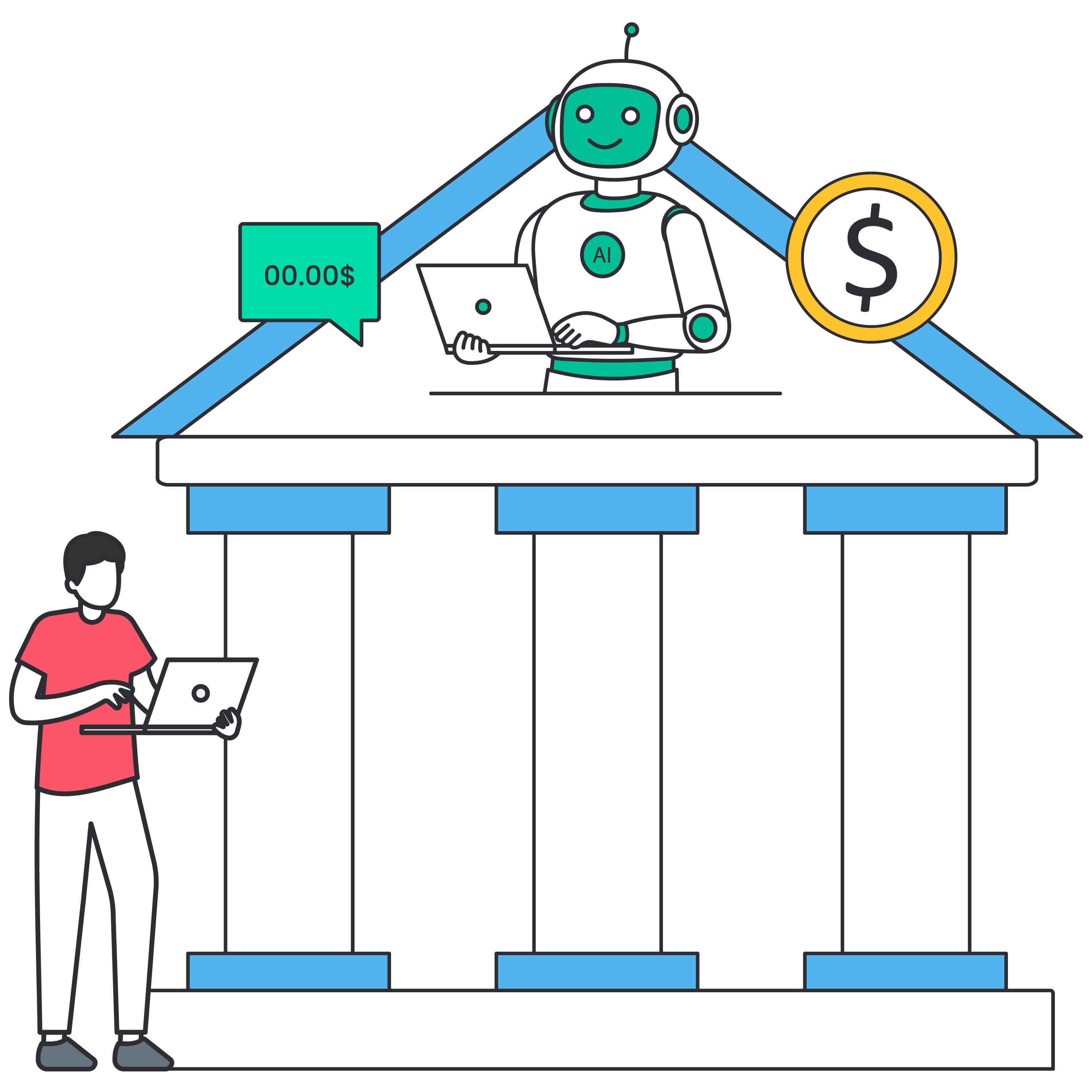
The enterprise risk management function was designed for a world of relatively stable, well-understood risks that could be catalogued, assessed periodically, and managed through documented controls and mitigation plans. The risk environment that large enterprises operate in today is fundamentally different: risks emerge faster, interconnect across domains in ways that traditional risk frameworks do not capture, and materialise with less warning than historical patterns suggest. Climate risk, geopolitical disruption, cyber threats, supply chain fragility, regulatory change, and technological disruption are not risks that fit neatly into traditional risk matrices they are dynamic, interconnected, and evolving continuously. AI-powered risk forecasting does not eliminate enterprise risk but it changes the information environment in which risk decisions are made, giving enterprises earlier warnings, better probability estimates, and clearer visibility into risk interconnections than traditional enterprise risk management processes can provide.
Why Traditional Enterprise Risk Management Is Insufficient
Traditional enterprise risk management processes share a structural limitation: they are designed to identify and assess risks that are already known, rather than to identify risks that are emerging. The annual risk register review, the quarterly risk committee meeting, and the periodic heat map update are all retrospective processes they capture the risks that previous experience has made visible and assess them based on historical frequency and impact data. Emerging risks those with no historical precedent, those arising from novel combinations of existing conditions, and those developing in domains the organisation has not previously monitored are systematically underweighted or missed entirely.The interconnection problem compounds the limitation: traditional risk frameworks assess risks in relative isolation, missing the cascading effects that make interconnected risk scenarios significantly more severe than individual risk assessments suggest. A supply chain disruption that coincides with a credit market tightening and a regulatory change in a key market is not three independent risks it is a compound scenario whose combined impact is significantly greater than the sum of its parts. AI risk forecasting systems that monitor the full breadth of risk signals and model interconnection effects give enterprise risk functions a qualitatively different view of the risk landscape than traditional frameworks allow.
Four AI Capabilities Improving Enterprise Risk Forecasting
Capability 1: Real-time risk signal monitoring
AI risk monitoring systems continuously scan the enterprise's risk environment geopolitical developments, financial market signals, supplier health indicators, regulatory developments, cyber threat intelligence, and macroeconomic trends identifying emerging risk signals before they develop into material threats. The breadth of signal coverage that AI systems can maintain monitoring thousands of sources simultaneously is qualitatively different from the periodic monitoring that human risk teams can perform. Early warning of emerging risks gives the enterprise the lead time to adjust strategy, build mitigations, and activate contingency plans before the risk materialises.
Capability 2: Probabilistic risk modelling
AI risk models produce probability distributions for risk outcomes rather than point estimates giving risk managers and executives a quantified picture of the range of possible outcomes and their respective likelihoods. This probabilistic approach changes how risk information is used in strategic decision-making: rather than a binary assessment of whether a risk is acceptable or unacceptable, decision-makers can evaluate the expected value of different strategic choices under a realistic distribution of risk outcomes. The quality of capital allocation, risk appetite setting, and strategic investment decisions consistently improves when the underlying risk analysis is probabilistic rather than deterministic.
Capability 3: Interconnected risk scenario analysis
AI scenario analysis tools model the cascading effects of risk events across the enterprise's operational and financial systems showing how a primary risk event propagates through supply chains, financial structures, customer relationships, and regulatory positions to produce a compound impact that simple risk assessment would significantly underestimate. This interconnection modelling is particularly valuable for tail risk assessment: the scenarios that are individually low-probability but produce catastrophic outcomes when multiple risks materialise simultaneously. Enterprises that understand their compound risk exposure make fundamentally different decisions about risk mitigation investment and strategic resilience than those that assess risks in isolation.
Capability 4: Continuous risk posture monitoring
AI systems that monitor the enterprise's current risk posture continuously tracking key risk indicators across operational, financial, strategic, and compliance domains in real time give risk management and executive teams the current-state risk picture that periodic reporting processes cannot provide. When a key risk indicator crosses a threshold, the system triggers an alert and provides the contextual information required for rapid assessment and response. This continuous monitoring approach transforms the risk function from a periodic assessment activity to a continuous operational capability that is integrated into the enterprise's decision-making infrastructure.
Enterprise Risk Forecasting Diagnostic Questions
- How many risk signals does your current enterprise risk monitoring process cover and does it include geopolitical, macroeconomic, supply chain, cyber, regulatory, and competitive signals simultaneously? Narrow signal coverage is the most common source of emerging risk blind spots.
- What is the average time between an emerging risk signal first becoming detectable and your enterprise risk function becoming aware of it? This lead time determines whether the enterprise can respond proactively or is forced to react after the risk has already materialised.
- Does your current risk assessment produce probabilistic outcomes ranges of impact with associated likelihoods or binary risk ratings? The latter significantly underinforms the strategic decisions that enterprise risk assessment is intended to support.
- Have you modelled the interconnection effects between your top enterprise risks the compound scenarios where multiple risks materialise simultaneously? Without interconnection modelling, your tail risk exposure is systematically underestimated.
- How frequently are your enterprise risk assessments updated and do they reflect current conditions or conditions at the last formal assessment cycle? The gap between assessment frequency and the pace of risk environment change is a structural information disadvantage.
- Do you have real-time key risk indicator monitoring that alerts the risk function and executive team when risk thresholds are breached? Without automated alerting, the risk function is dependent on periodic reporting that is too slow for the pace of risk events in the current environment.
The Future of Cross-Border Enterprise Operations with AI
Related articles
View all → Autonomous Coordination
The Rise of Autonomous Enterprise Coordination Platforms
Enterprise coordination the alignment of people, processes, information, and resources across organisational boundaries has always been expensive, slow, and error-prone when managed through human intermediaries alone. Autonomous coordination platforms powered by AI are replacing the coordination overhead of large organisations with intelligent systems that synchronise the enterprise continuously and without manual intervention.
 AI Agents
How AI Agents Are Transforming Enterprise Workflow Intelligence
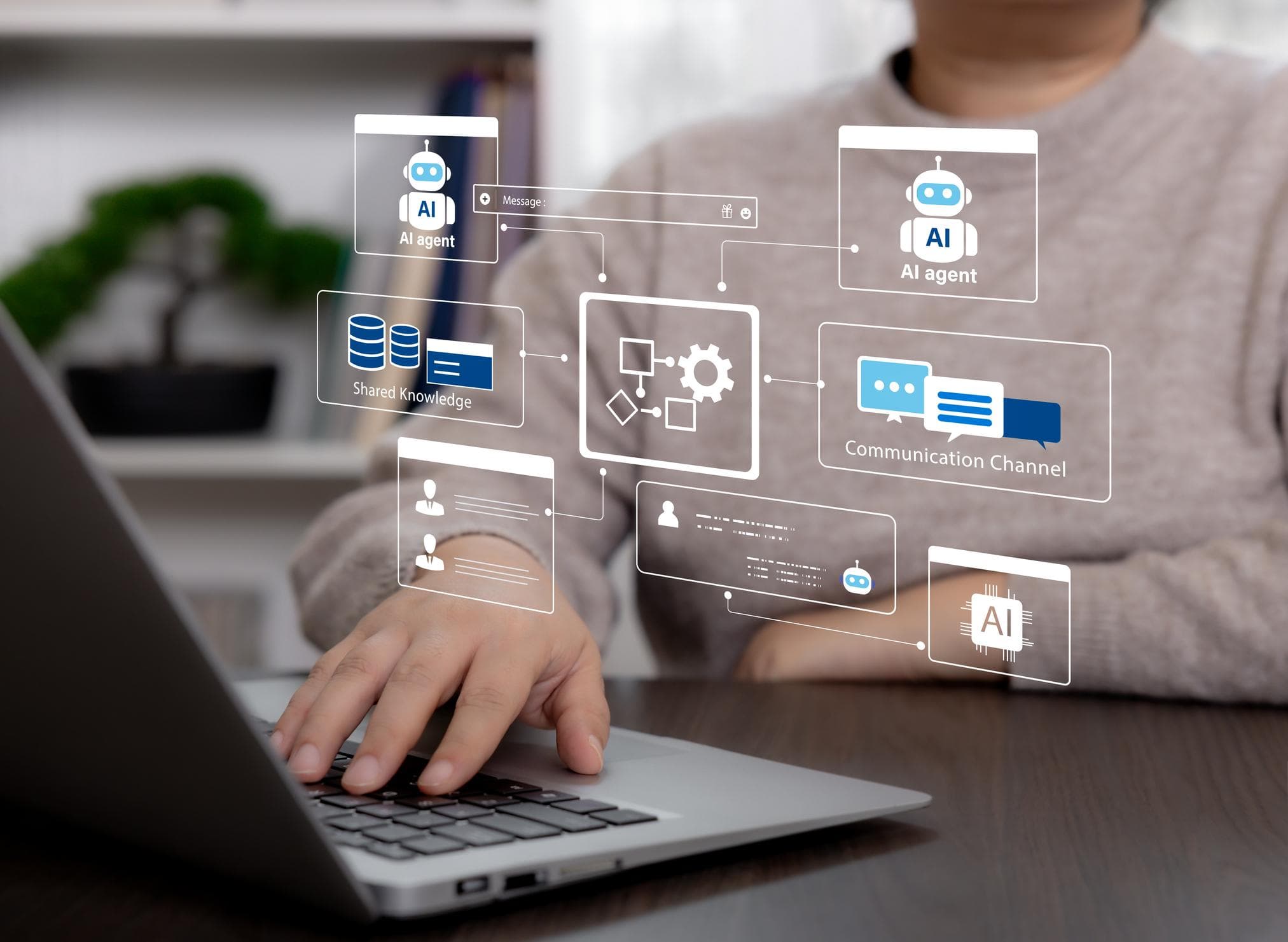
AI agents autonomous systems that perceive their environment, reason about objectives, and take action across enterprise workflows are moving from research concept to operational reality. The enterprises deploying AI agents at scale are discovering that workflow intelligence is not just about automation it is about creating organisational capability that compounds with every cycle.
 AI-Native Infrastructure
Why Global Enterprises Need AI-Native Operational Infrastructure
The operational infrastructure that global enterprises built in the pre-AI era was designed for a different competitive environment. Enterprises that try to layer AI on top of legacy operational infrastructure will capture a fraction of AI's potential. The ones that rebuild their operational foundations as AI-native will gain structural advantages their competitors cannot close.