How AI Can Detect Operational Failure Before Humans Do
Human operational monitoring is inherently reactive: operators review dashboards showing current or recent state, detect problems after they manifest, investigate to understand root causes, and coordinate responses to mitigate impact. This reactive model creates operational risk: problems compound while detection and response occur, cascading failures spread across interconnected systems, and recovery costs escalate with detection latency. AI operational monitoring is predictively proactive: continuous monitoring detects patterns indicating emerging problems before failure manifests, predictive models identify root causes and likely progression paths, automated responses prevent problems from escalating, and comprehensive operational context enables coordination across interconnected systems. Organizations deploying predictive operational monitoring report 70-85% reduction in operational incidents, 60-75% reduction in downtime, and 50-65% reduction in incident response costs through early detection and automated prevention.
Nirmal Nambiar
Author
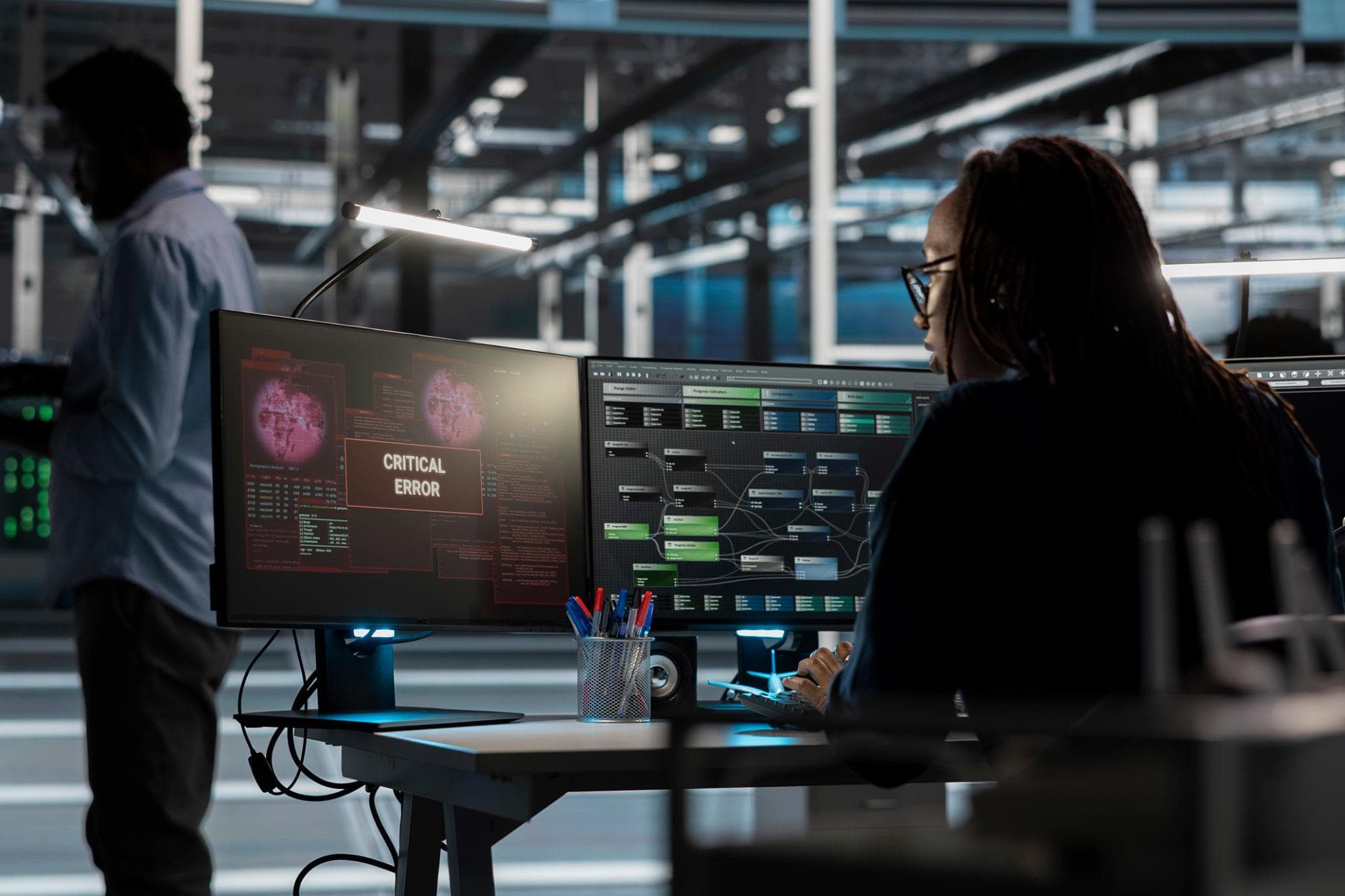
Manufacturing network experiences cascading production failure costing $4.2M in lost output and recovery: component supplier experiences quality issue, defective components flow into assembly operations, assembled products fail quality checks requiring rework, rework delays cascade across production schedule, delayed shipments breach customer commitments. Total impact: 6 production facilities disrupted, 48 hours to full recovery, 12,000 units scrapped. Traditional monitoring detected problems reactively: quality failures discovered 18 hours after defective components entered production, cascading impacts recognized 24 hours later, full scope understood 36 hours into incident. AI predictive monitoring: detects component quality deviation 2 hours after supplier issue begins (14x faster), predicts cascade path across production network, automatically isolates affected batches preventing contamination of additional production, coordinates supplier intervention and alternative sourcing, minimizes impact to single facility and 200 units. Incident cost: $180K (96% reduction). Key insight: predictive detection prevents problems rather than just responding faster to problems after they occur.
The Strategic Imperative: Why This Capability Determines Market Position
The capability described in how ai can detect operational failure before humans do is not optional for enterprises competing in markets where operational velocity, execution consistency, and coordination efficiency determine competitive outcomes. Organizations lacking this capability face structural disadvantages that compound over time: operational overhead consuming 30-50% of capacity that competitors eliminate through autonomous coordination, decision latency measured in days or weeks while competitors respond in hours, quality inconsistency from human variability while competitors maintain algorithmic consistency, and cost structures requiring headcount growth for capacity expansion while competitors scale computationally.The transformation described represents a transition from one operational paradigm to another comparable to previous shifts that reshaped competitive landscapes: from manual to automated manufacturing, from physical to digital distribution, from on-premise to cloud infrastructure. Organizations that recognize paradigm shifts and commit resources to transformation early establish competitive positions that persist for decades. Organizations that treat paradigm shifts as incremental improvements discover they are competing from permanently disadvantaged positions as performance gaps widen beyond what catch-up efforts can address.The implementation timeline is a critical strategic variable. The underlying technologies enabling this transformation have reached production viability and early adopters are demonstrating operational proof points. Organizations committing to transformation in 2026-2027 will build capabilities while implementation pathways remain accessible and first-mover advantages are available. Organizations delaying until 2028-2029 will face mature competition from enterprises with established capabilities, will compete in talent markets where the best people prefer advanced operational environments, and will discover that the organizational transformation required becomes more extensive as operational gaps widen. The window for establishing leadership positions is narrowing rapidly.
Implementation Framework: The Path from Concept to Operational Reality
Successful implementation requires understanding that the transformation is primarily organizational and architectural rather than technical. Modern AI capabilities are sufficient for most enterprise use cases. The implementation challenges are redesigning workflows around autonomous execution rather than human coordination, establishing governance frameworks enabling autonomous operations while maintaining control, developing capabilities for managing AI systems at scale, and navigating organizational change as roles evolve. Organizations that approach implementation as operational transformation succeed; organizations treating it as technology deployment fail despite equivalent or greater technology investment.The proven implementation sequence starts with high-impact, well-bounded workflows that prove value while managing risk. Supply chain coordination, customer service operations, financial processing, and HR workflows frequently serve as effective proving grounds because they combine clear value opportunities with manageable risk profiles. Organizations establish comprehensive governance and monitoring infrastructure before scaling deployment, demonstrating that autonomous operations operate within risk controls. They invest in organizational change management treating transformation as operational not technical change. They maintain sustained executive commitment through the 18-36 month transformation timeline required to achieve enterprise-scale value.The most critical success factor is establishing clear accountability models for autonomous operations. Traditional accountability focuses on decision-level responsibility (who approved this action). Agentic accountability focuses on framework-level responsibility (who designed the governance, monitoring, and escalation protocols within which autonomous decisions occur). This shift enables autonomous operations at scale: humans cannot review thousands of daily decisions but can be accountable for frameworks governing those decisions. Organizations establishing framework accountability can deploy autonomous agents confidently; organizations attempting decision-level accountability cannot scale autonomous operations because accountability models cannot handle the volume.
The Performance Transformation and Competitive Implications
Organizations successfully implementing ai can detect operational failure before humans do achieve performance characteristics fundamentally different from traditional operational models. Operational throughput increases 2-5x with same or reduced headcount because autonomous coordination eliminates bottlenecks constraining capacity. Decision latency compresses 10-20x from days to hours because decisions execute when conditions trigger them rather than queueing for human review. Quality consistency improves 40-60% because automated execution maintains standards rather than depending on human reliability. Cost structures transform as marginal capacity requires infrastructure investment rather than headcount growth, fundamentally changing unit economics and enabling pricing that traditional competitors cannot match.These performance advantages create self-reinforcing competitive dynamics. Organizations with superior operational models capture market share through better pricing enabled by lower costs, attract better talent through superior operational environments where people focus on meaningful work rather than coordination overhead, invest more in innovation through better margins, and execute faster on market opportunities through superior decision velocity. Each advantage reinforces the others: market share growth funds capability investment, talent advantages enhance innovation, innovation creates customer preference, and execution velocity enables first-mover advantages. The competitive gaps between enterprises with advanced capabilities and those with traditional models widen rather than narrow over time.By 2030, markets will clearly differentiate between enterprises that completed this transformation and those attempting incremental adoption. Winners will operate with capabilities creating permanent advantages. Laggards will face intensifying pressure: losing market share to competitors with superior economics, struggling for talent as people prefer advanced environments, facing customer defections as expectations rise, and discovering that transformation required to catch up becomes more extensive as gaps widen. The strategic choice is commit to transformation now while pathways remain accessible, or accept permanent competitive disadvantage.
Related articles
View all → AI Execution
Why AI Execution Systems Will Define the Future of Enterprise Operations
The next frontier of enterprise competitive advantage is not strategy it is execution. AI execution systems that translate strategic intent into coordinated operational action, faster and more reliably than any human-managed process, are becoming the defining infrastructure of enterprise performance in every sector.
 Operational Intelligence
Why Enterprise Leaders Must Adopt AI-Driven Operational Intelligence
Operational intelligence the real-time, comprehensive understanding of what is happening across an enterprise and why has always been the foundation of effective leadership. AI is making a quality of operational intelligence available to enterprise leaders that was previously impossible to achieve, and the leaders who adopt it are making fundamentally better decisions than those who do not.
 Operational Intelligence
Why Operational Intelligence Will Become the Foundation of Enterprise Growth
Operational intelligence the ability to know what is actually happening across every dimension of the enterprise in real time, connect the signals that cross functional boundaries, and act on what is known before the window for effective action closes is becoming the primary source of sustainable competitive advantage in global enterprise operations.