How AI Execution Platforms Will Replace Traditional Enterprise Coordination Tools
The tools enterprises have used to coordinate work project management software, workflow systems, communication platforms are being displaced by AI execution platforms that don't just facilitate coordination but execute it autonomously. The transition is faster than most enterprise leaders recognise.
Prince Kumar
Author
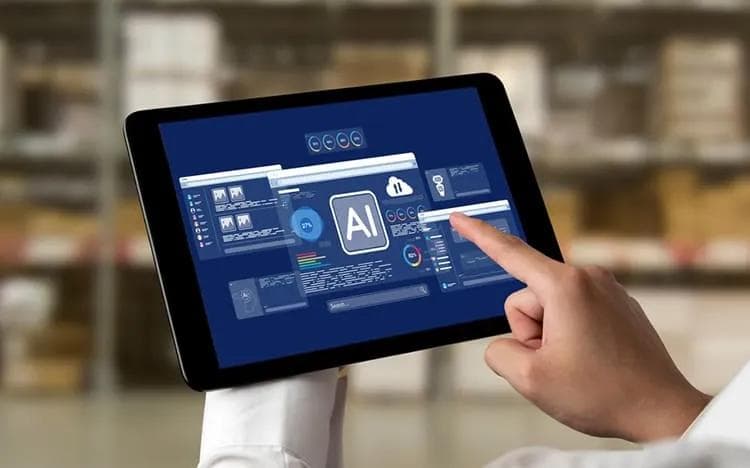
Enterprise coordination tools have improved significantly over the past decade. Project management platforms have become more visual, more collaborative, and more integrated. Communication tools have converged into unified collaboration environments. Workflow systems have become more configurable and more connected. But all of these improvements share a common characteristic: they make it easier for humans to coordinate they do not replace the coordination effort itself. The project management platform still requires human managers to update status, track dependencies, identify risks, and escalate issues. The workflow system still requires human operators to move tasks through stages, make routing decisions, and handle exceptions. The communication platform still requires human participants to align on decisions, share information, and coordinate actions. AI execution platforms are replacing this model. Not by making coordination easier for humans but by handling coordination autonomously, reducing the human effort required to keep complex enterprise operations aligned and moving.
The Displacement Dynamic: Why Traditional Tools Are Being Replaced
The displacement of traditional enterprise coordination tools by AI execution platforms is being driven by a fundamental capability gap that has emerged as AI systems have matured. Traditional coordination tools were designed for a world where humans needed to be the coordination agents where the role of software was to provide the environment in which human coordination happened, not to perform the coordination itself. AI execution platforms are designed for a world where software can be the coordination agent where the role of software is to handle coordination autonomously, with humans providing oversight and handling exceptions rather than executing the coordination work.The capability gap between these two models is widening rapidly. An AI execution platform that monitors project status in real time, identifies risks based on pattern recognition across thousands of similar projects, automatically reassigns resources when bottlenecks emerge, and generates stakeholder communications without human drafting effort is not just better than a traditional project management tool it is doing fundamentally different work. The enterprises that recognise this distinction and make the transition to AI execution platforms are not just upgrading their tools. They are transforming the operational model through which work gets coordinated and executed.
The Transition from Coordination Tools to Execution Platforms
What Enterprises Gain in the Transition
The transition from traditional coordination tools to AI execution platforms delivers three categories of enterprise gain. Speed gain: coordination that previously required human decision time at each step review, decide, communicate, update now happens autonomously at system speed, compressing process cycle times by 50 to 80 percent for well-designed AI execution implementations. Consistency gain: human coordination is subject to attention variability, experience differences between coordinators, and the inevitable errors of manual process management. AI execution platforms apply consistent logic across every process instance, eliminating the quality variance that human coordination produces. Capacity gain: the human coordination effort freed by AI execution platforms can be redirected to higher-value work strategic thinking, relationship management, creative problem-solving that AI systems cannot perform.
Managing the Transition
The transition from traditional enterprise coordination tools to AI execution platforms requires careful management of three risks. Integration risk: AI execution platforms need to integrate deeply with existing enterprise systems to access the data and trigger the actions their autonomous coordination capability requires and integration complexity is frequently underestimated. Adoption risk: the shift from human-as-coordinator to human-as-overseer requires significant mindset and behaviour change in the people whose roles are most directly affected. Governance risk: autonomous execution platforms operating without adequate governance frameworks can amplify errors, violate compliance requirements, or take actions that conflict with organisational policy making governance design a critical prerequisite for safe deployment.
AI Execution Platform Transition Questions
- Which of your current enterprise coordination tools are consuming the most human effort in coordination activities and have you evaluated AI execution platform alternatives in those categories?
- What integration requirements would an AI execution platform need to meet to operate effectively in your enterprise environment and how complex is your current systems landscape relative to those requirements?
- What is the total human effort currently consumed by coordination activities across your enterprise and what proportion of this could be handled autonomously by a well-designed AI execution platform?
- What governance framework would you need to deploy an AI execution platform with confidence defining the boundaries of autonomous execution and the escalation protocols for situations requiring human judgment?
- How would you sequence the transition from traditional coordination tools to AI execution platforms and what would a phased deployment plan look like that manages adoption and integration risk?

The Enterprise Command Center of the Future: Humans, AI Agents, and Autonomous Execution
Related articles
View all →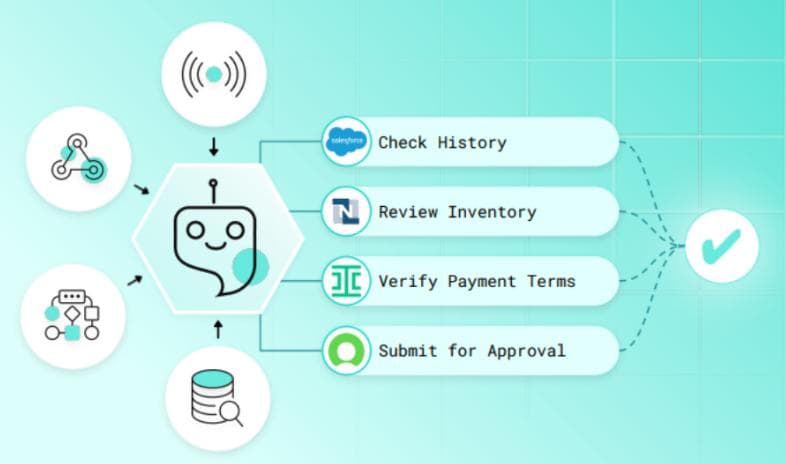 AI Execution
Why AI Execution Systems Will Define the Future of Enterprise Operations
The next frontier of enterprise competitive advantage is not strategy it is execution. AI execution systems that translate strategic intent into coordinated operational action, faster and more reliably than any human-managed process, are becoming the defining infrastructure of enterprise performance in every sector.
 AI-Native Infrastructure
Why Global Enterprises Need AI-Native Operational Infrastructure
The operational infrastructure that global enterprises built in the pre-AI era was designed for a different competitive environment. Enterprises that try to layer AI on top of legacy operational infrastructure will capture a fraction of AI's potential. The ones that rebuild their operational foundations as AI-native will gain structural advantages their competitors cannot close.
 Enterprise Management
The Future of Enterprise Management Through AI Execution Layers
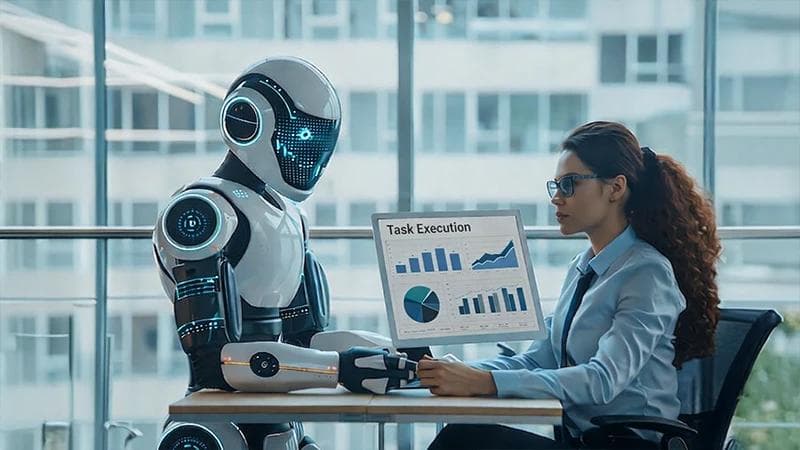
Enterprise management is being restructured by AI execution layers intelligent systems that sit between strategic direction and operational action, translating intent into coordinated execution at a speed and consistency that human management hierarchies cannot match. The enterprises that deploy these layers effectively are redefining what management means and what managers do.