How Small Businesses Can Beat Big Companies with AI
Large enterprises have AI budgets of crores. Small businesses have AI tools that cost ₹2,000 per month. The gap that once protected large companies the ability to out-resource smaller competitors is narrowing faster than most large companies realise. Here is exactly how small businesses are competing and winning.
Manthan Sharma
Author
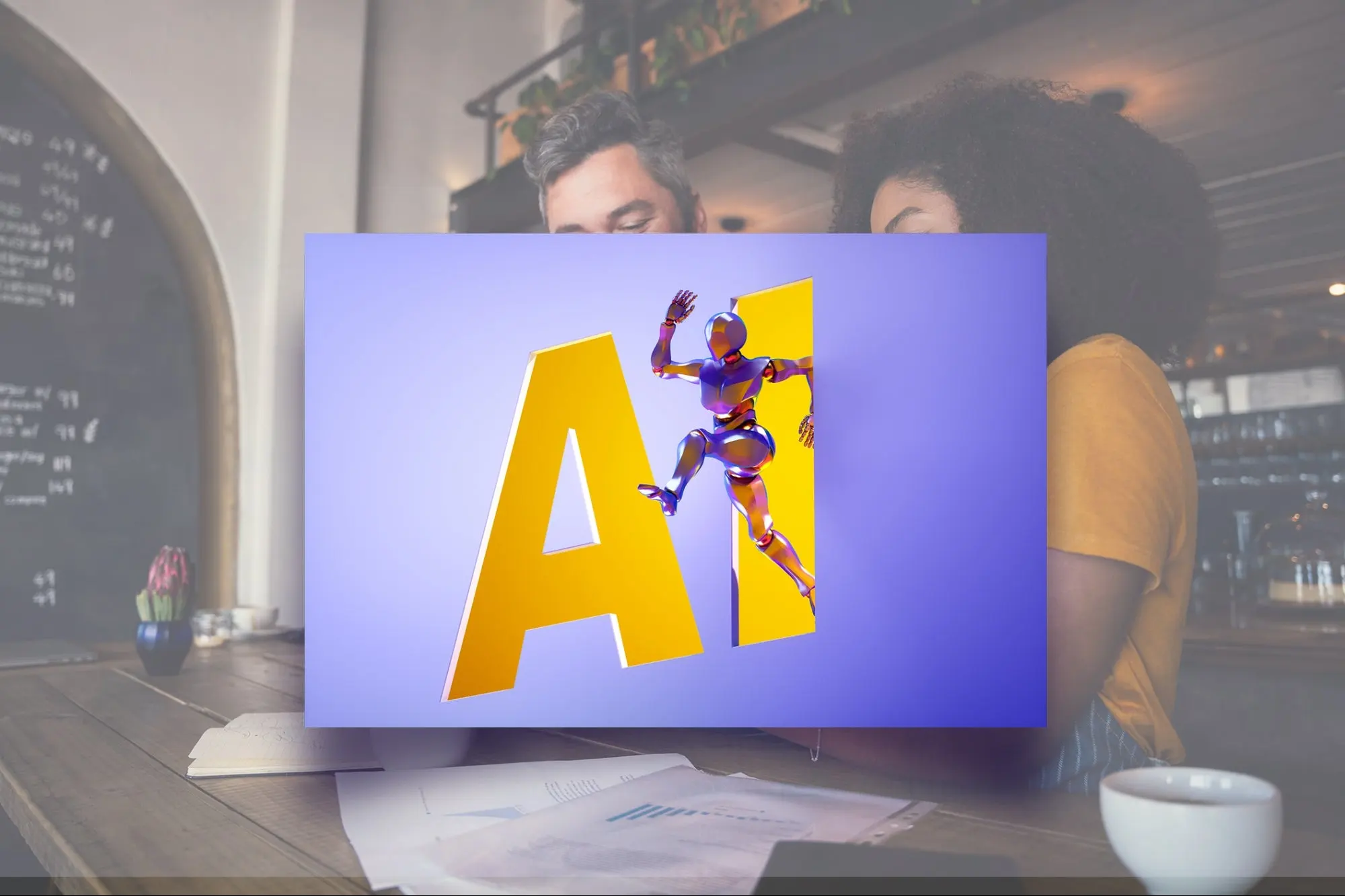
For most of business history, size was a durable competitive advantage. Large companies could out-resource, out-advertise, out-distribute, and out-hire their smaller competitors. The gap in output per employee between a large company with specialist teams and a small business where one person handles four functions was structural a function of the specialisation and resource concentration that only scale can produce. AI tools are compressing this gap faster than any previous technology. A freelancer using Claude can produce analysis that previously required a research team. A two-person content agency using AI workflows can produce the volume that a ten-person agency previously required. A small D2C brand using AI for customer communication, inventory prediction, and settlement reconciliation is operating with capabilities that a brand of its size would not have been able to afford two years ago. The competitive advantage of large companies has not disappeared. But the specific advantages that came from resource concentration access to specialist expertise, ability to produce high volumes of content and analysis, ability to automate repetitive processes are being democratised by AI tools that cost a fraction of what a human specialist costs.
The Specific Advantages AI Gives Small Businesses
Access to specialist expertise at generalist cost
A large company employs a specialist legal team, a specialist financial analyst team, a specialist marketing strategist team. A small business previously had to choose between going without this expertise or paying consultant rates to access it occasionally. AI tools now provide first-pass specialist analysis contract review, financial modelling, marketing strategy frameworks, technical documentation at the cost of a monthly subscription. The quality ceiling is below a dedicated senior specialist. It is above having no specialist input at all, which is the actual alternative for most small businesses. Claude can review a contract for standard risk clauses in minutes. A financial modelling assistant can produce a three-scenario cash flow model from a set of assumptions in an hour. These capabilities, previously accessible only through expensive professional services relationships, are now accessible to any business owner willing to learn to use the tools.
Content and communication at large-company volume
Marketing content has historically been a domain where large companies had a structural advantage: they could afford to employ content teams that produced consistent, high-volume output across channels. A small business competing for attention in the same market needed to either under-invest in content or over-invest relative to revenue. AI content workflows break this asymmetry. A small D2C brand with one marketing person using AI tools can produce the content volume that previously required a team of three to four. The quality depends on the human's brand judgment and editorial capability the AI provides speed and volume, the human provides the voice and strategic direction that makes the content actually work.
Customer communication and support at scale
Large companies can afford dedicated customer support teams. Small businesses often handle customer communication personally, which is relationship-building but time-intensive. AI-assisted customer communication using tools like WhatsApp Business API integrations with AI response drafting, or email automation with AI personalisation allows small businesses to maintain the response quality and speed that customers expect without the headcount that previously required. For Indian small businesses where customer relationships are especially central to trust and retention, the ability to respond to every inquiry within minutes rather than hours or days is a competitive differentiator that AI makes achievable.
Where Small Businesses Actually Have an Advantage Over Large Ones
Large enterprises deploying AI face organisational challenges that small businesses do not: change management across thousands of employees, data governance across complex legacy systems, procurement processes that add months to tool adoption, and cultural resistance from teams whose workflow changes are being mandated rather than chosen. A small business owner who decides on a Wednesday that they are going to build an AI workflow for their customer communication process can have it running by Friday. A large company making the same decision enters a process that involves IT approval, security review, vendor assessment, pilot programme, and phased rollout measured in quarters, not days.This deployment agility is a genuine competitive advantage. The AI tools available today are improving every quarter. The organisations that can adopt new capabilities fastest experiment, learn, iterate, and deploy capture competitive advantages that accumulate faster than larger organisations can match through sheer resource scale. Small businesses that build the habit of AI tool adoption and rapid iteration are positioned to continuously outpace larger competitors whose adoption cycles are constrained by their own organisational complexity.
The Specific Workflows That Deliver the Most Value for Indian MSMEs
For Indian small and medium businesses in 2026, the AI workflows delivering the highest return relative to investment are the ones that address the specific operational bottlenecks that limit growth at the MSME scale. WhatsApp AI automation integrating AI response generation with WhatsApp Business API to handle routine customer inquiries, order confirmations, and follow-ups addresses the customer communication bottleneck that consumes disproportionate founder and staff time in relationship-driven Indian markets.Settlement reconciliation for D2C brands operating across Amazon, Flipkart, Myntra, and their own website using AI to automatically identify and flag discrepancy patterns addresses the margin leakage that most small brands accept as unavoidable because they lack the analytical resource to pursue it. Operations planning using AI-assisted inventory forecasting and reorder recommendation addresses the stock-out and overstock cycles that consume cash and damage customer relationships at the MSME scale where working capital constraints are most acute.
The Honest Constraint: Skill, Not Access
The primary constraint on small business AI adoption in India in 2026 is not access. Claude, ChatGPT, Canva AI, Perplexity, Gamma, and n8n are all available at zero or near-zero cost. The constraint is skill specifically, the ability to identify which operational problems are worth automating, to design the workflow that automates them, and to evaluate whether the AI's output is accurate enough to act on. This is a learnable skill, but it requires deliberate investment in learning that many small business owners, operating under constant time pressure, have not yet prioritised.The businesses that are capturing the competitive advantage described in this article are not the ones with the largest AI budgets. They are the ones whose owners or key employees spent forty to sixty hours building AI skills not passively consuming YouTube videos about AI, but actively building workflows for their actual operational problems, running into failures, figuring out what caused them, and iterating to solutions. The investment is modest. The returns, in competitive positioning against larger, slower-moving competitors, are significant.
Related articles
View all → Autonomous Coordination
The Rise of Autonomous Enterprise Coordination Platforms
Enterprise coordination the alignment of people, processes, information, and resources across organisational boundaries has always been expensive, slow, and error-prone when managed through human intermediaries alone. Autonomous coordination platforms powered by AI are replacing the coordination overhead of large organisations with intelligent systems that synchronise the enterprise continuously and without manual intervention.
 AI Agents
How AI Agents Are Transforming Enterprise Workflow Intelligence
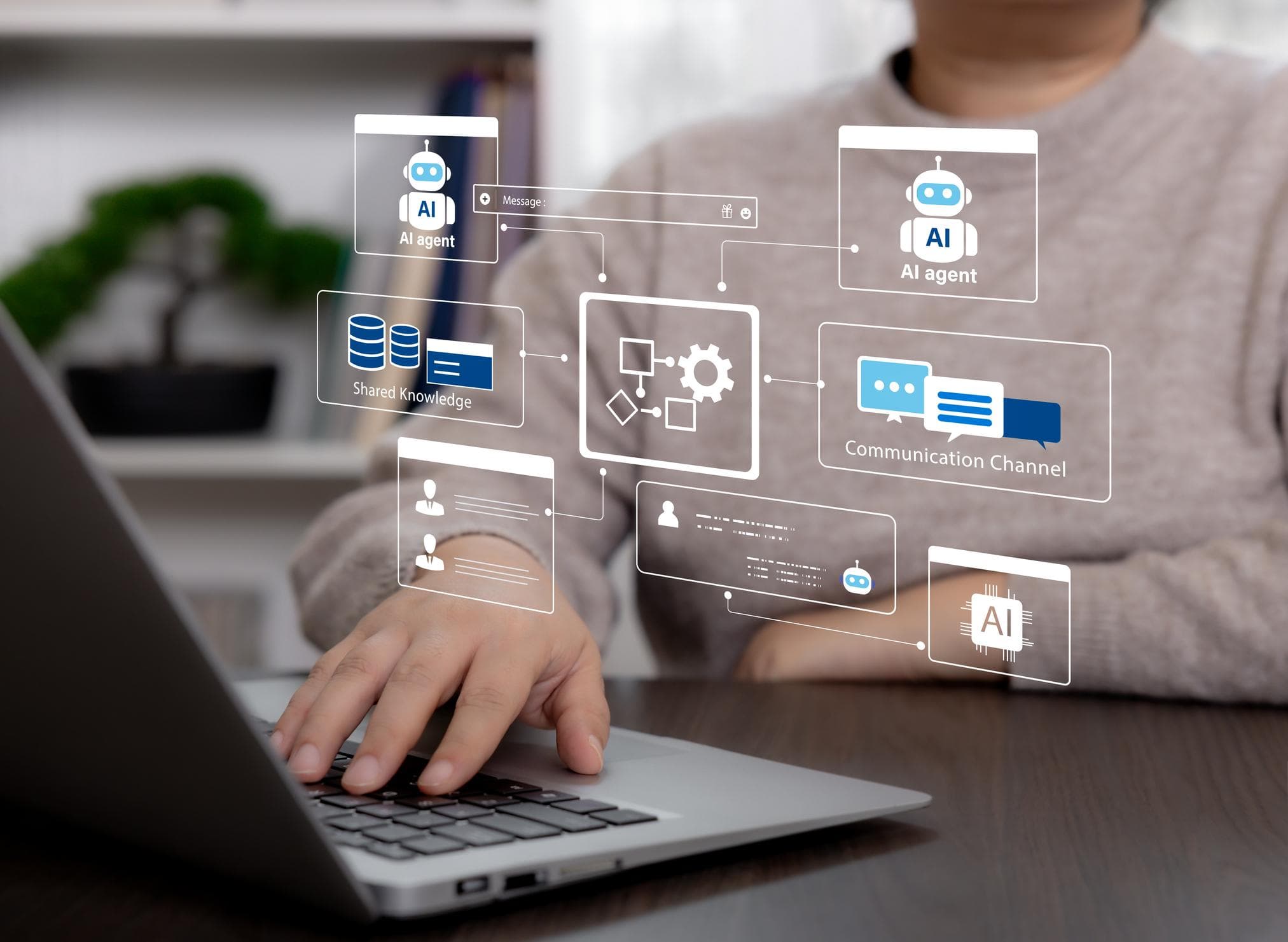
AI agents autonomous systems that perceive their environment, reason about objectives, and take action across enterprise workflows are moving from research concept to operational reality. The enterprises deploying AI agents at scale are discovering that workflow intelligence is not just about automation it is about creating organisational capability that compounds with every cycle.
 AI-Native Infrastructure
Why Global Enterprises Need AI-Native Operational Infrastructure
The operational infrastructure that global enterprises built in the pre-AI era was designed for a different competitive environment. Enterprises that try to layer AI on top of legacy operational infrastructure will capture a fraction of AI's potential. The ones that rebuild their operational foundations as AI-native will gain structural advantages their competitors cannot close.