The Return of the Generalist: Why AI Punishes Specialists
For thirty years, the labour market rewarded specialists. Go deep in one domain, develop rare expertise, command premium compensation. AI is inverting this logic for a specific category of specialisation the ones built on information access and routine execution. The generalist who can direct AI across multiple domains is emerging as the most valuable professional archetype of this decade.
Akshay
Author
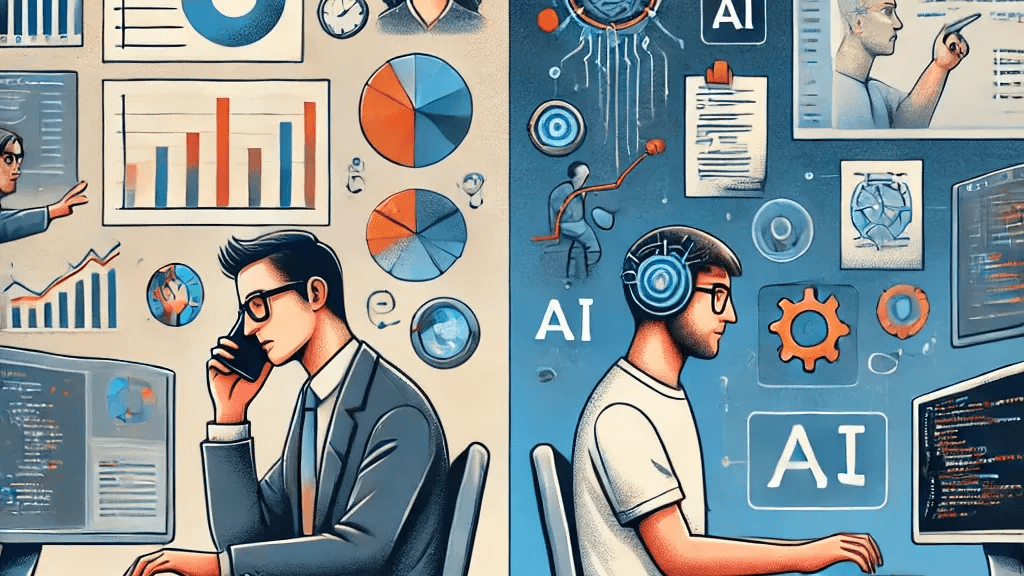
The post-industrial knowledge economy rewarded specialisation. The lawyers who knew one specific type of corporate law cold commanded higher rates than general practitioners. The engineers who developed deep expertise in one system architecture were more valuable than those who knew five systems moderately. The analysts who understood one industry's metrics and dynamics better than anyone else were hired first. The logic was simple and sound: deep knowledge is rare, rare knowledge commands premium compensation, and developing deep knowledge requires focused investment of time that precludes developing broad knowledge simultaneously. AI is disrupting this logic but not uniformly and not completely. The specialisations that are being devalued are the ones built primarily on information access (knowing things that are hard to look up), routine execution (applying known procedures to defined situations), and task volume (being able to produce more outputs per unit time than a generalist). The specialisations that are being revalued are the ones built on judgment (knowing what the right answer is in ambiguous situations), relationship (knowing the specific humans involved and what they actually need), and creativity (producing genuinely novel work that has no existing template to retrieve). Understanding which type of specialist you are is the most important career analysis available in 2026.
The Specialisations That AI Is Devaluing
The clearest examples of AI-devalued specialisation are in domains where the primary value delivered was information synthesis and routine application. A tax specialist whose primary value was knowing the current tax code and applying it correctly to standard scenarios faces direct competition from AI tax preparation tools that know the same code and apply the same procedures faster. A junior lawyer whose primary value was conducting document review and legal research faces competition from AI legal research tools that retrieve, organise, and synthesise case law faster than any human researcher. A data analyst whose primary value was the ability to construct and interpret standard analyses faces competition from AI data tools that construct those analyses from natural language descriptions.These are not imaginary future scenarios. The Goldman Sachs 2025 report identified marketing consulting, office administration, and content production as sectors where employment growth had slowed in ways correlated with AI efficiency gains. The entry-level job markets in law, finance, and data analysis have contracted in ways that reflect employers' ability to use AI tools to handle work that previously required junior specialist hires. The specialists who are thriving in these fields are those who have moved up the value chain toward the judgment, client relationship, and creative problem-solving that AI does not yet perform reliably.
Why Generalists Are Winning in the AI Era
The generalist advantage in an AI-enabled world comes from a specific combination: enough domain breadth to know what question to ask and enough AI fluency to use AI tools to get the depth of answer that previously required a specialist. A generalist product manager who can use AI to get legal analysis, technical architecture review, financial modelling, and market research and who has enough cross-domain literacy to evaluate whether those AI outputs are sensible can now operate in spaces that previously required specialist support for every dimension of a decision.This is the archetype that Block's Dorsey was describing when he wrote '100 people + AI = 1,000 people.' He was not describing 100 deep specialists each becoming ten times more productive in their narrow domain. He was describing people with enough breadth and enough AI fluency to stretch across multiple functions to be the strategic thinker who can also draft the technical spec, analyse the market data, and write the customer communication, using AI to execute in each domain at a quality level that previously required specialists.The Turing College's 2026 analysis of engineering career trajectories found that 'AI-native builders' engineers with broad product and business understanding who use AI tools across the full product development stack are commanding salary premiums over deep backend specialists whose primary value is code production. The label 'full-stack' has expanded in meaning: the most valuable professionals in 2026 are not full-stack in the technical sense but full-stack in the sense of being able to move fluidly across product, technical, commercial, and operational domains with AI assistance in each.
The Specialisations That AI Cannot Touch
The return of the generalist does not mean that all specialisation is devalued. The specialisations that are most protected from AI displacement are the ones built on capabilities that AI currently lacks and is not on a credible path to developing in the near term. Clinical judgment in medicine the ability to integrate patient presentation, history, physical examination, and test results into a diagnostic and treatment decision that accounts for the specific patient's values, circumstances, and preferences requires a combination of pattern recognition, contextual judgment, and human relationship that AI tools can assist but cannot replace. The AI-assisted radiologist who uses AI to improve their detection rate is more valuable than either the unassisted radiologist or the AI alone.High-stakes negotiation where the outcome depends on reading the specific humans across the table, understanding their unstated interests, and building the trust required for an agreement that holds is a domain where AI can prepare but cannot substitute. The environmental lawyer who knows the specific local political relationships that determine whether a regulatory challenge succeeds or fails has value that no AI trained on publicly available legal information can replicate. The therapist who has spent five years working with a specific patient and understands the specific patterns of that person's psychological history has a depth of relational knowledge that no AI companion can build. These forms of specialisation built on embodied judgment, human relationship, and contextual knowledge accumulated through specific experience are not only safe from AI displacement but increasingly differentiated as other specialisations are compressed.
The Practical Career Implication
The practical implication of the generalist return is not that everyone should become a generalist. It is that the type of specialist worth being has changed. A specialist who has built their value primarily on information depth knowing more about a narrow domain than anyone else is more vulnerable than a specialist who has built their value on judgment depth being able to make consistently good decisions in complex, ambiguous situations within a domain. Information depth is increasingly replicable by AI. Judgment depth is not.The career move that protects specialists is not to become a generalist. It is to move up the value chain within their specialisation from information-based to judgment-based work while adding enough AI fluency to maintain the execution speed that competing with AI-enabled generalists requires. The specialist who combines deep domain judgment with the ability to use AI tools to handle the information synthesis and routine execution that previously consumed most of their time is the most valuable professional archetype available. They bring what AI cannot produce (domain judgment) and the speed that AI enables.

AI-Generated Code: Who Owns the Copyright?
Related articles
View all → Autonomous Coordination
The Rise of Autonomous Enterprise Coordination Platforms
Enterprise coordination the alignment of people, processes, information, and resources across organisational boundaries has always been expensive, slow, and error-prone when managed through human intermediaries alone. Autonomous coordination platforms powered by AI are replacing the coordination overhead of large organisations with intelligent systems that synchronise the enterprise continuously and without manual intervention.
 AI Agents
How AI Agents Are Transforming Enterprise Workflow Intelligence
AI agents autonomous systems that perceive their environment, reason about objectives, and take action across enterprise workflows are moving from research concept to operational reality. The enterprises deploying AI agents at scale are discovering that workflow intelligence is not just about automation it is about creating organisational capability that compounds with every cycle.
 AI-Native Infrastructure
Why Global Enterprises Need AI-Native Operational Infrastructure
The operational infrastructure that global enterprises built in the pre-AI era was designed for a different competitive environment. Enterprises that try to layer AI on top of legacy operational infrastructure will capture a fraction of AI's potential. The ones that rebuild their operational foundations as AI-native will gain structural advantages their competitors cannot close.